
Most clinicians believe patient non-adherence is a behavioral failure, but it’s actually a prescription-precision gap that generic advice can’t bridge. You’ve likely spent hours crafting manual meal plans only to see patients struggle with implementation or lose interest. It’s a frustrating cycle that drains your time and limits the impact of your medical expertise. Integrating sophisticated nutrition prescription software for clinicians changes this dynamic by turning dietary guidance into a precise, automated clinical intervention.
We understand that managing complex nutritional needs, especially for patients on GLP-1 medications, requires more than just a printed handout. You need tools that align with evidence-based protocols while ensuring your practice remains profitable through proper CPT coding. This article demonstrates how specialized medical nutrition therapy software transforms patient outcomes by automating clinical workflows and securing reimbursement. We’ll examine the shift toward AI-driven protocols, the integration of billing tools for codes like 97802 and 97803, and the specific strategies for supporting patients through modern metabolic therapies.
Key Takeaways
- Identify why traditional dietary suggestions often fail and how clinical-grade automation ensures patients follow your precise nutritional prescriptions.
- Discover how specialized nutrition prescription software for clinicians transforms lab results into evidence-based meal plans in under 60 seconds.
- Streamline your administrative tasks by integrating automated billing tools that support CPT codes 97802 and 97803 directly into your clinical workflow.
- Learn to scale your practice using Advanced Medical Series meal plans and specialized protocols designed for complex cases like GLP-1 therapy.
The Crisis of Patient Nutritional Adherence in Modern Medicine
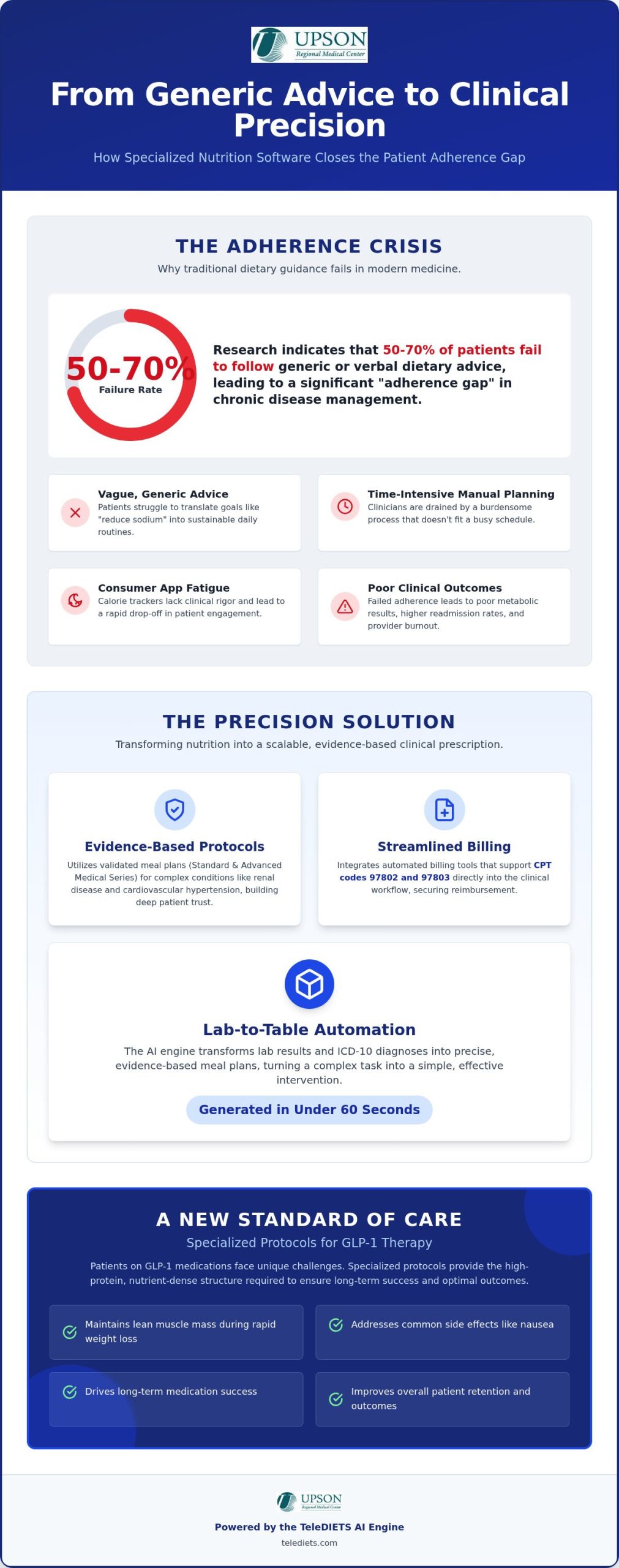
Nutritional adherence is the clinical alignment between your dietary prescription and a patient’s actual behavior. In chronic disease management, a significant “adherence gap” persists. Research indicates that 50-70% of patients fail to follow generic or verbal dietary advice. This disconnect isn’t merely a patient failure; it’s a systemic one. When dietary guidance is vague or lacks structure, patients struggle to translate a goal like “reduce sodium” into a sustainable daily routine.
You face substantial clinical costs when adherence fails. Poor metabolic outcomes and higher readmission rates don’t just affect the patient; they contribute to provider burnout. Manual meal planning is often the primary barrier you encounter. It’s a time-intensive process that doesn’t fit into a busy clinical schedule, yet nutrition prescription software for clinicians can automate this burden, turning a suggestion into a precise medical intervention.
Why Generic Apps Fail Clinical Standards
Many patients turn to consumer calorie trackers, but these tools often lack the rigor of professional nutrition analysis software. Consumer apps rely heavily on self-monitoring, which frequently leads to “app fatigue” and a rapid drop-off in engagement. These platforms aren’t designed for clinical validation or provider oversight. You need medical-grade tools that bridge the gap between a diagnosis and a plate, providing a structured path rather than just a digital food diary.
The Shift Toward Precision Nutrition in 2026
Modern medicine is moving away from one-size-fits-all advice toward lab-based protocols. In 2026, the standard of care requires dietary interventions based on real-time patient data and specific ICD-10 codes. Utilizing nutrition prescription software for clinicians allows for this level of precision. By integrating AI, you can automate the creation of meal plans tailored to individual diagnoses like metabolic syndrome or diabetes. This shift transforms nutrition from a general suggestion into a scalable, evidence-based clinical prescription.
Essential Software Features for Maximizing Patient Compliance
High-compliance begins with precision. Effective nutrition prescription software for clinicians must bridge the gap between diagnostic data and daily meals. Lab-to-table automation allows you to generate protocols directly from blood work and specific ICD-10 diagnoses. This ensures that every dietary recommendation is medically necessary and scientifically sound, which significantly enhances patient buy-in from the first consultation.
Utilizing evidence-based libraries like the Standard Series and Advanced Medical Series Meal Plans builds deep patient trust. These aren’t generic diets; they’re validated clinical interventions tailored for conditions like renal disease or cardiovascular hypertension. Integration is equally vital for modern practices. A telemedicine plugin allows for seamless remote monitoring, while automated follow-ups trigger reminders and adjustments based on the patient’s physiological progress.
GLP-1 Support: A New Adherence Standard
Patients using GLP-1 receptor agonists face unique challenges, including potential muscle loss and nutrient deficiencies. Specialized GLP-1 Meal Plan Protocols provide the high-protein, nutrient-dense structure required to maintain lean mass during rapid weight loss. These protocols address common side effects like nausea by suggesting appropriate food textures and meal frequencies. Providing this specific support drives long-term medication success and improves patient retention.
Engagement through Personalized Visualization
Interactive, visual meal plans significantly reduce the cognitive load on patients. Moving away from static paper handouts to dynamic digital interfaces changes the psychology of the intervention. When nutrition feels “prescribed” like a medication rather than merely “suggested” like a lifestyle tip, patient commitment levels rise. You can explore these automated protocols to see how visual clarity improves clinical outcomes and streamlines your workflow.
Integrating Adherence Software into Clinical Workflows
Integrating nutrition prescription software for clinicians into your practice doesn’t require a total overhaul of your existing systems. The process follows a logical four-step sequence designed for maximum efficiency and patient impact:
- Step 1: Assess patient lab data and input clinical diagnoses directly into the SaaS platform to establish a baseline.
- Step 2: The AI engine generates a personalized medical nutrition therapy plan in under 60 seconds, ensuring accuracy while saving you hours of manual meal planning.
- Step 3: Deliver the plan immediately through a secure patient portal or a telemedicine plugin for instant patient access.
- Step 4: Monitor adherence through automated reporting and data sync, allowing you to adjust therapy in real-time based on physiological progress.
Solving the Billing Hurdle: MNT Reimbursement
Many providers avoid prescribing nutrition because of the perceived lack of reimbursement. Integrated CPT coding tools remove this barrier by streamlining the insurance billing process for nutrition services. You can accurately bill for initial assessments using CPT code 97802 and follow-up medical nutrition therapy with code 97803. This ensures that the time you spend on patient nutrition is both professionally valued and financially compensated, turning clinical guidance into a sustainable revenue stream.
Telehealth Integration for Remote Care
A dedicated telemedicine plugin allows your clinic to operate effectively beyond its physical walls. It reduces provider friction by keeping all nutritional data within your primary clinical workflow. This integration ensures that you aren’t chasing data across multiple apps or spreadsheets. Instead, you have a single source of truth for every patient’s nutritional journey. You can automate your clinical workflow now to begin delivering high-precision care with minimal administrative effort.
Scaling Practice Outcomes with TeleDIETS AI Engine
TeleDIETS acts as a Trusted Expert Guide, providing the sophisticated architecture required to scale specialized nutrition therapy across diverse clinical settings. This AI engine isn’t just for individual practitioners; it licenses its specialized meal plan protocols to large-scale telemedicine platforms and high-volume private clinics alike. By utilizing 100% evidence-based Standard and Advanced Medical Series meal plans, you ensure clinical safety while maintaining a high standard of care. This robust framework allows you to focus on patient interaction while the technology handles the complex nutritional calculations and protocol generation.
Customizing the Clinical Experience
Tailoring protocols to specific patient populations is essential for achieving long-term success. Whether you’re managing patients with obesity or complex metabolic syndrome, providing authoritative meal plans builds lasting practice loyalty. When patients receive professional, structured guidance rather than vague advice, their trust in your clinical expertise grows. This level of personalization is what differentiates a standard consultation from a transformative medical intervention. It creates a supportive environment where patients feel capable and well-supported throughout their health journey.
Getting Started with Clinical Nutrition SaaS
A cloud-based subscription model offers the most efficient path for modern clinics. It removes the need for complex local installations and ensures your team always has access to the latest evidence-based protocols. Implementing nutrition prescription software for clinicians provides the necessary infrastructure for clinical adherence and a measurable return on investment. Software is no longer just an optional tool; it’s the backbone of modern metabolic care. You can empower your practice with professional MNT tools today to begin optimizing patient outcomes at scale.
Elevate Your Practice Standards with Automated Precision
The shift toward precision medicine demands a move from dietary suggestions to clinical prescriptions. You now have the tools to bridge the adherence gap by replacing time-consuming manual planning with evidence-based automation. Utilizing nutrition prescription software for clinicians allows you to deliver the Advanced Medical Series and specialized GLP-1 protocols with quiet confidence. With a cloud-based AI engine designed for rapid protocol generation and integrated CPT coding for seamless reimbursement, your practice is empowered to scale without compromising quality or safety. This infrastructure ensures that every dietary plan is as precise as a medication dosage.
It’s time to move beyond the limitations of generic apps and manual workflows. Upgrade your practice with TeleDIETS Clinical Nutrition SaaS and experience the immediate ROI of improved patient adherence. You’re ready to lead your patients toward better metabolic outcomes with the support of a stable, innovative partner. Your expertise deserves the support of a system built for clinical excellence and professional empowerment.
Frequently Asked Questions
What is the best software for patient nutritional adherence in a clinical setting?
TeleDIETS is the premier solution for clinical adherence because it automates evidence-based protocols in seconds. Its AI engine interprets lab data to provide immediate, actionable prescriptions that patients can follow easily. This precision moves beyond the limitations of generic tracking apps. By delivering a structured, medical-grade plan, you empower patients to succeed while positioning your practice as a leader in modern, data-driven nutritional care.
Can physicians bill insurance for medical nutrition therapy using software?
Physicians can certainly bill for these services using integrated CPT coding tools designed for clinical workflows. Codes 97802 and 97803 are the primary vehicles for securing reimbursement for initial and follow-up medical nutrition therapy sessions. The software automates the documentation process, ensuring that your practice captures revenue for the time spent on nutritional guidance. This creates a sustainable model for improving patient metabolic health through professional intervention.
How does medical nutrition therapy software integrate with telemedicine platforms?
Medical nutrition therapy software integrates through a dedicated Telemedicine Plugin that syncs with your clinical dashboard. This allows you to deploy nutrition prescription software for clinicians during virtual visits without switching platforms. It ensures that all patient data remains secure and accessible within your primary workflow. By streamlining this process, you can provide high-quality, remote nutritional support that maintains the same rigorous standards as an in-office consultation.
What are the specific meal plan requirements for patients on GLP-1 medications?
GLP-1 protocols must prioritize high-quality protein and essential micronutrients to protect muscle mass during rapid weight loss. These specialized plans also manage gastrointestinal side effects by adjusting meal frequency and food acidity levels. Using a clinical-grade protocol ensures that patients receive the specific support they need to stay on their medication. This structured approach is far more effective for long-term success than general wellness advice or consumer calorie trackers.
Does nutrition software for providers require manual data entry of lab results?
Advanced nutrition prescription software for clinicians uses an AI engine to interpret lab markers and diagnoses with minimal administrative effort. While you provide the initial clinical data, the platform automates the protocol generation in under 60 seconds. This efficiency allows you to prescribe nutrition as a precise medical intervention during the appointment. It eliminates the need for manual meal planning, ensuring your practice remains productive while delivering evidence-based care.
Leave a Reply