
What if your clinical nutrition documentation software was no longer just a digital filing cabinet but an active clinical engine that translated complex lab results into reimbursable therapy in seconds? You likely entered this field to transform patient health, yet you probably spend a staggering portion of your week buried in manual ADIME charting and SOAP notes. It’s a common frustration for modern providers who are balancing high-volume GLP-1 patient loads with the constant need for clinical precision.
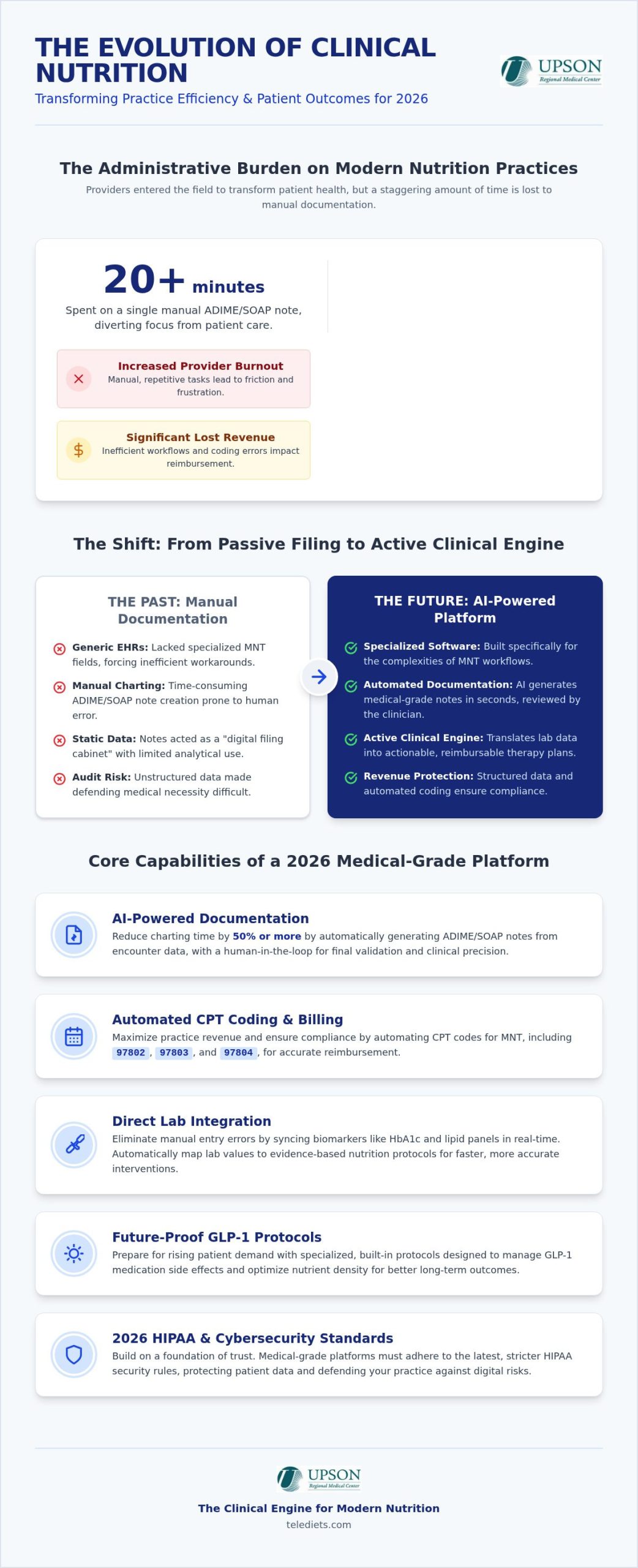
We understand that the administrative weight of Medical Nutrition Therapy can lead to burnout and lost revenue. In this 2026 guide, you’ll discover how to eliminate that burden and improve patient outcomes using AI-driven clinical nutrition documentation and automated prescription tools. We’ll show you how to reduce your charting time by 50% or more while maintaining the highest standards of evidence-based care. From navigating the latest CPT coding updates for codes like 97802 and 97803 to integrating lab-based protocols into your telemedicine workflow, this article provides the roadmap for a more efficient, sophisticated practice.
Key Takeaways
- Learn how to transition from manual ADIME charting to automated clinical nutrition documentation software that generates medical-grade SOAP notes in seconds.
- Understand the critical distinction between passive nutrition tracking and active Medical Nutrition Therapy (MNT) prescription using AI-driven engines.
- Discover how to maximize practice revenue by automating CPT coding for MNT, ensuring accurate reimbursement for codes 97802, 97803, and 97804.
- Prepare your clinic for the rising demand for GLP-1 support with specialized protocols designed to manage side effects and optimize nutrient density.
- Identify the essential 2026 HIPAA and cybersecurity standards required for any modern medical-grade nutrition platform.
The Evolution of Clinical Nutrition Documentation Software in 2026
Clinical nutrition documentation software is the specialized digital framework that automates the Assessment, Diagnosis, Intervention, and Monitoring (ADIME) process. In 2026, this technology has transitioned from a passive repository for notes into an active clinical assistant. While a standard Electronic Health Record (EHR) is designed for broad administrative and medical data, it often lacks the granular fields required for sophisticated Medical Nutrition Therapy (MNT). Generic systems often force dietitians into "workaround" behaviors, such as copying and pasting text blocks into non-specific fields that do not support clinical analysis. This creates a friction-filled environment that contributes significantly to provider burnout.
Modern specialized platforms address this by replacing manual data entry with AI-driven clinical decision support. Instead of spending 20 minutes typing a single note, clinicians in high-volume environments now use these tools to generate documentation in seconds. This shift allows you to focus on the patient rather than the keyboard. It effectively reduces the administrative overhead that has historically plagued clinical nutrition practices, especially those managing complex chronic diseases or high-volume GLP-1 patient loads.
Moving Beyond Simple SOAP Notes
Traditional text-based SOAP notes are often too static for the data-rich clinical environment of 2026. Structured data within clinical nutrition documentation software allows for longitudinal tracking, making it easier to visualize patient progress across multiple visits. This isn’t just about efficiency; it’s about compliance and revenue protection. In the event of an insurance audit, having structured, data-backed records is essential for defending medical necessity and ensuring your practice retains its reimbursements. This level of detail provides a clear narrative of the patient’s journey and the efficacy of your interventions.
The Rise of AI in Clinical Nutrition Documentation
Natural language processing (NLP) has changed the way encounters are recorded. These systems can listen to a consultation and distill the conversation into a draft clinical record. However, clinical precision remains paramount. A "human-in-the-loop" approach ensures that the dietitian reviews and validates every AI-generated note before it becomes part of the permanent record. This maintains the clinician’s authority while leveraging the speed of an AI engine. AI-powered MNT documentation acts as a bridge between laboratory data and actionable clinical prescriptions. By using clinical nutrition documentation software, providers can ensure that every intervention is grounded in the most recent evidence-based protocols without sacrificing hours of their day to manual charting.
Core Functional Requirements for Medical-Grade Nutrition Platforms
Selecting the right clinical nutrition documentation software requires looking beyond simple recipe databases or aesthetic PDF generators. In 2026, medical-grade platforms must adhere to the latest HIPAA Security Rule updates, which introduced stricter cybersecurity expectations and compliance standards for all healthcare entities. Security isn’t just a technical checkbox. It’s the foundation of patient trust and the primary defense against the increasing risks of digital healthcare delivery. A platform that doesn’t prioritize these 2026 standards puts your entire practice at risk.
Beyond security, the system must offer automated ADIME and SOAP note generation to maintain clinical consistency. This functionality ensures that your documentation follows established best practices for EHR in nutrition care, providing a high standard of accuracy across your entire clinical team. When your software handles the structural heavy lifting, you’re free to focus on the nuanced needs of the patient sitting across from you.
Clinical Decision Support and Lab Integration
Manual lab entry is a significant bottleneck in any busy clinic. It’s also a primary source of clinical error that can lead to inappropriate interventions. A medical-grade platform must integrate directly with laboratory information systems (LIS) to sync biomarkers in real-time. When biomarkers like HbA1c, lipid panels, or GFR update in the system, the software should automatically map these values to the appropriate nutritional interventions. For instance, a sudden drop in GFR should trigger immediate alerts for protein or potassium contraindications. This level of automated oversight allows you to provide safer, more responsive care while maintaining a library of evidence-based dietary protocols for chronic disease management.
Workflow Integration: Telemedicine and EHR Plugins
Modern care delivery often happens outside the four walls of a traditional clinic. A robust telemedicine plugin is no longer optional; it’s a necessity for remote care, especially with Medicare telehealth flexibilities currently extended through 2027. To ensure clinic-wide adoption, look for API-first architectures and Single Sign-On (SSO) capabilities. These technical features allow the software to sit comfortably within your existing ecosystem rather than acting as a disconnected silo. Streamlining the loop from referral to prescription within a single interface creates a frictionless experience for both the provider and the patient. Exploring an AI-powered MNT platform can help you integrate these complex requirements into your daily workflow without increasing your technical burden.
From Documentation to Prescription: The TeleDIETS Advantage
Most clinicians are familiar with software that tracks patient intake or generates generic recipe lists. However, true Medical Nutrition Therapy (MNT) requires a shift from passive tracking to active prescription. While documentation is the legal record of care, the prescription is the therapeutic intervention that drives outcomes. Modern clinical nutrition documentation software must bridge this gap by converting complex diagnostic data into precise dietary protocols. TeleDIETS serves as an AI engine that does more than just record what a patient ate. It empowers you to prescribe evidence-based therapy tailored to specific clinical markers and laboratory findings.
The psychological impact on patients when they receive a professional, lab-based plan cannot be overstated. When a patient sees a protocol that directly addresses their specific biomarkers, their adherence typically increases. They no longer feel they are following a generic diet; they feel they are following a medical prescription. This level of professional empowerment transforms the provider-patient relationship from one of casual advice to one of clinical partnership. TeleDIETS reduces the time to prescribe from 30 minutes to 30 seconds, allowing you to deliver this high-value intervention without extending your workday.
Automating Evidence-Based Nutritional Protocols
Precision in documentation is only half the battle. Your interventions must also remain consistent with the latest clinical guidelines from organizations like the Academy of Nutrition and Dietetics (AND) and ASPEN. By using the Standard Series Meal Plans for general wellness or the Advanced Medical Series Meal Plans for complex, multi-morbid patients, you ensure every recommendation is scientifically validated. This structured approach is similar to the clinical benefits of standardizing nutritional supplement documentation, which has been shown to improve the accuracy and administration of care in hospital settings. By automating these protocols, you eliminate the risk of human error and ensure that your practice always meets the highest standard of evidence-based care.
Personalization at Scale for High-Volume Clinics
Managing a panel of over 100 patients requires a system that scales without losing the personal touch. High-volume clinics often struggle to maintain the same level of detail for every patient as they grow. TeleDIETS solves this by allowing for the dynamic adjustment of plans based on follow-up lab results and direct patient feedback. When a new set of labs arrives, the AI engine can suggest protocol modifications that you can approve in a single click. This ensures that the patient’s plan evolves alongside their health status. Furthermore, the role of automated follow-up documentation is critical for patient retention. When patients receive regular, data-driven updates to their care plan, they feel supported and are more likely to remain engaged with your practice over the long term. This clinical nutrition documentation software provides the infrastructure needed to grow your clinic while maintaining the intimacy of a boutique practice.
Maximizing ROI: Insurance Billing and CPT Coding Automation
In 2026, financial sustainability is as vital as clinical precision. For many practices, the difference between growth and stagnation lies in the efficiency of their reimbursement cycles. Clinical nutrition documentation software must do more than record patient interactions; it must capture the specific data points required for successful insurance claims. As of July 2026, Medicare national unadjusted rates for CPT 97802 (initial assessment) are $36.74 per 15-minute unit, while CPT 97803 (reassessment) stands at $31.73 per unit. Group therapy sessions under CPT 97804 are reimbursed at $17.03 per 30-minute unit. Without precise, automated tracking of time-spent data, providers often under-bill or face denials due to insufficient documentation.
Automating the collection of this data reduces the administrative friction that typically leads to lost revenue. By integrating billing functions directly into the clinical encounter, you ensure that every billable minute is accounted for without manual intervention. This approach minimizes the time your staff spends on back-office corrections and allows you to focus on delivering high-quality Medical Nutrition Therapy (MNT). Sophisticated platforms now include medical necessity flags and automated compliance checks to ensure that your notes meet the rigorous standards of both private insurers and Medicare.
Mastering CPT 97802 and 97803 for Clinical Profitability
Initial assessments require significant depth to establish a baseline for care. Documenting the specific elements for a successful 97802 claim, such as anthropometric measurements and a detailed diet history, is essential. However, it’s the consistent follow-up visits under code 97803 that provide the recurring revenue necessary for a sustainable practice model. High-quality clinical nutrition documentation software automates the collection of these metrics, ensuring each claim is backed by appropriate clinical evidence. Explore how TeleDIETS can transform your revenue cycle with automated insurance billing and CPT coding tools that integrate directly into your clinical workflow.
Compliance and Audit Protection
Creating a digital paper trail is a non-negotiable requirement for modern practices. Automated alerts for missing documentation elements help you catch errors before a claim is even submitted. This proactive approach is your best defense against retrospective audits. For large practices managing multiple clinicians, having a centralized system that produces audit-ready notes is a critical risk management strategy. By using a platform that enforces standardized documentation, you protect your revenue from avoidable administrative denials. These tools don’t just save time; they provide the quiet confidence that your practice is both clinically sound and financially secure.
Future-Proofing Your Practice: GLP-1 Protocols and Beyond
The landscape of obesity management has shifted permanently. With the World Health Organization issuing its first global guideline on GLP-1 therapies in late 2025 and the FDA approving Wegovy HD in March 2026, the volume of patients requiring pharmacological support has surged. However, medication alone is rarely a complete solution. Medical Nutrition Therapy has become a non-negotiable partner to these drugs to ensure weight loss is both healthy and sustainable. Modern clinical nutrition documentation software must evolve to support this specific patient population, moving beyond generic templates to provide specialized clinical oversight.
Obesity affected more than 1 billion people globally in 2024, and the demand for evidence-based management continues to grow. In 2026, successful practices are those that treat nutrition as an integral part of the pharmacological journey. By using automated clinical documentation, you can scale your obesity management programs to meet this demand without sacrificing the quality of care. This transition ensures that your practice remains at the forefront of metabolic health, providing the sophisticated support that modern patients and referring physicians expect.
Managing the GLP-1 Patient Journey
A primary clinical concern with rapid weight loss from GLP-1 receptor agonists is the risk of muscle wasting and micronutrient deficiencies. Documentation must go beyond calorie counting. It needs to track protein density and specific nutrient intake to preserve lean body mass. TeleDIETS provides specialized GLP-1 Meal Plan Protocols designed to address these exact challenges. These protocols include automated support for managing common gastrointestinal symptoms and titration-related dietary adjustments. By providing this wraparound care, you improve long-term patient success and prevent the common pitfalls of pharmacological therapy. Your documentation serves as the evidence base for these interventions, ensuring that every protocol adjustment is grounded in the patient’s reported symptoms and progress.
Scaling with the Telemedicine Nutrition Plugin
Delivering care across state lines is a reality for many modern practices, especially with Medicare telehealth flexibilities extended through 2027. This expansion requires a robust understanding of documentation requirements for remote care. Your clinical nutrition documentation software should seamlessly integrate a telemedicine plugin that handles both synchronous encounters and asynchronous data collection. Synchronous documentation occurs during the live video visit, while asynchronous tools allow patients to report symptoms or intake between sessions. This dual approach ensures a continuous stream of data, allowing for more responsive care. As you scale your obesity management programs, having a single interface that manages these complex remote workflows becomes a significant competitive advantage.
Empower your clinic with TeleDIETS clinical nutrition software.
Advancing Your Practice with Clinical Precision
The transition from manual charting to an AI-driven clinical engine represents the most significant shift in nutrition therapy for 2026. By automating your ADIME notes and integrating lab results directly into your workflow, you reclaim the time necessary to focus on complex patient needs. We’ve explored how the right clinical nutrition documentation software transforms administrative burdens into revenue-generating opportunities through precise CPT coding for 97802 and 97803. Additionally, specialized protocols for GLP-1 patients ensure you provide the high-density nutritional support required for modern obesity management.
TeleDIETS offers an established, evidence-based platform trusted by physicians for rapid, lab-based dietary prescriptions. With integrated tools for chronic disease management and insurance billing, you can scale your clinic with confidence and clinical precision. It’s time to empower your practice with a solution that works as hard as you do. Schedule a demo of the TeleDIETS AI Nutrition Engine to see how we can streamline your daily workflow and improve patient outcomes. Your expertise deserves a platform that supports your professional growth.
Frequently Asked Questions
What is the best software for clinical nutrition documentation?
The most effective platforms function as an active clinical engine rather than a passive record-keeping tool. Modern clinical nutrition documentation software should automate the ADIME process and integrate directly with laboratory data to ensure evidence-based accuracy. TeleDIETS is a premier choice because it combines an AI-powered documentation engine with the ability to prescribe medical-grade meal plans tailored to specific diagnoses.
Can AI-powered software generate HIPAA-compliant ADIME notes?
Yes, AI platforms can generate compliant notes if they adhere to the updated 2026 HIPAA Security Rule standards. These tools utilize natural language processing to transcribe patient encounters into structured ADIME or SOAP formats. To maintain clinical precision, it’s essential to use a "human-in-the-loop" workflow where the provider reviews and validates all AI-generated content before finalizing the medical record.
How do I bill for Medical Nutrition Therapy (MNT) using CPT codes?
Billing for MNT requires the use of specific CPT codes to ensure proper reimbursement for individual and group sessions. For 2026, the national unadjusted Medicare rates are $36.74 for initial assessments (CPT 97802) and $31.73 for reassessments (CPT 97803), both billed in 15-minute units. Group sessions (CPT 97804) are reimbursed at $17.03 per 30-minute unit. Automated billing tools help track these units accurately.
Does TeleDIETS integrate with my existing EHR or telemedicine platform?
TeleDIETS utilizes an API-first architecture and Single Sign-On (SSO) to integrate seamlessly with most modern clinical ecosystems. This allows you to maintain a unified workflow without switching between disconnected silos. The platform also includes a dedicated telemedicine plugin, which is vital for remote care delivery under the current Medicare flexibilities extended through December 2027.
Are there specific meal plan protocols for patients on GLP-1 medications?
Yes, specialized GLP-1 protocols are necessary to manage the unique side effects of receptor agonist therapies. These evidence-based plans focus on high nutrient density and protein intake to prevent muscle wasting and micronutrient deficiencies. They also provide structured guidance for managing gastrointestinal symptoms, which is a common challenge during the titration phase of GLP-1 medications.
How much time can clinical nutrition software save per patient encounter?
Providers typically see a reduction in charting time by 50% or more when using automated clinical nutrition documentation software. By shifting from manual text entry to AI-driven note generation, you can reduce the time spent on a single prescription from 30 minutes to as little as 30 seconds. This efficiency allows high-volume practices to manage larger patient panels without increasing the risk of administrative burnout.
Is lab integration necessary for clinical nutrition documentation software?
Lab integration is a critical requirement for any medical-grade platform to ensure patient safety and clinical accuracy. Manually entering biomarkers like HbA1c or GFR is a common source of error that can lead to inappropriate interventions. Real-time syncing with laboratory information systems allows the software to trigger alerts for contraindications and automatically map biomarkers to the most effective nutritional protocols.
What is the difference between nutrition planning software and clinical MNT software?
Nutrition planning software generally focuses on recipe databases and aesthetic meal plan generation for wellness. In contrast, clinical MNT software is designed for medical environments where interventions must be mapped to specific diagnoses and lab values. MNT platforms include the structured documentation, insurance billing tools, and evidence-based protocols required to satisfy medical necessity and secure professional reimbursement.
Leave a Reply