
A static meal plan handout isn’t a clinical tool. It’s often just a piece of paper that ends up in a patient’s kitchen drawer, ignored and forgotten. You likely recognize that manual meal planning is far too time-consuming for a high-volume clinic, yet providing generic advice often leads to poor metabolic adherence. Finding a reliable diabetic meal plan generator for clinicians is no longer just a luxury; it’s a necessity for balancing high-quality care with the administrative burden of documentation and reimbursement.
By integrating automated Medical Nutrition Therapy, you can bridge the gap between a complex diagnosis and a patient’s daily plate. You’ll learn how to implement evidence-based protocols that drive better outcomes and practice efficiency. This guide covers everything from using lab data for precision nutrition to mastering CPT codes like 97802 and 97803 for maximum reimbursement. We’ll show you how to move beyond manual entry and into a modern, technology-forward clinical workflow.
Key Takeaways
- Learn why moving from static handouts to a sophisticated diabetic meal plan generator for clinicians is essential for improving patient metabolic adherence.
- Discover how to automate the translation of complex lab results like A1C and GFR into precise, diagnosis-based dietary protocols.
- Identify the essential software features needed for seamless practice integration, from HIPAA-compliant portals to automated CPT billing tools.
- Gain a step-by-step framework for transitioning your clinical staff to an automated nutrition workflow that enhances both efficiency and patient outcomes.
The Shift from Generic Handouts to Clinical Diabetic Meal Plan Generators
A clinical diabetic meal plan generator for clinicians is a sophisticated, AI-driven engine designed to automate Medical Nutrition Therapy (MNT). It moves beyond basic recipe collection, functioning instead as a precision tool that translates medical requirements into actionable daily nutrition. Static handouts often fail in chronic disease management because they don’t account for the unique metabolic needs of the individual. When you rely on generic advice, you risk low patient adherence and poor glycemic control.
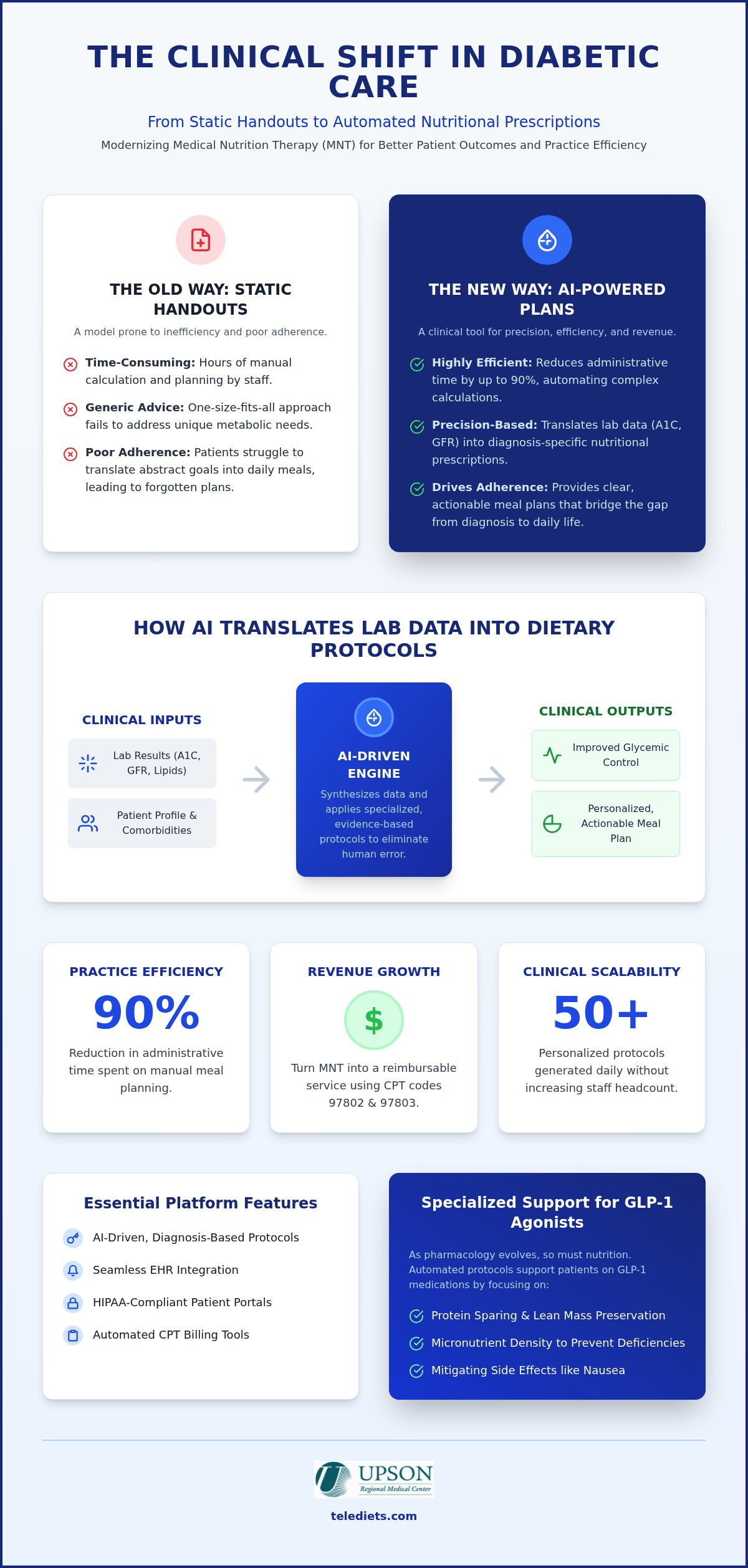
Transitioning from offering “dietary advice” to issuing a “nutritional prescription” elevates your standard of care. By grounding your recommendations in core diabetic diet principles, you provide a framework that’s both scientifically valid and practically achievable. These automated systems bridge the gap between complex medical requirements and the patient’s kitchen. Evidence suggests that using an automated diabetic meal plan generator for clinicians can reduce administrative time by up to 90%, freeing you to focus on direct patient interaction.
Why Clinicians are Automating Nutrition Therapy
The gap between physician recommendations and patient adherence is often rooted in complexity. Patients frequently struggle to translate abstract goals into specific meals. Automation provides the necessary precision in macronutrient distribution, which is critical for Type 2 diabetes management. It ensures that every meal plan aligns with the patient’s specific caloric needs and glycemic targets without requiring hours of manual calculation from your staff.
MNT as a Revenue Driver for Modern Practices
Nutrition therapy is no longer just a supportive cost center; it’s a reimbursable clinical service. With integrated tools for CPT codes like 97802 and 97803, your practice can turn nutrition counseling into a sustainable revenue stream. Technology allows you to scale these services across your entire patient panel, making high-quality MNT accessible within a busy primary care environment. This shift empowers you to provide evidence-based care while maintaining practice efficiency and financial health.
How AI Generators Translate Lab Data into Dietary Protocols
Clinical precision requires more than just carb counting. A professional diabetic meal plan generator for clinicians integrates critical lab results like A1C, lipid panels, and GFR directly into its logic. This ensures that a patient with comorbid Chronic Kidney Disease (CKD) receives a plan that manages potassium and phosphorus while maintaining glycemic control. By automating this synthesis, you eliminate the risk of human error in complex calculations. The TeleDIETS AI engine licenses specialized protocols for provider workflows, providing a scientifically backed foundation for every patient interaction.
The Advanced Medical Series: Beyond Basic Carb Counting
Manual tracking often relies on the CDC Diabetes Meal Planning plate method for simplicity. While useful for foundational education, it lacks the specificity needed for complex chronic disease management. Automated engines handle intricate glycemic load calculations with superior accuracy, ensuring stable metabolic responses that manual methods simply cannot match. You can leverage these advanced protocols to improve patient outcomes without increasing your daily workload. This technology-forward approach transforms a diabetic meal plan generator for clinicians into a vital diagnostic ally.
Supporting Patients on GLP-1 Receptor Agonists
As more patients utilize GLP-1 receptor agonists, nutritional requirements have shifted toward protein sparing and micronutrient density. Specialized GLP-1 meal plan protocols are designed to mitigate common side effects like nausea while prioritizing lean mass preservation. These algorithm-driven plans ensure that the caloric deficit created by the medication doesn’t lead to nutritional deficiencies or significant muscle loss. It’s about providing a supportive partnership that empowers patients to succeed throughout their pharmacological journey.
Evaluating Generator Features: Workflow, Billing, and Compliance
Selecting a diabetic meal plan generator for clinicians requires looking beyond the nutritional output. You need a platform that mirrors your clinical environment through seamless EHR integration and secure, patient-facing portals. Data security isn’t negotiable; a HIPAA-compliant SaaS ensures that sensitive metabolic data remains protected during every digital interaction. With these automated systems, your clinic can scale from manual entries to generating over 50 personalized protocols daily without increasing headcount. You can review the TeleDIETS subscription options to see how these features align with your specific practice implementation.
Maximizing Reimbursement with Integrated CPT Coding
Automated billing tools identify revenue opportunities that manual systems often overlook. Codes like 97802 for initial assessments and 97803 for re-assessments are the foundation of MNT reimbursement. For 2026, the approximate rate for 97802 is $36.74 per 15-minute unit, while 97803 is roughly $31.73. By automating the documentation process, you ensure that every session meets rigorous insurance requirements for medical necessity. This transformation turns a time-intensive administrative task into a scalable, reimbursable clinical service.
Telemedicine Integration for Remote Patient Monitoring
A dedicated telemedicine plugin allows you to deliver high-quality MNT in a modern digital care environment. You can conduct virtual consultations while making real-time protocol adjustments based on remote dietary tracking data. This constant connectivity fosters a deeper partnership with your patients, allowing for immediate intervention when metabolic trends shift. It’s about providing the tools for success regardless of the patient’s physical location. You can start your practice integration today to enhance your remote care capabilities and improve long-term adherence.
Implementing an Automated Nutrition Workflow in Your Clinic
The transition from manual prescribing to an automated system begins with a clear audit of your current patient documentation steps. You’ll find that a diabetic meal plan generator for clinicians replaces hours of manual research with seconds of algorithmic calculation. This workflow allows your team to move beyond providing general advice and start issuing precise nutritional prescriptions. By standardizing how your clinic handles Medical Nutrition Therapy, you ensure that every patient receives evidence-based care that’s tailored to their specific metabolic profile. This systematic approach is the foundation for improving long-term patient adherence.
Onboarding and Staff Training
Reducing the learning curve for new software is critical in a busy clinical environment. You don’t have to manage every detail yourself; modern SaaS tools enable you to delegate meal plan generation to medical assistants or Registered Dietitians safely. Training your staff focuses on accurately inputting lab data and selecting the correct diagnosis-based protocols. This collaborative model ensures that nutritional plans are generated rapidly, often while the patient is still in the exam room. By using a centralized platform, you maintain clinical oversight while freeing up significant physician hours for complex case management.
Measuring ROI: Clinical and Financial Outcomes
You can verify the success of your new workflow by tracking both clinical and financial metrics. Integrated analytics allow you to monitor glycemic improvements, such as A1C reductions, across your entire patient panel. A 2026 survey indicates that 78% of patients expect their doctors to validate AI-generated health information, which places your expertise at the center of the technology. Simultaneously, you’ll see practice revenue growth through consistent billing of CPT codes 97802 and 97803. For providers seeking clinical-grade efficiency, the TeleDIETS platform serves as the logical conclusion for modern chronic disease management.
Advancing the Standard of Diabetic Care through Automation
Transitioning to a digital-first nutrition strategy is more than an efficiency gain; it’s a commitment to clinical excellence. You’ve seen how a diabetic meal plan generator for clinicians bridges the gap between complex lab data and daily patient adherence. Automating the translation of A1C and GFR results into precise protocols provides a level of personalization that manual methods can’t match. This technology doesn’t just save time. It empowers your staff through delegated workflows and ensures your practice captures every reimbursement opportunity with integrated CPT coding tools.
Automated Medical Nutrition Therapy allows you to focus on the human side of medicine while the AI handles the metabolic math. Whether you’re supporting patients on specialized GLP-1 medical protocols or managing complex comorbidities, these tools ensure your advice is always evidence-based and actionable. It’s time to move beyond generic handouts and embrace a system that scales with your ambition. Scale your MNT practice with TeleDIETS clinical software and experience the benefits of AI-driven lab result integration today. You’re well-equipped to lead your patients toward better metabolic health.
Frequently Asked Questions
What is a diabetic meal plan generator for clinicians?
It’s an AI-driven SaaS platform that allows healthcare providers to create evidence-based dietary protocols in seconds. Unlike static handouts, this diabetic meal plan generator for clinicians uses specific patient data, such as lab results and clinical diagnoses, to build a personalized nutritional prescription. It integrates directly into your professional workflow, ensuring that the plans are both scientifically valid and practically applicable for long-term chronic disease management.
Can I bill insurance for meal plans generated by software?
Yes, you can bill for the time spent providing Medical Nutrition Therapy using specific CPT codes. TeleDIETS includes integrated tools for codes 97802 and 97803, which cover initial assessments and re-assessments. In 2026, Medicare covers these services at 100% for patients with diabetes when a physician referral is present. Using automated software ensures your documentation meets the rigorous requirements for insurance reimbursement and medical necessity.
How does a clinical meal plan generator differ from consumer apps?
Clinical generators are built for diagnostic precision rather than general calorie tracking. While consumer apps focus on self-reported data and weight loss trends, a diabetic meal plan generator for clinicians uses verified lab data like A1C and lipid panels. It creates a nutritional prescription that aligns with clinical guidelines. These platforms also include professional features like EHR integration, CPT coding tools, and HIPAA-compliant data handling.
Is TeleDIETS software HIPAA compliant?
TeleDIETS is designed with enterprise-grade security to ensure full HIPAA compliance. The platform protects sensitive metabolic data and personal health information through secure encryption and controlled access protocols. This allows you to share meal plans and track patient progress through a secure portal or telemedicine plugin without compromising privacy. Maintaining these standards is essential for any professional practice moving toward digital nutrition therapy and remote patient monitoring.
Does the generator account for comorbidities like kidney disease or hypertension?
The system specifically tailors protocols for patients with multiple chronic conditions. By selecting the Advanced Medical Series, you can generate plans that manage sodium for hypertension or protein and phosphorus for Chronic Kidney Disease. The AI logic synthesizes these conflicting dietary needs into a single, cohesive meal plan. This ensures your patients receive safe, effective guidance that addresses their entire clinical profile rather than just their blood glucose levels.
Leave a Reply