
If you are only prescribing medication without a scalable nutrition strategy, you’re only solving half of the metabolic puzzle for your patients. Most providers agree that while GLP-1 receptor agonists are transformative, long-term success depends on preserving lean muscle mass and managing side effects through precise dietary intervention. Scaling this level of care is often the primary hurdle for growing practices. Finding the right glp-1 clinic software is no longer just about managing records; it’s about integrating an automated engine that delivers medical nutrition therapy (MNT) at the same speed as the prescription itself.
This guide explores how to bridge the gap between medication and nutrition by implementing software that automates lab-based protocols. We’ll examine how to maximize patient retention through proactive side-effect management and how to capture new revenue streams using integrated CPT-coded nutrition therapy. You will discover a clear framework for choosing a platform that transforms your practice into a comprehensive metabolic health center, ensuring every patient receives the clinical-grade support they need to succeed.
Key Takeaways
- Understand why modern metabolic practices are moving beyond basic EMRs toward specialized glp-1 clinic software that integrates medication management with clinical nutrition.
- Learn how to automate medical nutrition protocols based on patient lab results to ensure lean mass preservation and improved metabolic health outcomes.
- Discover a framework for evaluating software based on its clinical depth and its ability to integrate seamlessly with your existing telemedicine stack.
- Identify how to scale your practice efficiently by leveraging integrated insurance billing tools and CPT-coded medical nutrition therapy.
What is GLP-1 Clinic Software and Why is it Essential?
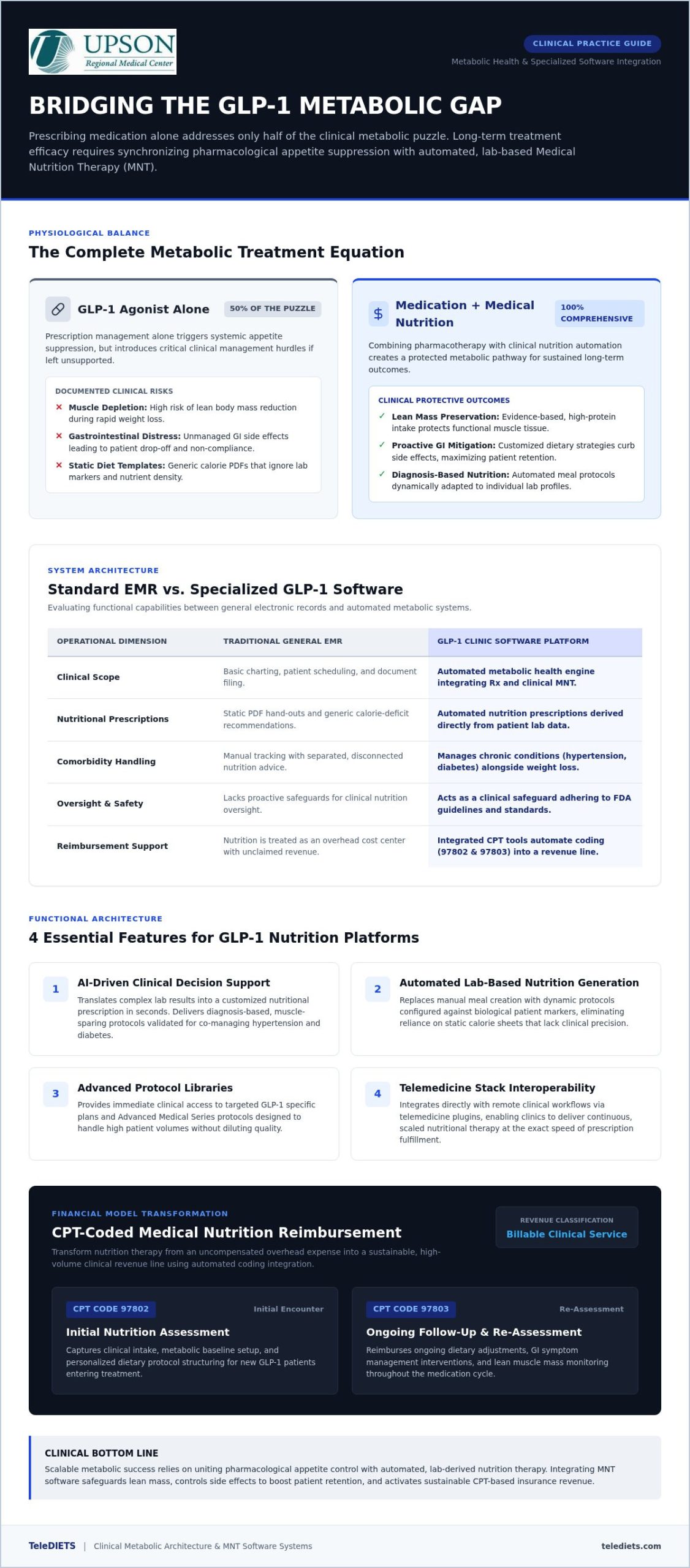
Modern metabolic health providers are moving beyond traditional electronic medical records to meet the demands of a new era in weight management. While a standard EMR handles scheduling and basic charting, specialized glp-1 clinic software functions as a comprehensive ecosystem for metabolic health. GLP-1 software is the integration of pharmacological management and clinical nutrition automation. This shift is necessary because managing glucagon-like peptide-1 receptor agonists requires more than just a prescription pad; it demands a system that synchronizes medication, lab data, and targeted nutrition therapy into a single clinical workflow.
The Clinical Gap in Standard Practice Management
Most general EMRs fail to address the specific physiological risks associated with rapid weight loss, particularly the threat of muscle mass depletion. Without automated tools, clinics often rely on generic weight-loss templates that lack clinical precision. A dedicated glp-1 clinic software platform replaces these static PDFs with diagnosis-based meal planning. This ensures that every patient receives a protocol tailored to their specific metabolic profile and lab results, rather than a generic calorie count that ignores nutritional density. It bridges the gap between simply losing weight and achieving long-term metabolic health.
The Role of Medical Nutrition Therapy (MNT) in GLP-1 Success
Medical Nutrition Therapy serves as the essential second pillar of patient success. High-protein, evidence-based protocols are vital for preserving lean body mass while the medication manages appetite. Additionally, software-driven MNT is a powerful tool for patient retention. By providing specific dietary guidance that helps manage common gastrointestinal side effects, providers can significantly reduce the likelihood of non-compliance. This proactive approach ensures that the medication works in harmony with the body’s nutritional needs, allowing your practice to scale without sacrificing the quality of individual care.
Core Features to Look for in GLP-1 Nutrition Software
Selecting a glp-1 clinic software requires moving beyond aesthetics to focus on clinical robustness. The right platform must handle high patient volumes while maintaining the integrity of Medical Nutrition Therapy (MNT). This is particularly important given FDA warnings and safety recommendations for GLP-1 prescribing, which emphasize the need for rigorous provider oversight and adherence to established clinical standards. Your software should act as a safeguard, ensuring that nutrition isn’t an afterthought but a central component of the treatment plan.
Essential features for a modern metabolic practice include:
- Automated nutrition prescriptions generated from patient clinical data.
- Telemedicine plugins that allow for seamless remote care delivery.
- A library of specialized protocols, such as GLP-1 specific and Advanced Medical Series plans.
- Integrated billing tools to capture MNT-specific revenue.
AI-Driven Clinical Decision Support
An effective system shouldn’t just provide a meal plan; it should act as an MNT engine. Advanced AI engines can now translate complex lab results into a customized nutritional prescription in seconds. This automation is crucial for managing chronic conditions like hypertension or diabetes alongside weight loss. By using diagnosis-based protocols, clinicians ensure that patients receive high-protein, muscle-sparing nutrition that is scientifically validated. This level of precision is what separates a medical weight loss practice from a generic wellness program.
Insurance Reimbursement and CPT Coding Integration
Revenue sustainability is often overlooked in software selection. Robust glp-1 clinic software includes integrated tools for CPT codes 97802 and 97803. These tools automate the coding process for initial nutrition assessments and follow-ups, allowing clinics to capture revenue that often goes unclaimed. For high-volume practices, this integration reduces the administrative burden and turns nutrition therapy into a profitable service line rather than a cost center. If you’re looking to scale your impact, exploring specialized nutrition protocols can help you build a more resilient revenue model.
Evaluation Framework: Choosing the Right Platform
Selecting the right glp-1 clinic software requires a rigorous assessment of both technical capabilities and clinical philosophy. You aren’t just buying a database; you’re selecting the engine that drives your patient outcomes. Start by evaluating interoperability. The software must plug into your existing EHR or telemedicine stack to prevent data silos. Next, determine clinical depth. A platform that only offers simple calorie counting is insufficient for metabolic patients. You need evidence-based, high-protein meal plans that support lean mass preservation during rapid weight loss.
Scalability is equally vital. As your practice grows, your software should handle 1,000+ patients without requiring a proportional increase in clinical staff overhead. This is achieved through AI-driven automation that handles the heavy lifting of dietary prescriptions. Finally, review compliance. Clinical-grade security and HIPAA standards are non-negotiable for protecting sensitive health information and maintaining your professional standing.
SaaS vs. Custom Development for GLP-1 Clinics
Building custom tools is often slow and prohibitively expensive. In the fast-moving GLP-1 market, speed-to-market is your greatest competitive advantage. A specialized MNT SaaS provides a turnkey solution that is ready for immediate deployment. This allows you to focus on patient care rather than managing a software development team. Choosing a ready-made platform ensures you have access to continuous updates and clinical refinements without the overhead of maintenance.
Integration and Workflow Optimization
Efficiency dies in the “tab-switching” between EMRs, billing platforms, and nutrition software. Look for a “single-pane-of-glass” experience. Telemedicine plugins that embed directly into your workflow reduce administrative friction and prevent provider burnout. When your tools work in harmony, you can spend more time on clinical strategy and less on data entry. To see how these tools integrate into your workflow, you can explore automated nutrition protocols today.
Scaling Your GLP-1 Practice with TeleDIETS
TeleDIETS provides the clinical infrastructure needed to turn a prescription-heavy clinic into a comprehensive metabolic health powerhouse. It stands out as a leading glp-1 clinic software by providing specialized GLP-1 Meal Plan Protocols that prioritize lean mass preservation. Beyond weight loss, the Advanced Medical Series supports long-term chronic disease management for conditions like diabetes and hypertension. This system functions as a robust MNT engine, allowing you to manage high patient volumes without sacrificing the supportive, partnership-oriented care your patients expect. Providers can gain immediate access through the TeleDIETS clinical SaaS subscription to begin integrating these tools into their workflow.
Automating the Nutrition Prescription
Scaling a practice traditionally requires hiring additional staff to manage the increased patient load. TeleDIETS changes this dynamic. The AI engine generates personalized dietary protocols from lab data in seconds. This allows you to scale nutrition therapy without the need to hire a new registered dietitian for every 50 patients. It’s about efficiency and clinical precision. The glp-1 clinic software does the heavy lifting, ensuring every patient receives a clinically validated plan based on their unique biomarkers and metabolic needs. This enables your practice to grow rapidly while maintaining the highest standards of evidence-based care.
Maximizing Revenue with Integrated Billing
Practice growth depends on diversified revenue and operational efficiency. TeleDIETS helps clinics capture MNT reimbursement through automated CPT coding for 97802 and 97803. By integrating these tools, you turn nutritional support from a logistical hurdle into a profitable service line. This integrated approach improves practice ROI while simultaneously driving better patient outcomes. When nutrition is automated, your clinical team stays focused on high-level strategy rather than administrative paperwork. It is the essential ally for clinics aiming to lead the industry in quality care and professional success.
Future-Proofing Your Metabolic Care
Success in the rapidly evolving weight management landscape requires a shift from simple medication fulfillment to comprehensive metabolic oversight. By integrating clinical nutrition as a core pillar of your practice, you ensure that patients achieve sustainable results while protecting their long-term health. The right glp-1 clinic software empowers your team to deliver high-precision care at scale, turning complex nutritional needs into automated, actionable protocols. This approach not only improves patient outcomes but also secures your practice’s financial future through diversified revenue streams.
TeleDIETS provides the essential tools for this transition, featuring an AI-powered nutrition engine and integrated CPT coding for medical nutrition therapy. With specialized GLP-1 and Advanced Medical Series protocols, you can confidently manage high patient volumes without compromising on quality. It’s time to elevate your clinical standards and lead the market with a science-backed, comprehensive strategy. Get Started with TeleDIETS Clinical Nutrition Software today and transform the way you deliver metabolic care. Your patients deserve a partner who prioritizes their complete physiological success.
Frequently Asked Questions
Can GLP-1 clinic software integrate with my existing EMR?
Yes, many platforms offer telemedicine plugins or API-based connections. TeleDIETS specifically provides a telemedicine plugin for seamless integration into provider workflows. This reduces administrative friction by allowing clinicians to generate protocols without leaving their primary patient management environment. Ensuring your glp-1 clinic software communicates with your EMR is critical for maintaining a single-pane-of-glass experience and preventing data silos.
What CPT codes are used for medical nutrition therapy in GLP-1 clinics?
Providers primarily utilize CPT codes 97802 and 97803 for medical nutrition therapy (MNT). Code 97802 covers the initial assessment and intervention, while 97803 is used for follow-up visits and reassessment. Specialized software automates the documentation and coding process for these services. This allows clinics to capture revenue for nutritional oversight that is often missed in traditional pharmacological workflows, improving the overall ROI of the practice.
How does nutrition software help with GLP-1 side effect management?
Nutrition software manages side effects by delivering targeted dietary protocols that address gastrointestinal issues like nausea or constipation. By automating high-protein, fiber-rich meal plans, the platform helps patients maintain lean muscle mass while the medication manages appetite. These evidence-based protocols improve patient compliance and retention. When patients feel supported through their side effects, they are much more likely to remain on their treatment plan and achieve their metabolic goals.
Is TeleDIETS HIPAA compliant for medical nutrition therapy?
TeleDIETS is designed as a clinical-grade SaaS platform that prioritizes data security and HIPAA standards. It provides a secure environment for generating diagnosis-based nutrition protocols from sensitive patient lab results. This ensures that all patient health information (PHI) is handled with the necessary technical and administrative safeguards. Using a compliant glp-1 clinic software platform protects your practice from regulatory risks while ensuring that patient data remains confidential throughout the MNT process.
Do I need a registered dietitian to use GLP-1 nutrition software?
While a registered dietitian (RD) is a valuable asset, this software is specifically built to empower physicians and mid-level providers to prescribe clinical nutrition. The AI engine handles the complex calculations and protocol generation based on lab data. This allows medical teams to deliver high-quality MNT without the immediate need for a full-time RD on staff. It’s a scalable solution that makes clinical-grade nutrition accessible to any metabolic health practice.
Leave a Reply