
Nurse practitioners can find drug-nutrient interaction information in medication references and interaction checkers, then consider it alongside a patient’s medication and nutrition history. For managing drug-nutrient interactions with software, checkers can flag foods, alcohol, vitamins, and supplements that may need attention. The U.S. Food and Drug Administration explains that grapefruit juice can block intestinal enzymes that metabolize certain drugs, potentially increasing the amount of medication in the bloodstream and keeping it in the body longer.
It’s understandable to want a reliable way to identify potential drug-nutrient interactions without losing sight of the individual patient. This article explains how medications can affect nutrient absorption and levels, where to find interaction guidance, and how software can support clinical review. It also shows how guidelines and digital tools fit into a broader process for identifying possible risks and informing patient education, without treating a software alert as a diagnosis or a substitute for professional judgment.
Key Takeaways
- Distinguish interactions that change a medication’s effects from medication-related nutrient depletion to frame your review.
- Consider how a medicine may alter nutrient absorption, processing, or levels when assessing nutrition-related concerns.
- Use interaction checkers to identify potential items for review, then interpret alerts in the context of the patient’s full medication and nutrition history.
- Combine medication review, nutrition assessment, and patient education to make risk-reduction decisions part of routine care.
Drug and nutrient interaction information
Interaction information helps clinicians connect a patient’s medications and dietary intake with possible changes in treatment response. Software can organize potential concerns, but clinical review determines their relevance.
Interaction information
A drug-nutrient interaction occurs when a nutrient, herb, or supplement ingredient changes how the body absorbs, processes, or responds to medication. Recognizing a possible interaction can help you assess concerns, guide patient education, and decide when nutrient status warrants attention.
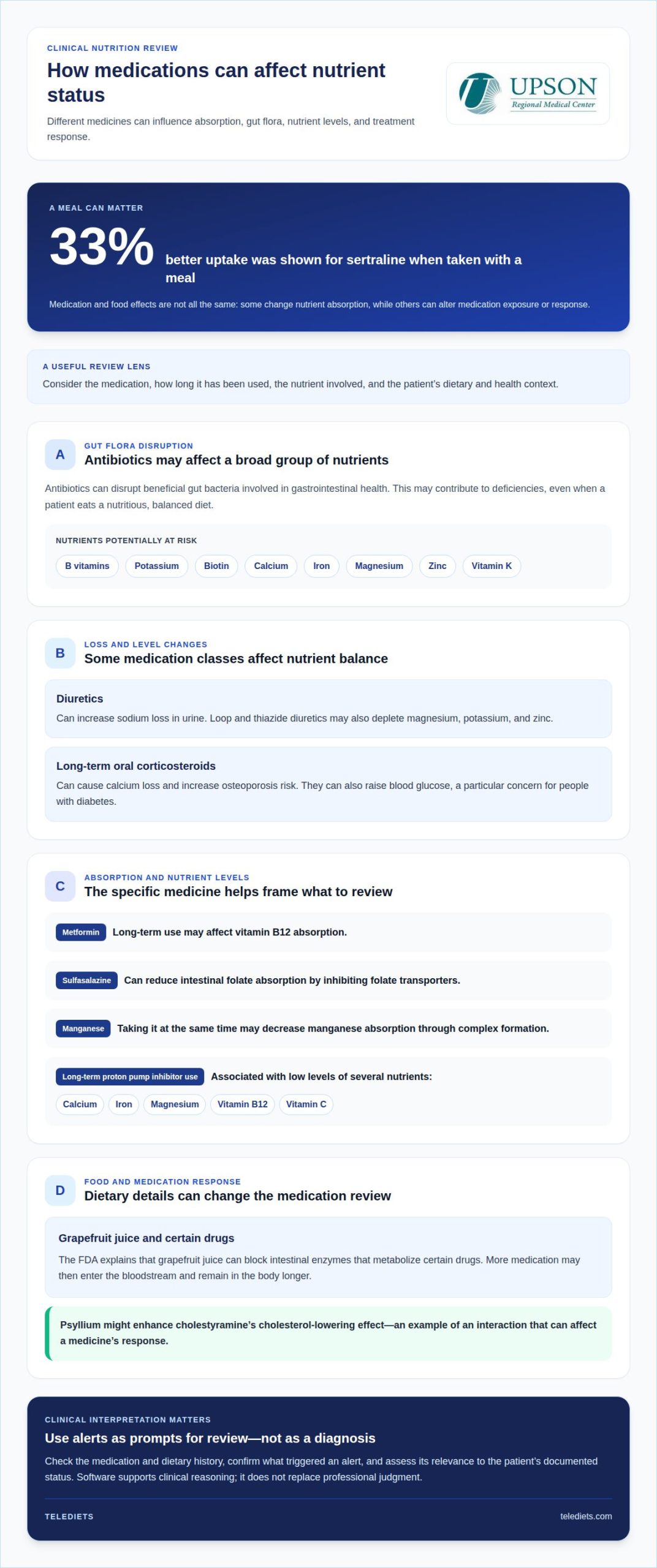
Consider sulfasalazine: it can reduce intestinal folate absorption by inhibiting folate transporters. Reviewing medication and dietary habits may help identify potential nutrient-interaction concerns. Psyllium might enhance cholestyramine’s cholesterol-lowering effect, illustrating that interactions can affect a medicine’s response in different ways.
Food can matter, too. The U.S. Food and Drug Administration explains that grapefruit juice can block intestinal enzymes that metabolize certain drugs. As a result, more medication may enter the bloodstream and remain in the body longer. Examples like these help focus a medication and dietary review.
Software limitations and risks
A software alert identifies a potential interaction, not its significance in the patient’s full clinical context. A checker can flag an item for review, but an alert alone doesn’t establish that harm will occur or determine the right response. Treat its output as educational information, not medical advice or a replacement for professional judgment.
In the United States, privacy, security, and regulatory requirements depend on the data handled and the software’s role. Assess access controls, data handling, and applicable obligations before use. Review the patient’s medication history and dietary intake alongside alerts, especially when a specific condition or limited liver or kidney function may affect medication considerations.
Use software to support, not replace, clinical reasoning. Confirm which medication, nutrient, food, or supplement triggered an alert, then assess its relevance to the patient’s documented status. This connects interaction information to individual care rather than treating every flagged combination as identical.
Drug effects on nutrient absorption and bioavailability
Medication effects can change how the body absorbs, processes, stores, or uses nutrients. This drug-induced depletion can develop through different mechanisms, so medication name, duration, and the nutrient involved all matter. For example, long-term metformin use may affect vitamin B12 absorption. Reviewing medication history alongside nutrition information can help identify where nutrient status warrants attention.
Antibiotics can disrupt gut flora by killing beneficial bacteria involved in gastrointestinal health. This disruption may contribute to deficiencies, even when a patient eats a nutritious, balanced diet. Nutrients potentially at risk include B vitamins, potassium, biotin, calcium, iron, magnesium, zinc, and vitamin K. Because possible effects can involve more than one nutrient, antibiotic exposure may warrant a broader nutrition review.
Other medications can affect nutrient levels through different pathways. Diuretics can increase sodium loss in urine; loop and thiazide diuretics may also deplete magnesium, potassium, and zinc. Long-term oral corticosteroid use can cause calcium loss and increase osteoporosis risk. It can also raise blood glucose, a particular concern for people with diabetes. These distinct effects show why medication class and health conditions matter in clinical assessment.
Some medicines can affect how nutrients are absorbed without necessarily causing broad nutrient depletion. Sulfasalazine can reduce intestinal folate absorption by inhibiting folate transporters, while taking manganese at the same time may decrease manganese absorption through complex formation. Sertraline showed 33% better uptake when taken with a meal. Long-term proton pump inhibitor use has been associated with low calcium, iron, magnesium, vitamin B12, and vitamin C levels.
For a software-supported review, organize each medication with its duration and relevant dietary details, then compare potential nutrient effects. This can help distinguish a possible absorption issue from a broader depletion concern. A structured nutrition plan can support clinicians managing complex medical needs alongside medication-related considerations.
Drug-nutrient interaction guidelines and checkers
Interaction checkers organize potential concerns involving medications, foods, alcohol, vitamins, and supplements. Their value depends on how clinicians interpret alerts within the patient’s treatment context.
Databases and tool options
Medication databases organize drug information, while interaction checkers can flag foods, alcohol, vitamins, and supplements for review. This distinction matters because a medication list alone may not capture the dietary products a patient uses. Coverage varies between medication and supplement databases, so review whether a tool includes both prescribed drugs and the dietary products relevant to the patient.
Costs and free access vary by tool and access model. Some checkers provide educational and general wellness information, but that doesn’t mean every option is free or clinically equivalent. Compare each tool’s intended use and coverage before incorporating it into treatment review.
Identifying and reviewing interactions
Software identifies potential concerns by comparing entered medications and dietary products with interaction information. A checker can surface combinations for review, but clinicians need an accurate list of what the patient takes and consumes. Software can flag possible interactions to support decisions about patient education and follow-up.
To review medications, supplements, and diet, start with the patient’s current medication history and ask about dietary products and alcohol. Compare those entries with the checker’s alerts, then consider their clinical relevance. This makes the tool part of a structured review rather than a standalone treatment decision.
Alert accuracy and updates
Alert accuracy and currency depend on the tool’s database coverage and the information used for each match. How accurate and up to date are alerts? Review the alert’s cited evidence and update date when available, and compare its details with the medication and product entered. E-prescribing platforms already use some computer learning to help predict drug interactions, but that does not establish an accuracy rate for nutrient alerts.
Reducing false positives and alert fatigue
Reducing low-relevance alerts starts with accurate, active medication and supplement records. Remove discontinued entries from the review and distinguish a documented product from a possible exposure. How can software reduce false positives? Use relevant patient details to prioritize alerts, then assess whether each one applies before taking action.
For EHR and pharmacy workflows, place interaction review alongside medication reconciliation and prescribing. EHR systems can alert nurse practitioners to potential drug-drug interactions and recommend similar medications when a prescribed drug has an interaction. These functions support review, while nutrient alerts still need context. A workflow for managing drug-nutrient interactions with software should make alerts visible during clinical review without treating them as automatic treatment decisions.
Actions to minimize interaction risks
Risk reduction starts with a complete view of the patient’s healthcare context. Review prescribed medications alongside vitamins, supplements, and dietary patterns, then consider relevant health conditions. Older patients with limited liver or kidney functioning need particular consideration because these factors can affect medication interactions and effects.
Use software alerts to guide review, not to make decisions in isolation. Electronic health record systems can alert nurse practitioners to potential drug-drug interactions involving medications on a patient’s list. When a prescribed drug has a drug-drug interaction, these systems can recommend similar medications for clinicians to consider as alternatives. A nutrient alert requires its own review of the patient’s medication and nutrition information.
- Reconcile the medication list, including prescribed and over-the-counter products.
- Record dietary supplements, vitamins, and relevant food or alcohol intake.
- Connect flagged concerns with the patient’s conditions and clinical history.
Follow-up can help clarify a possible nutrient concern. Assessment may involve blood tests, symptom review, diet assessment by a registered dietitian, and medication history review. Each source provides different information: symptoms identify concerns to explore, dietary assessment describes intake, and blood tests can inform nutrient status. A patient with a nutrient deficiency should be referred to a registered dietitian for tailored nutrition interventions.
Include patient education in the same workflow. Explain which medication or dietary factor prompted review, what potential effect is being considered, and what follow-up has been arranged. For example, grapefruit juice can affect the metabolism of certain drugs, as the U.S. Food and Drug Administration explains. Clear education helps patients understand why it matters to report foods, vitamins, and supplements during medication review.
Document the alert, relevant context, and clinical action in the health record. This creates a useful reference for the next medication review and helps the care team distinguish an addressed concern from one requiring follow-up.
TeleDIETS: Standard Series Meal Plans
TeleDIETS supports healthcare professionals who want to connect nutrition planning with clinical care. Its Standard Series Meal Plans provide an option for nutrition care, while Advanced Medical Series Meal Plans and GLP-1 Meal Plan Protocols address specialized clinical needs. These plans don’t replace medication-interaction review; they can support the nutrition-planning work that follows a clinician’s assessment.
For practices managing chronic disease, TeleDIETS enables clinicians to prescribe evidence-based nutrition plans tailored to lab results and clinical diagnoses. This helps translate nutrition priorities into a structured plan alongside medication and dietary review. TeleDIETS also offers insurance billing and CPT coding tools to support nutrition-service workflows.
Explore TeleDIETS to see how its meal plans and clinical tools may fit your practice. You’re welcome to contact TeleDIETS or visit telediets.com.
Build a nutrition workflow that keeps moving
Make interaction review part of a consistent clinical workflow so nutrition planning follows naturally from medication and dietary assessment. Managing drug-nutrient interactions with software works best when alerts inform professional judgment and nutrition decisions remain connected to each patient’s needs.
For clinicians extending that work into medical nutrition therapy, TeleDIETS offers Standard Series Meal Plans, Advanced Medical Series Meal Plans, and GLP-1 Meal Plan Protocols. These options provide a pathway to incorporate structured nutrition planning into care for patients with varying clinical needs.
Explore how TeleDIETS may fit your practice’s nutrition workflow, or contact TeleDIETS for support. A thoughtful next step can help your team bring nutrition planning into focus with confidence.
Frequently Asked Questions
Where can nurse practitioners get information on drug-nutrient interactions?
Nurse practitioners can consult medication references, interaction checkers, and clinical prescribing systems for potential interaction information. For a focused review, search by the exact medication and dietary product, then compare the result with the patient’s current use. The U.S. Food and Drug Administration provides information about grapefruit juice and certain medicines. Use reference material to inform clinical review, not as a substitute for patient-specific assessment.
What are drug-nutrient interactions and which medications and nutrients are most commonly involved?
Drug-nutrient interactions occur when food, nutrients, or supplements affect how a medicine works, or when medication changes nutrient levels. Relevant combinations vary. Examples include loop diuretics and potassium, beta-blockers and melatonin production, and calcium channel blockers with potential potassium depletion. Foods high in vitamin K may decrease aspirin’s efficacy as a blood thinner. Reviewing the medication class and nutrient involved helps clarify what to assess.
Which drug-nutrient interaction checker software is best for clinicians and pharmacists?
No single checker is best for every clinical workflow. Choose a tool that covers the medications and dietary products your team reviews, including vitamins, supplements, foods, and alcohol. Check whether its results explain the flagged combination and fit your existing workflow. For a pharmacy medication check, medication coverage may be central; nutrition-focused review also calls for dietary product coverage and relevant clinical context.
How much do drug-nutrient interaction software tools cost, and what free options are available?
Costs and free access vary by tool and access model.
Leave a Reply