
A useful sample GLP-1 meal plan doesn’t rely on one calorie target for every patient. Effective GLP-1 meal plan protocols for clinics set an individualized calorie range while prioritizing protein, fiber-rich carbohydrates, and food choices that account for medication-related symptoms.
That balance matters: reduced appetite can make it harder to meet nutrition needs, while nausea, constipation, or reflux may affect which foods are manageable. A plan should be practical to adapt, not just precise on paper.
Here, you’ll learn how to structure protein-rich meals and snacks, choose fiber-rich foods, and account for hydration and common symptoms. You’ll also see how to approach a sample plan’s calorie range based on individual needs, so your clinic can provide clear, consistent nutrition support as part of medical care.
Key Takeaways
- Build meals around protein-rich foods and fiber-rich carbohydrates, then distribute protein across eating occasions to support nutrition needs.
- Plan for reduced appetite and medication-related digestive changes by choosing nutrient-dense foods and adjusting meal size and timing.
- Manage common symptoms with practical food and hydration strategies, including gradual changes to fiber intake when constipation is a concern.
- Set a sample plan’s calorie range around individual energy needs and clinical context rather than applying one target to every patient.
1. Choosing protein-rich foods and fiber-rich carbohydrates
During active weight loss, plan protein around the person’s body weight and clinical needs. A daily target of 1.2 to 1.6 grams per kilogram of body weight is one approach; 80 to 120 grams daily offers a simpler alternative. Spread protein across four or five eating occasions, aiming for 20 to 40 grams each time. This structure makes protein a planned part of meals, not an afterthought.
Use varied protein sources, such as eggs, fish, poultry, beans, tofu, and yogurt. For example, pair Greek yogurt with oats and berries, or add beans to a meal with vegetables. Protein supports muscle maintenance during weight loss and can help people feel full. A registered dietitian can tailor portions to body size, activity, age, and medical history.
Fiber-rich carbohydrates add another useful foundation. Include options such as oats, beans, lentils, fruit, vegetables, and whole grains. The adult daily fiber target is about 25 to 34 grams, depending on age and sex. Increase fiber gradually when needed, and pair higher-fiber choices with consistent hydration. This approach can support digestive regularity without relying on one food.
For a sample day, breakfast might combine yogurt, oats, and fruit; lunch could include chicken, beans, and vegetables. At dinner, pair fish or tofu with whole grains and cooked vegetables. Adjust portions to appetite while preserving nutrient density. Smaller portions of protein-rich foods may be more manageable when appetite is reduced.
Daily calorie needs have no universal target. Set a range based on the person’s energy needs, weight, medical history, and treatment context; a dietitian can translate these factors into practical portions. Review intake as appetite and tolerance change. Prioritize protein, then add fiber-rich carbohydrates and other foods to build balanced meals.
2. Nutrition needs and side effects of GLP-1 medications
Reduced appetite can make adequate nutrition harder, even when meals seem filling. Build meal preparation around small, nutrient-dense options, such as Greek yogurt, eggs, cooked vegetables, and protein servings that can be divided across meals. Prepare foods patients tolerate and offer alternatives, since nausea, constipation, and other effects vary.
Meal plans for semaglutide, tirzepatide, and liraglutide should respond to appetite, symptoms, and clinical needs rather than assume that each medication requires a distinct menu. Medication effects vary, so coordinate dietary adjustments with the prescriber and never use a meal plan to direct dose changes.
For U.S. clinics, nutrition protocols can draw on the 2025 joint advisory’s protein recommendations and the Dietary Guidelines for Americans’ fiber guidance. Apply these alongside the patient’s diagnoses, food tolerance, and usual intake; the evidence supports individualized nutrition, not a single calorie prescription for every patient.
Clinic-based counseling and meal-plan program costs depend on program scope, staffing, and follow-up needs; pricing is provided after a quote request. Keep the nutrition protocol separate from medication billing or prescribing decisions.
Monitor weight trends alongside meal intake, hydration, symptoms, and functional indicators of muscle maintenance. Track the same measures at follow-ups to identify changes, and assess possible nutritional deficiencies when intake or symptoms raise concern. Persistent vomiting or signs of dehydration warrant contacting the prescriber or a registered dietitian.
Give patients practical education materials on meal structure, hydration, symptom tracking, and when to seek help. Schedule follow-ups around treatment initiation, medication changes, and ongoing nutrition review, adjusting their timing to symptoms and intake. This supports clear communication among the patient, dietitian, and prescriber without directing medication changes.
Food triggers may take time and trial and error to identify. Staying hydrated can support digestion and help reduce constipation. Patients should take medication as prescribed and follow its schedule.
3. Managing nausea, constipation, and reflux
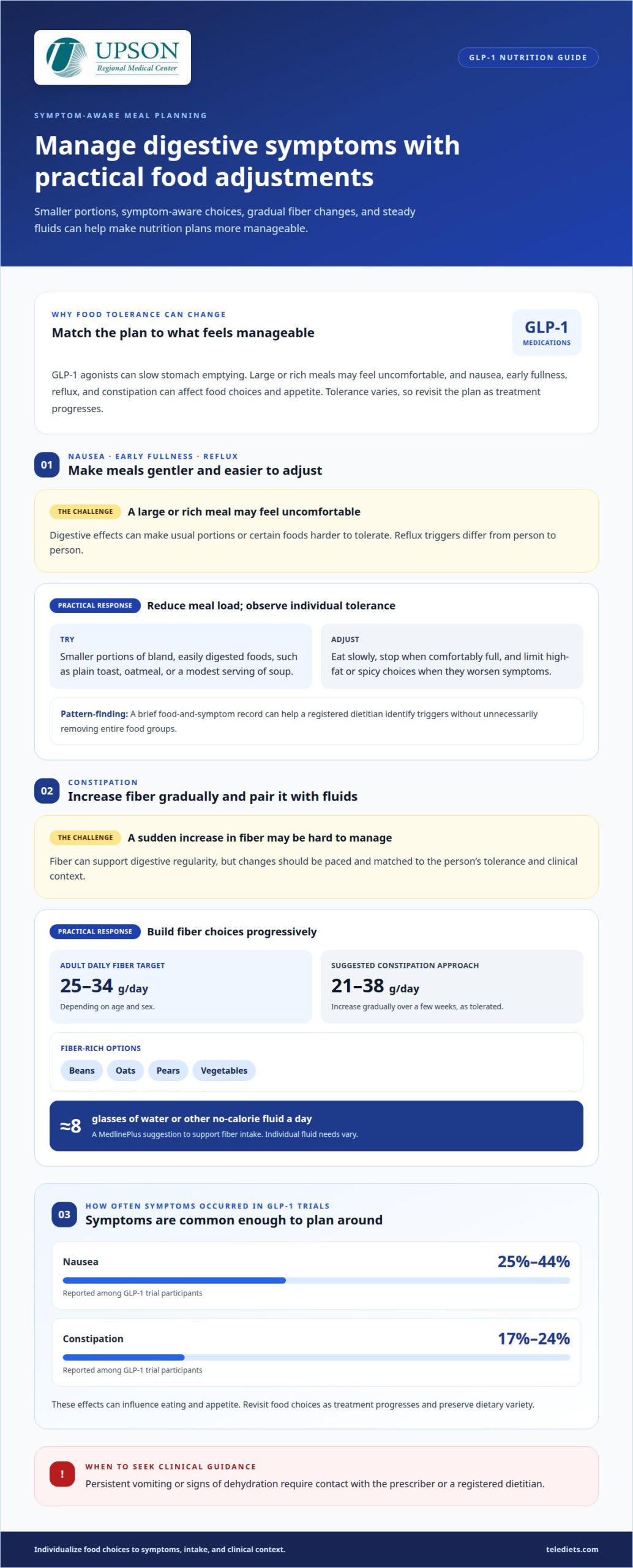
For nausea, early fullness, reflux, and other digestive effects, offer smaller portions of bland, easily digested foods, then adjust based on tolerance. Examples include plain toast, oatmeal, or a modest serving of soup. Limit high-fat and spicy choices when they worsen symptoms.
GLP-1 agonists can slow stomach emptying, so large or rich meals may feel uncomfortable. Encourage patients to eat slowly, stop when comfortably full, and note which foods affect symptoms. Reflux triggers vary, so a brief food-and-symptom record can help a registered dietitian identify patterns without removing entire food groups unnecessarily.
For constipation, increase fiber gradually rather than making a sudden change. The Dietary Guidelines for Americans recommend adults aim for about 25 to 34 grams daily, depending on age and sex. A gradual increase toward 21 to 38 grams per day over a few weeks is another suggested approach for constipation management. Beans, oats, pears, and vegetables add variety; increase portions progressively as tolerated.
Pair fiber changes with steady fluids. MedlinePlus suggests about 8 glasses of water or other no-calorie fluid a day to support fiber intake. Individual fluid needs vary, and the meal plan should account for a patient’s symptoms and clinical context.
Nausea occurred in 25% to 44% of GLP-1 trial participants, while constipation occurred in 17% to 24%. These effects can influence eating and appetite, so revisit food choices as treatment progresses. A personalized weight-management plan should preserve dietary variety and support blood sugar needs, not rely on a rigid menu. The same symptom-focused principles apply across GLP-1 medications, including medicines sometimes recognized by brand names such as Wegovy. Persistent vomiting or signs of dehydration require contact with the prescriber or a registered dietitian.
4. Calorie range for a sample GLP-1 meal plan
A sample menu should not assign one calorie range to every patient. For clinics, GLP-1 meal plan protocols for clinics should set an individualized range using body size, activity, health conditions, weight trajectory, and usual intake. The calorie target follows from that assessment, rather than from the medication name alone.
Consider a sample day with yogurt, oats, and fruit at breakfast, chicken and vegetables at lunch, and fish with whole grains at dinner. One example plan provides 127 grams of protein and 25 grams of fiber daily. These totals describe that sample’s nutrients; they don’t establish its calorie target or suit every patient.
To set a range, assess energy needs using clinical and dietary information. Then check whether proposed portions meet protein, fiber, and other nutrition needs. Calculate calories from the ingredients and serving sizes in the actual menu. Cooking fats, sauces, and substitutions can change the total, so document the foods included in the sample.
Reduced appetite may make larger meals difficult. Divide foods into manageable portions while retaining nutrient-dense choices. For example, a 4-ounce serving of grilled chicken can anchor lunch alongside vegetables and a whole-grain carbohydrate. If a patient can’t finish the planned serving, review intake across the day and adjust meal distribution.
At follow-up, consider weight trends, meal tolerance, and recorded intake together. Changes in appetite or symptoms can prompt a review of portions and the calorie range. A registered dietitian can refine the sample to support adequate nutrition and muscle maintenance. This is where GLP-1 meal plan protocols for clinics provide structure: they guide menu design while allowing the calorie range to reflect each patient’s needs. The central step is to calculate the range from individual factors, then check it against the complete menu.
TeleDIETS: Standard Series Meal Plans
TeleDIETS gives clinics a practical next step when they need structured nutrition plans for patient care. Its Standard Series Meal Plans support general nutrition workflows, while Advanced Medical Series Meal Plans address more specialized clinical needs. For patients using GLP-1 medications, GLP-1 Meal Plan Protocols provide a focused option within the platform’s evidence-based plan offering.
Clinicians can use the TeleDIETS platform to prescribe nutrition plans tailored to lab results and clinical diagnoses. This helps teams translate nutrition priorities into consistent plans while keeping individual clinical needs central. Insurance Billing & CPT Coding Tools are also available to support related administrative workflows.
Consider TeleDIETS when your clinic needs structured meal-plan resources to support medical nutrition therapy within its care processes. Contact TeleDIETS to discuss how its platform and protocols can fit your clinic’s workflow.
Turn nutrition planning into a consistent clinic workflow
Make nutrition planning part of the care process, not a document that sits apart from it. Define how your team will capture dietary needs, communicate plan adjustments, and revisit nutrition as patient circumstances change. Clear roles help align recommendations across clinical and nutrition staff.
Well-designed GLP-1 meal plan protocols for clinics can give your team a consistent framework while leaving room for individualized decisions. Use that framework to support informed conversations, document the plan, and identify when symptoms or changing intake call for a review with the care team.
TeleDIETS offers meal-plan tools for clinics building this workflow. Contact TeleDIETS to discuss clinic support and consider how structured nutrition planning can fit your team’s care processes.
Frequently Asked Questions
What nutrition guidelines and meal plans are recommended for patients taking GLP-1 medications?
Use an individualized, nutrient-dense plan that makes protein and fiber-rich foods practical to eat. For clinic implementation, translate nutrition goals into flexible meal components rather than a fixed menu: offer substitutions for dietary preferences, food access, and tolerance. For example, beans or tofu can replace poultry, while cooked vegetables may suit someone who finds raw vegetables difficult. Review the plan as intake and symptoms change.
How should clinics tailor GLP-1 meal plans to dose escalation and side effects?
Meal plans should respond to appetite and symptoms during medication changes, while dose decisions remain with the prescriber. Use a brief record of meal tolerance, nausea, bowel changes, and fluid intake to guide nutrition adjustments at follow-up. If symptoms limit eating, revise food texture and portion size. Persistent vomiting or signs of dehydration call for prompt contact with the prescriber or a registered dietitian.
What sample 7-day GLP-1 meal plan can clinics provide?
Offer a flexible seven-day rotation, not a universal prescription. For example, rotate yogurt, eggs, or oats at breakfast; chicken, lentils, or salmon at lunch; and turkey, tofu, or fish at dinner. Pair meals with tolerated vegetables, fruit, or whole grains. Include simple substitutions for each day so patients can maintain variety when appetite or food tolerance changes. Set portions and calories to individual needs.
What screening, contraindications, and nutrition risks should clinics assess before prescribing GLP-1 therapy?
Before prescribing, the prescriber assesses medication eligibility and contraindications using relevant medication information and the patient’s clinical history. A nutrition screen can document usual intake, recent changes in appetite or weight, hydration, gastrointestinal symptoms, diagnoses, and available laboratory results. Flag restricted intake or persistent symptoms for clinical review, then coordinate nutrition planning with the prescriber and registered dietitian. Keep medication decisions separate from meal-plan adjustments.
Leave a Reply