
Why does a life-saving prescription for a chronic condition often stop at the pharmacy counter, leaving the most critical element of recovery, the patient’s daily nutrition, to guesswork? Implementing a clinical-grade AI nutrition plan generator for physicians bridges this gap, transforming vague dietary advice into precise, lab-based medical nutrition therapy. You likely recognize that manual meal planning is an administrative burden your practice cannot sustain, yet your patients with chronic diseases or those on GLP-1 protocols require far more than a generic handout. Generic advice often leads to poor compliance and stalled progress.
This guide demonstrates how to integrate automated nutrition prescriptions into your existing workflow to improve patient outcomes and unlock new revenue streams through CPT codes. We’ll show you how to move beyond basic recipe apps toward a sophisticated system that supports insurance billing and specialized protocols. You’ll discover how to leverage the Advanced Medical Series and GLP-1 protocols to provide the high-level care your patients deserve while reducing your team’s overhead. We are going to examine the specific tools and coding strategies that turn nutrition into a core, reimbursable part of your clinical practice.
Key Takeaways
- Distinguish clinical-grade AI from consumer recipe apps to ensure evidence-based care for chronic disease management.
- Learn how an AI nutrition plan generator for physicians utilizes lab results and clinical diagnoses to create automated, patient-specific prescriptions.
- Identify the primary CPT codes, such as 97802 and 97803, and the documentation required to capture new revenue streams.
- Access specialized protocols like the Advanced Medical Series and GLP-1 support to handle complex patient populations with ease.
- Integrate these digital tools into your daily clinical workflow using a dedicated telemedicine plugin and efficient data-entry protocols.
Beyond Recipes: Why Physicians Need Clinical-Grade AI Generators
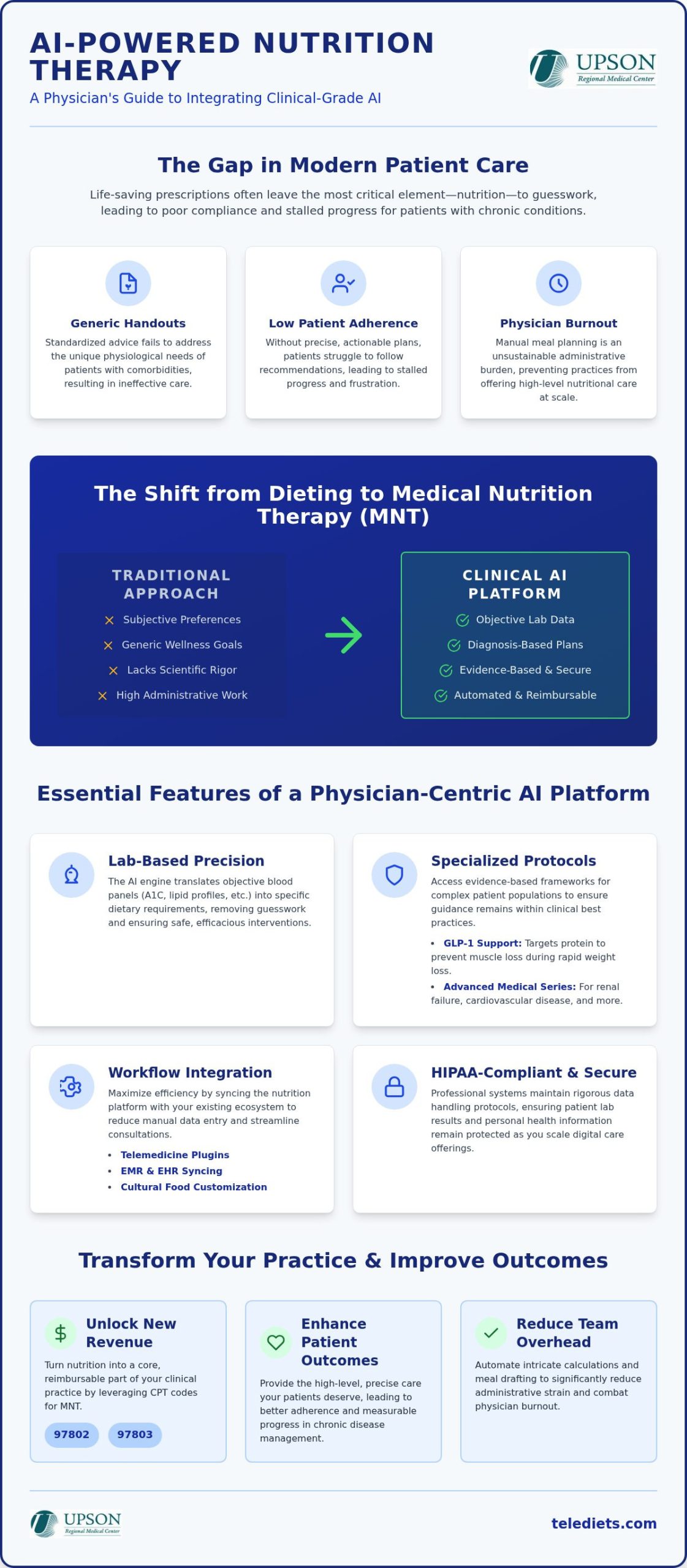
Consumer-facing meal planners are often designed for aesthetic goals or general wellness. While they may offer visually appealing interfaces, they lack the scientific rigor required for professional patient care. An AI nutrition plan generator for physicians serves a fundamentally different purpose; it’s a clinical tool built to translate complex medical data into actionable therapy. Medical Nutrition Therapy (MNT) is a clinical-grade intervention supported by objective lab data rather than subjective lifestyle preferences. By automating the intricate calculations required for macronutrient and micronutrient distribution, these engines significantly reduce physician burnout. You can finally provide high-level care without the administrative strain of manual meal drafting.
The Shift from Dieting to Medical Nutrition Therapy (MNT)
Relying on generic dieting advice is insufficient when managing metabolic syndrome, diabetes, or renal disease. Standardized recommendations often fail to account for the specific physiological needs of a patient with multiple comorbidities. Diagnosis-based meal planning software represents a paradigm shift in primary care, moving from “eat less” to “eat this specific nutrient profile based on your A1c.” This level of precision is only possible through an AI-driven engine that aligns daily meals with clinical goals. It empowers you to prescribe nutrition with the same accuracy as a pharmaceutical intervention.
Evidence-Based Standards in AI Generation
For a digital tool to be effective in a medical environment, it must parse vast amounts of clinical research into practical meal plans. Professional AI nutrition platforms ensure that every recommendation adheres to the latest evidence-based protocols, such as those found in the Advanced Medical Series. Beyond the science, security is paramount. Professional systems maintain rigorous HIPAA-compliant data handling, ensuring that patient lab results and personal health information remain protected while you scale your digital care offerings. This structure allows you to maintain professional standards while delivering modern, technology-forward solutions that your patients can trust.
Essential Features of a Physician-Centric AI Nutrition Platform
A truly professional AI nutrition plan generator for physicians must go beyond simple caloric targets. It needs to function as a clinical extension of your expertise, integrating seamlessly with your current practice management tools. This requires a platform that prioritizes medical validity over generic weight loss trends. By utilizing an engine that understands the nuances of metabolic health, you can deliver interventions that are as precise as they are practical. Your patients require more than “healthy eating” tips; they need a structured roadmap that aligns with their specific medical needs.
Specialized Protocols for GLP-1 and Chronic Care
Patients utilizing GLP-1 receptor agonists present unique nutritional challenges. Rapid weight loss often comes at the cost of lean muscle mass, making specific protein targets and macronutrient ratios non-negotiable. Specialized GLP-1 Meal Plan Protocols ensure patients receive adequate nutrition to support metabolic health while minimizing the risk of sarcopenia. For those managing complex comorbidities, the Advanced Medical Series provides evidence-based frameworks for conditions ranging from renal failure to cardiovascular disease, ensuring your guidance remains within the scope of clinical best practices.
Lab-Based Precision in Meal Planning
The most effective nutritional interventions are those driven by objective data. A sophisticated platform translates blood panels, including A1C levels and lipid profiles, into specific dietary restrictions and requirements. This clinical logic ensures that every meal plan is safe, efficacious, and tailored to the patient’s current physiological state. It removes the guesswork from dietary counseling, allowing you to focus on patient engagement rather than manual calculation.
To maximize efficiency, these features must work within your existing ecosystem. Key integration points include:
- Telemedicine Plugin: Conduct virtual consultations and deliver plans in real-time through a secure interface.
- EMR Syncing: Reduce data entry by aligning nutrition prescriptions with patient records.
- Cultural Customization: Adjust plans to respect patient food preferences and cultural needs without compromising clinical integrity.
Implementing these tools allows you to scale your practice’s digital care offerings while maintaining the highest standards of medical nutrition therapy.
Maximizing Practice Revenue with Integrated CPT Coding Tools
Integrating medical nutrition therapy (MNT) into your practice isn’t just a clinical improvement; it’s a strategic financial move. Many physicians provide dietary advice for free during routine visits, missing out on legitimate reimbursement opportunities. By using an AI nutrition plan generator for physicians, you can formalize these interventions into billable services. This software acts as a bridge between clinical guidance and financial sustainability, ensuring that your time is accurately valued. It transforms nutrition from a peripheral suggestion into a core, revenue-generating component of your practice.
Navigating CPT 97802 and 97803
Medical billing for nutrition services centers on specific time-based codes. CPT 97802 covers the initial assessment and intervention, while CPT 97803 is utilized for follow-up reassessments. To secure reimbursement, documentation must be meticulous. Automated software streamlines this process by tracking time and specific interventions, creating an audit-proof trail for insurance payers. This system removes the administrative guesswork, allowing your staff to focus on patient care rather than coding nuances. Precise documentation is the key to maintaining a high claim-acceptance rate.
Scaling Nutrition Services Without Adding Staff
The traditional hurdle to offering MNT was the need for extensive manual oversight or hiring additional specialized staff. AI changes this dynamic. It provides dietitian-level guidance under your supervision, allowing you to manage entire patient cohorts efficiently using SaaS tools that automate meal adjustments and progress tracking. This scalability is essential for high-volume practices looking to increase ROI without increasing overhead. You can now offer specialized protocols for chronic disease without the need for a full-time in-house specialist.
- Increased Efficiency: Reduce the time spent on manual documentation through automated reporting and tracking.
- Better Compliance: Patients who receive structured, reimbursable plans are more likely to adhere to long-term protocols.
- Revenue Growth: Capture revenue that is often lost to informal, non-billable conversations.
Ready to transform your clinical expertise into a sustainable revenue stream? You can get started with our professional billing and MNT tools here to begin scaling your practice today.
Implementing AI Nutrition Therapy into Your Clinical Workflow
Adopting new technology shouldn’t disrupt your existing operations. Successful implementation of an AI nutrition plan generator for physicians requires a methodical approach that prioritizes efficiency and clinical accuracy. By following a structured workflow, you can transition from traditional dietary advice to a comprehensive, lab-driven nutrition program. This transition empowers your team to deliver specialized care without increasing their administrative burden.
- Platform Selection: Choose a system with a dedicated telemedicine plugin. Unlike general wellness apps designed for coaches, a physician-centric tool must support secure, remote consultations and professional-grade data handling.
- Workflow Integration: Train your clinical staff on lab-data entry or EMR syncing. This ensures that patient blood panels and diagnoses flow directly into the AI engine, which eliminates manual errors and saves time.
- Prescription Phase: Determine whether the patient requires the Standard Series for general wellness or the Advanced Medical Series for chronic disease management. This decision is guided by the clinical logic built into the platform.
- Monitoring and Adjustment: Use automated follow-up tools to track patient compliance. These tools allow for real-time adjustments based on updated lab results, ensuring the nutrition therapy remains effective over time.
Telemedicine Integration and Remote Care
An integrated nutrition plugin allows you to provide high-level care regardless of the patient’s location. During a virtual consultation, you can generate and share personalized protocols instantly. This digital access empowers patients to follow their plans more accurately; they have their specific medical nutrition therapy available on their mobile devices or patient portals. It transforms the patient experience from a static handout to a dynamic, interactive health tool.
Next Steps for Your Practice
When evaluating an AI nutrition plan generator for physicians, consider whether a SaaS subscription model or an AI engine licensing agreement better suits your practice size. A subscription model offers immediate access to updates and support, while licensing may be preferable for larger organizations with custom integration needs. Both paths provide the necessary tools to scale your nutrition services while maintaining professional standards. You don’t need to reinvent your practice to include MNT; you simply need the right clinical partner.
Ready to enhance your patient care and capture new revenue? You can start your clinical nutrition journey with TeleDIETS today and begin transforming your practice workflow.
Advancing Your Practice with Digital Nutrition Therapy
The evolution of primary care demands tools that match your clinical expertise and respect your time. Adopting a professional AI nutrition plan generator for physicians allows you to bridge the gap between a medical diagnosis and a patient’s daily habits. You’ve seen how automated, lab-based protocols reduce administrative strain while ensuring every prescription is grounded in evidence. By utilizing Integrated CPT Coding Tools, you can finally capture the revenue your practice deserves for these essential services. This transition empowers you to provide the high-level guidance your patients need without increasing your staff’s workload.
Leveraging specialized GLP-1 Meal Plan Protocols and a clinical-grade AI engine ensures that even your most complex patients receive precise, metabolic support. This is not just an addition to your workflow; it is an investment in a modern, revenue-positive standard of care. You now have the framework to make Medical Nutrition Therapy a cornerstone of your practice’s success.
Upgrade your practice with the TeleDIETS clinical SaaS to begin delivering automated, science-backed nutrition therapy today. We look forward to partnering with you to improve patient outcomes and practice efficiency.
Frequently Asked Questions
Can physicians bill for nutrition therapy using AI-generated plans?
Yes, physicians can bill for nutrition therapy when using clinical-grade software to deliver structured Medical Nutrition Therapy. The key is ensuring the generated plans are part of a supervised treatment protocol and are supported by robust documentation. Our integrated billing tools help you track the specific time and interventions required to satisfy insurance requirements. This turns dietary advice from a casual suggestion into a formal, reimbursable clinical service.
Is the AI nutrition plan generator HIPAA compliant?
Professional platforms are designed with rigorous security standards to ensure full HIPAA compliance. Protecting patient health information and lab data is a core priority for any clinical-grade AI nutrition plan generator for physicians. Our system employs advanced encryption and secure data handling protocols to safeguard sensitive information. You can confidently integrate these digital tools into your practice without compromising patient privacy or regulatory standards.
What CPT codes are used for medical nutrition therapy?
The primary codes for billing these services are CPT 97802 and 97803. Code 97802 is typically used for the initial assessment and intervention, while 97803 covers subsequent follow-up reassessments. Using automated software helps you maintain the meticulous documentation needed for these time-based codes. This ensures your billing is audit-proof and that your practice is accurately compensated for the specialized care provided to your patients.
How does the software handle patients on GLP-1 medications?
The platform includes specialized GLP-1 Meal Plan Protocols specifically designed to support patients on receptor agonists. These protocols focus on high protein intake and specific macronutrient ratios to help patients maintain lean muscle mass during rapid weight loss. By using an AI nutrition plan generator for physicians, you can automate these complex dietary calculations. This ensures your patients receive the metabolic support they need to succeed while on these advanced medications.
Can I integrate this AI engine into my existing telemedicine platform?
Yes, you can integrate the AI engine into your current workflow through a dedicated Telemedicine Plugin. This allows you to generate and deliver clinical-grade meal plans during virtual consultations without switching between different applications. Whether you choose a SaaS subscription or a deeper engine licensing model, the goal is a seamless experience. This integration ensures that nutrition therapy becomes a natural, efficient part of your digital care delivery system.
Leave a Reply