
What if your practice could prescribe clinical nutrition with the same precision and speed as a pharmaceutical script? You likely recognize that manual meal planning is a significant bottleneck that drains staff hours, and finding the right medical weight loss software is now essential to maintaining clinical standards. Managing the intricacies of CPT codes for Medical Nutrition Therapy (MNT) reimbursement only adds further frustration to an already demanding clinical environment.
This guide demonstrates how clinical-grade software transforms these operational hurdles into a streamlined, high-revenue workflow. By integrating sophisticated tools, you can move beyond generic advice toward automated, lab-based nutrition prescriptions that enhance patient adherence to GLP-1 treatments. We’ll examine how to automate your clinical protocols and maximize practice reimbursement through specialized billing tools. This article provides a comprehensive look at delivering the evidence-based care your patients expect while utilizing Advanced Medical Series Meal Plans to support long-term practice growth.
Key Takeaways
- Understand the shift from generic dieting to billable Medical Nutrition Therapy (MNT) and how it elevates your clinical standards.
- Identify the core features of high-performance medical weight loss software, focusing on automated engines that translate lab data into precise nutrition prescriptions.
- Learn to maximize practice revenue by utilizing integrated tools for CPT coding and automated insurance documentation.
- Discover how specialized GLP-1 protocols and telemedicine plugins create a seamless, high-volume workflow for your staff.
- Establish clear criteria for selecting evidence-based platforms that prioritize clinical validity and seamless EMR integration.
The Role of Medical Weight Loss Software in Modern Clinical Practice
Medical weight loss software has evolved from a simple tracking tool into a sophisticated clinical engine. In a modern practice, it serves as the bridge between a patient’s metabolic diagnosis and their daily dietary habits. We’ve seen a decisive shift from generic dieting advice toward Medical Nutrition Therapy (MNT), which treats food as a precision intervention. As we look toward 2026, the demand for technology that supports chronic disease management and metabolic health has never been higher. Unlike consumer-facing apps that rely on user-reported data, professional-grade software utilizes objective clinical markers to drive outcomes.
Effective obesity management strategies require more than just “eating less.” They require a structured, evidence-based approach that integrates seamlessly into a provider’s workflow. This transition ensures that nutrition isn’t an afterthought but a central pillar of patient care. It’s about empowering clinicians with tools that translate complex lab work into actionable, therapeutic meal protocols.
Why General EHRs Fall Short for Nutrition Therapy
Standard Electronic Health Records (EHRs) are designed for documentation and billing, not for the complex nuances of nutrition science. Their templates are often static and fail to account for the dynamic changes in a patient’s lab results or medication side effects. When providers rely on non-standardized advice, it creates a risk of inconsistent outcomes and administrative bloat. Specialized medical weight loss software fills this gap by providing a dedicated environment for dietary intervention that actually communicates with your diagnostic data.
Meeting the 2026 Standard for Evidence-Based Care
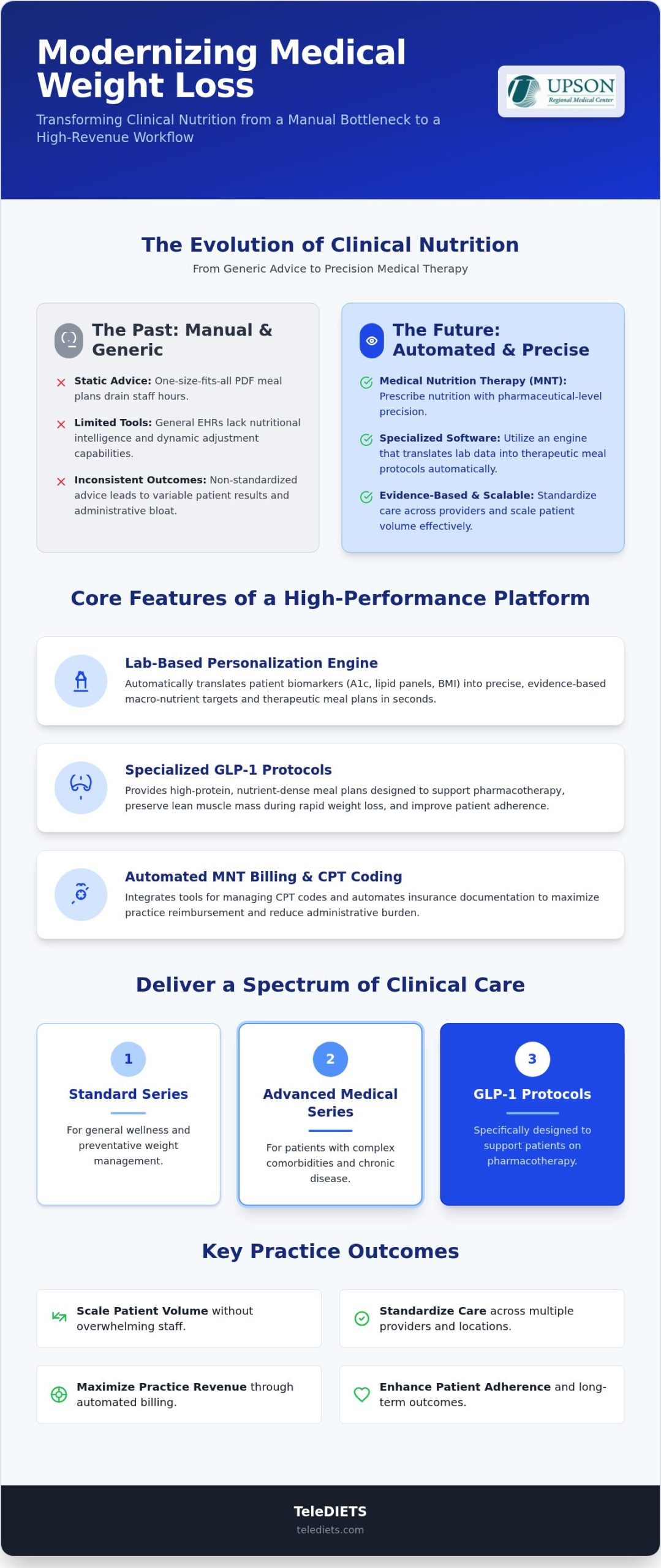
Today’s clinical standards require protocols that adapt in real-time. It’s no longer enough to provide a static PDF meal plan. You need an engine that adjusts based on the latest clinical data, ensuring every prescription is medically sound. This level of automation allows your practice to:
- Scale patient volume without overwhelming your dietitian staff.
- Standardize care across multiple providers and locations.
- Ensure protocols reflect the latest metabolic research and lab findings.
By moving to a system that prioritizes scientific validity, you ensure your practice remains a leader in metabolic health. This approach builds trust with patients who are looking for more than a generic diet; they’re looking for a medically supervised path to wellness.
Core Features of High-Performance Clinical Nutrition Platforms
Modern clinical tools must do more than store data. They must actively assist the provider in delivering high-quality, evidence-based care. High-performance medical weight loss software serves as a decision-support system that automates the translation of patient data into therapeutic action. By integrating directly with telemedicine plugins, these platforms ensure that clinical nutrition is accessible regardless of the patient’s physical location. This approach allows a practice to offer several levels of care:
- Standard Series Meal Plans: For general wellness and weight management.
- Advanced Medical Series Meal Plans: For patients with complex comorbidities.
- GLP-1 Meal Plan Protocols: Specifically designed to support pharmacotherapy.
Lab-Based Personalization: The New Clinical Standard
Effective treatment starts with objective data. Software should automatically translate biomarkers like A1c, lipid panels, and BMI into precise macro-nutrient targets that align with the patient’s metabolic profile. Modern AI engines generate comprehensive, lab-validated meal protocols in seconds by cross-referencing clinical diagnoses with evidence-based nutritional guidelines. Research on the Role of Technology in Obesity Management confirms that these digital interventions significantly enhance the precision of lifestyle modifications. This level of personalization is critical for managing metabolic syndrome and diabetes where nutritional margins are slim.
Specialized Protocols for GLP-1 Receptor Agonists
The rise of GLP-1 medications has introduced new nutritional requirements for clinical practices. Rapid weight loss often risks significant lean mass depletion if not managed with high-protein, nutrient-dense protocols. High-performance software automates these specialized plans, ensuring patients receive the necessary support to preserve muscle while losing fat. These systems also automate follow-up cadences, which improves long-term patient adherence to the treatment plan.
Beyond the clinical protocols, security and workflow remains paramount. HIPAA-compliant data handling ensures that sensitive patient metrics are protected throughout the care journey. When selecting medical weight loss software, prioritize systems that offer a seamless telemedicine interface to keep your practice efficient. If you are ready to scale your nutrition services, you can access professional clinical tools that bridge the gap between diagnosis and dietary intervention.
Maximizing Revenue with Automated MNT Billing and CPT Coding
Integrating billable nutrition services into your clinic isn’t just a clinical upgrade; it’s a strategic financial decision. Many practices overlook the revenue potential of Medical Nutrition Therapy (MNT) because they lack the tools to bill it efficiently. By utilizing high-quality medical weight loss software, you can transition these services from cost centers to profit drivers. The platform automates the heavy lifting of documentation, allowing your team to focus on patient care while the system handles the complexities of reimbursement.
Clinical evidence supports this tech-forward approach. A study on the Efficacy of Tech-Enhanced Weight Loss shows that integrating technology into standard care doesn’t just improve patient results; it creates a structured environment where intervention is measurable and billable. This structure is the foundation of a sustainable revenue stream that doesn’t rely solely on out-of-pocket payments.
Navigating CPT Codes: 97802, 97803, and Beyond
Understanding the distinction between CPT codes is vital for accurate billing. Code 97802 covers the initial medical nutrition assessment and intervention, while 97803 is designated for follow-up reassessments. Specialized software ensures audit-proof documentation for these codes by automatically capturing the required session duration, clinical necessity markers, and diagnosis-specific goals. Beyond these core codes, you can identify opportunities for G-codes related to preventive services, further diversifying your practice’s income without increasing administrative overhead.
Streamlining the Insurance Reimbursement Workflow
The administrative burden of manual billing often leads to missed revenue or frequent claim denials. Professional medical weight loss software streamlines this process by automating the generation of superbills that include all necessary clinical-grade protocol documentation. This precision reduces the likelihood of insurance pushback and ensures your staff spends less time on paperwork. When your system automatically aligns your clinical protocols with billing requirements, you create a seamless path from patient consultation to payment.
- Automate superbill generation for every nutrition encounter.
- Reduce claim denials with standardized, evidence-based documentation.
- Identify high-reimbursement opportunities for chronic disease management.
To see how these tools integrate into your specific workflow, you should Explore professional MNT software subscription levels. By automating these financial processes, you ensure that your practice remains both clinically effective and economically resilient. You can maximize your practice reimbursement today by implementing a system designed for high-volume clinical nutrition.
Selecting the Right Software for Your Medical Weight Loss Program
Choosing the right medical weight loss software is a pivotal decision that dictates your practice’s clinical integrity and operational efficiency. You need a platform that offers more than a user-friendly interface; it must provide a framework rooted in scientific validity. When evaluating options, prioritize those that offer evidence-based protocols and seamless integration with your existing telemedicine and EMR workflows. This ensures that your nutrition services aren’t a siloed add-on but a core component of your patient care model.
Scalability is equally vital. As your GLP-1 programs grow, your software must handle increasing patient volumes without compromising the quality of care or increasing dietitian overhead. It’s essential to ensure the provider offers robust support and training. This empowers your staff to utilize the AI engine effectively, ensuring that every patient receives a high-standard, personalized experience.
Implementation Strategies for High-Volume Clinics
A successful transition to a nutrition SaaS platform requires a strategic approach. You might consider a phased rollout, starting with a specific patient cohort before a full-scale launch. Training is the cornerstone of this process. By educating medical assistants on how to utilize automated prescription tools, you free up high-level providers for complex consultations. This delegation ensures your practice remains efficient while maintaining high clinical standards.
The Future of MNT: AI-Driven Nutrition Engines
Metabolic health is rapidly evolving, and your tools must keep pace. TeleDIETS empowers providers to lead this shift by offering a sophisticated AI engine that prioritizes clinical outcomes. Choosing a partner that values practice efficiency as much as patient success is the final step in future-proofing your program. If you’re ready to elevate your practice, you can get started with a clinical-grade medical nutrition therapy platform today. This investment ensures you remain at the forefront of modern obesity management while delivering the precision care your patients deserve.
Leading the Next Era of Metabolic Health
The transition toward evidence-based, automated nutrition is no longer a luxury for modern providers; it’s a clinical necessity. By integrating professional medical weight loss software, you move beyond manual planning and toward a model that prioritizes both metabolic precision and practice efficiency. You’ve seen how specialized tools can transform patient adherence during GLP-1 treatments while simultaneously securing the reimbursement your expertise deserves.
Adopting a system that offers AI-driven plans based on clinical lab results allows you to scale without increasing administrative strain. With specialized GLP-1 and Advanced Medical Series protocols at your fingertips, you can provide the high-standard care that today’s patients expect. It’s time to empower your staff with automated insurance billing for CPT 97802 and 97803, ensuring your clinic remains financially resilient as it grows.
You don’t have to navigate these complexities alone. Scale your clinic with TeleDIETS medical nutrition therapy software and take the first step toward a more efficient, outcome-focused practice. We’re here to support your journey toward clinical excellence and long-term success.
Frequently Asked Questions
Is medical weight loss software HIPAA compliant?
Professional medical weight loss software is built with HIPAA compliance as a foundational requirement to protect sensitive patient health information. These platforms utilize advanced encryption, secure user authentication, and detailed audit logs to ensure data integrity. By choosing a clinical-grade solution, you can maintain the highest standards of privacy while managing patient records and metabolic data within a secure digital environment.
Can I bill insurance for medical nutrition therapy using this software?
Yes, you can bill for these services by utilizing integrated insurance billing and CPT coding tools. The software automates the generation of superbills and clinical documentation required for successful reimbursement. This feature allows your practice to capture revenue for Medical Nutrition Therapy (MNT) sessions that might otherwise go unbilled due to administrative complexity or lack of proper documentation.
How does the software handle patients on GLP-1 medications?
The platform includes specialized GLP-1 Meal Plan Protocols that address the unique nutritional challenges of patients on receptor agonists. These protocols focus on lean mass preservation and nutrient density to support patients during rapid weight loss phases. By automating these evidence-based plans, the software ensures that your patients receive the specific metabolic support they need to improve long-term adherence and clinical outcomes.
Does the platform integrate with my existing EMR or telemedicine tool?
High-performance clinical nutrition platforms are designed to integrate with your current workflow through a dedicated telemedicine plugin or API connections. This connectivity ensures that you don’t have to manage multiple siloed systems or engage in repetitive data entry. You can launch nutrition consultations and review patient progress directly within your established digital environment, maintaining a seamless experience for both staff and patients.
What CPT codes are most commonly used for medical weight loss nutrition?
The primary codes used for nutrition services are 97802 for the initial medical nutrition assessment and 97803 for follow-up reassessment and intervention. Utilizing medical weight loss software ensures your documentation is audit-proof and specifically aligned with these codes. This precision reduces the risk of claim denials and helps you establish a consistent, billable revenue stream for your weight management program.
Do I need a registered dietitian to use clinical nutrition software?
While registered dietitians often lead nutrition therapy, the software is designed to empower your entire clinical team. Medical assistants and other staff can utilize the AI-driven engine to implement standardized, evidence-based protocols under a provider’s supervision. This scalability allows you to deliver high-quality nutrition prescriptions to a larger patient volume without significantly increasing your practice’s specialist overhead or training requirements.
Leave a Reply