
Your clinical expertise shouldn’t be held hostage by manual data entry or fragmented lab reports that fail to influence your patient’s daily habits. You’ve likely felt the frustration of identifying a clear nutritional need only to realize that manual prescription is simply too time-consuming for a high-volume clinic. It’s a common struggle; the data exists in the labs, but it rarely flows into a dietary plan. Selecting the right MNT software with EHR integration is the only way to turn these disconnected data points into actionable, therapeutic care without adding hours to your workday.
We understand that your priority is patient outcomes, not wrestling with software. This guide provides a clear roadmap to bridging the gap between clinical diagnosis and nutritional intervention through a seamless, automated workflow. You’ll discover how to implement a lab-to-prescription model that handles the heavy lifting for you. We will cover the essentials of automated CPT coding for insurance reimbursement and the deployment of clinical-grade meal plans that adapt as your patient’s data changes. By the end of this guide, you’ll have the framework to scale your nutrition services efficiently and confidently.
Key Takeaways
- Learn why bi-directional data flow using FHIR standards is essential for synchronizing real-time lab results with nutritional prescriptions.
- Understand how to deploy specialized GLP-1 and chronic disease protocols that adapt automatically based on your patient’s clinical data.
- Discover the benefits of using MNT software with EHR integration to eliminate manual planning and bridge the gap between diagnosis and dietary intervention.
- Identify strategies to maximize practice ROI by automating CPT coding and reducing insurance claim denials for medical nutrition services.
- Transition from generic meal planning to a clinical decision-support model that transforms objective lab findings into therapeutic patient outcomes.
The Evolution of MNT Software: Why EHR Integration is Non-Negotiable
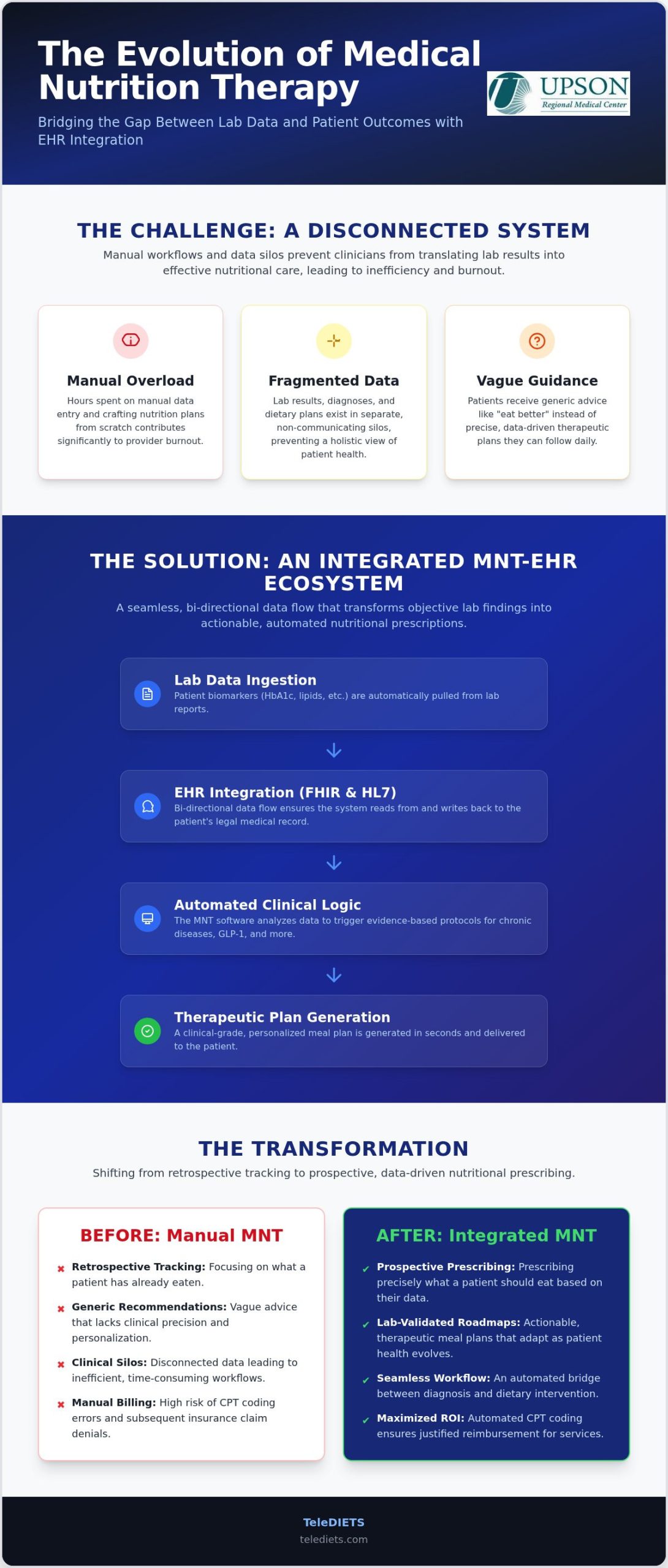
Modern medicine is data-rich but often insight-poor. You see the lab results, but translating those into a daily routine for the patient remains a significant hurdle. MNT software with EHR integration acts as a specialized clinical bridge. It connects objective data points, like blood glucose levels or lipid panels, directly to therapeutic dietary interventions. In 2026, manual nutrition planning is no longer sustainable. Clinical silos prevent the flow of information, forcing providers to spend hours on manual data entry. This fragmentation contributes significantly to physician burnout. By automating the data exchange, you reclaim time and ensure that Clinical Nutrition Principles are applied consistently across your patient panel.
Bridging the Nutritional Care Gap
There’s a persistent disconnect in many high-volume clinics. A patient might receive a diagnosis of Type 2 Diabetes, but the specific, day-to-day meal plan often remains a vague recommendation. Integrated software closes this loop at the point of care. When a diagnosis is entered into the EHR, the system immediately suggests evidence-based protocols. It’s the difference between telling a patient to “eat better” and providing a precise, lab-validated roadmap. This seamless transition ensures that nutritional therapy is treated with the same clinical rigor as pharmaceutical interventions.
The Shift Toward Automated Clinical Prescriptions
We’ve moved beyond simple calorie counters. Traditional diet software focused on tracking what a patient already ate; modern MNT software with EHR integration focuses on prescribing what they should eat. These AI-powered clinical engines analyze real-time patient data to generate prescriptions in seconds. This shift from retrospective tracking to prospective prescribing is vital for managing complex conditions. It empowers you to provide clinical-grade meal plans that update based on the latest patient data, ensuring your recommendations remain relevant as the patient’s health evolves.
Key Technical Requirements for Seamless MNT-EHR Interoperability
Technical excellence in 2026 is defined by how effectively systems communicate without manual intervention. To be truly effective, your MNT software with EHR integration must support bi-directional data flow. This ensures the system does not just read your patient’s chart; it writes back to it. This loop ensures that nutritional prescriptions are documented as part of the legal medical record, providing a clear audit trail for care. Adherence to EHR Interoperability Standards, specifically FHIR R4 and HL7, is mandatory for secure and universal connectivity. Without these standards, your data remains trapped in a silo, defeating the core purpose of integration.
Beyond connectivity, the software must handle data normalization. Lab values often arrive in disparate formats depending on the originating facility. A sophisticated system interprets these variables and translates them into specific dietary constraints or allowances. Single Sign-On (SSO) is equally vital for maintaining a unified provider experience. It allows you to move between clinical notes and nutrition planning without the friction of multiple logins, preserving your focus on the patient rather than the interface.
Lab Data Ingestion and Interpretation
Effective nutrition therapy relies on the precise reading of biomarkers like HbA1c, fasting glucose, and lipid profiles. The software should ingest these values directly to trigger specific clinical logic. For instance, TeleDIETS utilizes this real-time data to activate its Advanced Medical Series Meal Plans. This automation ensures that the nutritional intervention is always aligned with the patient’s current metabolic state, removing the guesswork from the prescription process.
Telemedicine Plugin vs. Standalone SaaS
High-volume clinics often prefer a dedicated Telemedicine Plugin. This model embeds the nutrition consultation directly into the virtual visit workflow, which is ideal for remote patient monitoring and consistent follow-up. Conversely, boutique settings might opt for a standalone SaaS model if their workflow is less centralized. Choosing the right fit depends on your practice’s volume and how you intend to deliver care. If you are looking to scale, you might consider how a seamless telemedicine integration can expand your reach and improve patient adherence.
Evaluating Clinical Protocols: GLP-1 and Chronic Disease Management
Generic recipe generators and consumer weight-loss apps lack the clinical rigor required for complex patient populations. In a medical setting, you need specialized logic that accounts for metabolic shifts and pharmacological interactions. High-quality MNT software with EHR integration ensures that your nutritional recommendations aren’t just suggestions; they’re evidence-based extensions of your clinical treatment plan. This level of integrated logic allows a single physician to manage hundreds of nutrition prescriptions simultaneously, ensuring scalability without sacrificing the precision of individualized care.
Customization remains a pillar of patient adherence. While “Standard Series” plans provide a solid foundation for general wellness, the ability to tailor these plans to specific patient preferences within the EHR is vital. By adjusting for food allergies, cultural preferences, or specific caloric needs directly from the patient’s chart, you increase the likelihood of long-term success. This automated customization saves your staff from the labor-intensive task of manual plan modification.
GLP-1 Nutrition Support in Clinical Workflows
The rapid adoption of GLP-1 receptor agonists has created a specific demand for specialized nutrition protocols. Effective management during titration is essential to prevent muscle mass loss and mitigate gastrointestinal side effects. By following established GLP-1 Clinical Guidelines, integrated software can automatically deploy high-protein, nutrient-dense protocols that support the medication’s efficacy. Our GLP-1 Meal Plan Protocols are designed to bridge this gap, providing patients with the structural support they need while they navigate the physiological changes of weight-loss therapy.
Advanced Medical Series for Complex Diagnoses
Managing renal, cardiovascular, or diabetic patients requires a high degree of specificity. Our Advanced Medical Series Meal Plans utilize the data within your EHR to ensure every prescription complies with the latest clinical guidelines. Whether it’s managing potassium levels for a renal patient or monitoring sodium intake for hypertension, the automation handles the complex calculations for you. This ensures your practice delivers gold-standard care while maintaining an efficient workflow. To see how these protocols can transform your practice, you can get started with our clinical nutrition engine today.
Maximizing Practice ROI with Integrated Billing and Coding
Clinical excellence and financial sustainability aren’t mutually exclusive. While medical nutrition therapy is a clinical necessity for chronic disease management, it’s also a significant revenue driver when managed correctly. High-performing practices use MNT software with EHR integration to transform what was once a time-intensive cost center into a streamlined profit center. By syncing insurance billing tools directly with your EHR’s financial module, you ensure that every nutritional intervention is captured, documented, and billed accurately without manual intervention.
The financial case for MNT relies on capturing every billable minute. When your clinical tools and financial systems operate in silos, revenue often slips through the cracks. Professional-grade integration ensures that the time spent on nutritional counseling is automatically logged and ready for processing, allowing you to focus on care rather than paperwork.
Mastering CPT Codes for MNT
Revenue leakage often occurs because of improper documentation or missed coding opportunities. Automated CPT coding specifically targets codes 97802, used for the initial assessment and intervention, and 97803, used for re-assessment and subsequent interventions. Integrated software justifies medical necessity by automatically pulling lab-backed data and diagnosis codes into the billing record. This level of precision reduces claim denials and ensures your practice is reimbursed for the full scope of care provided. It’s a professional safeguard that protects your revenue cycle while maintaining compliance with the latest payer requirements.
Reducing Administrative Friction
Manual data entry is the enemy of efficiency. Automated billing tools free your administrative staff from the burden of cross-referencing charts and dietary logs. This reduces human error and accelerates the time-to-reimbursement. When your coding logic is embedded within the clinical workflow, the financial documentation happens in the background. This allows your team to focus on patient engagement rather than administrative troubleshooting.
Ready to scale? Learn more about TeleDIETS integration options to see how we can help you streamline your clinical nutrition workflow. To simplify the process for your entire organization, you can use our member-checkout to gain immediate access to these professional billing and coding tools.
Scaling Nutritional Care with Confidence
The transition toward a fully automated clinical environment is no longer a luxury; it’s a necessity for practices aiming to thrive in 2026. By implementing MNT software with EHR integration, you bridge the gap between complex lab results and daily patient adherence. This integration ensures that bi-directional syncing handles the administrative burden, allowing you to focus on high-level clinical decision-making. Whether you’re managing titration side effects through specialized GLP-1 protocols or deploying Advanced Medical Series plans for chronic disease, the right platform provides the stability your practice requires.
Lifestyles Technologies has been a nutrition software leader since 1995, offering the established expertise needed to navigate these technical complexities. Our platform empowers you with automated CPT coding and evidence-based protocols that are ready to scale with your patient panel. You have the tools to transform nutritional therapy from a manual task into a seamless, revenue-generating clinical service.
Access the TeleDIETS MNT Platform and EHR Integration Tools today to begin your journey toward a more efficient, data-driven practice. We’re here to support your commitment to superior patient outcomes and sustainable practice growth.
Frequently Asked Questions
What is the difference between EMR and EHR integration for MNT software?
While EMR integration focuses on a single practice’s internal records, EHR integration provides broader interoperability across various healthcare environments. This allows your nutritional prescriptions to remain accessible as patients transition between different providers or facilities. By utilizing MNT software with EHR integration, you ensure that dietary interventions are a permanent part of the patient’s longitudinal record rather than being confined to a local data silo.
Does MNT software with EHR integration support CPT codes 97802 and 97803?
Yes, the platform is specifically engineered to support CPT codes 97802 and 97803. It automates the documentation required for initial assessments and subsequent follow-up sessions, significantly reducing the likelihood of claim denials. By linking these codes directly to objective lab data within the EHR, the software provides the clinical evidence necessary to justify medical necessity for insurance reimbursement and practice revenue growth.
How long does it take to implement a telemedicine nutrition plugin?
Most practices can implement a telemedicine nutrition plugin within several business days. The exact timeline depends on your current EHR vendor and the specific level of customization required for your workflow. Because these plugins are built on standardized API frameworks, they integrate quickly. This allows you to offer remote medical nutrition therapy without a prolonged technical setup or extensive staff retraining.
Can I prescribe GLP-1 meal plan protocols directly through my EHR?
You can deploy these specialized protocols directly within your existing EHR workflow. Once integrated, the system recognizes relevant diagnoses and medication triggers to suggest the appropriate GLP-1 Meal Plan Protocols. This allows you to provide targeted nutritional support that manages side effects and preserves muscle mass. You can issue these prescriptions as easily as a pharmaceutical order without leaving the patient’s digital chart.
Is MNT software compliant with HIPAA and data security standards for 2026?
Compliance with HIPAA and the latest 2026 security standards is a foundational feature of our platform. The software adheres to current ONC certification requirements, utilizing FHIR R4 standards for secure data exchange. This ensures that all bi-directional syncing between your EHR and the nutrition engine remains encrypted and protected. It meets the rigorous privacy demands of a modern, technology-forward medical practice while maintaining clinical efficiency.
Leave a Reply