
Is the clinical success of GLP-1 therapy being undermined by the very “eat less” mentality it encourages? While these medications offer transformative weight loss, the accompanying gastrointestinal distress and risk of sarcopenic obesity often lead to high patient dropout rates. You likely understand the frustration of seeing a patient’s progress stalled by nausea or the silent loss of lean muscle mass. This article provides evidence-based GLP-1 nutrition protocols for managing patient side effects in clinical practice, ensuring that your patients don’t just lose weight, but improve their metabolic health.
You’ll discover how to standardize your approach to common GI symptoms, preserve vital muscle tissue, and integrate Medical Nutrition Therapy into your workflow with greater efficiency. We’ll explore specific dietary strategies that move beyond generic advice, offering a structured path toward better drug tolerability and long-term adherence. By shifting to a prescriptive nutrition model, you can transform these clinical challenges into opportunities for superior patient outcomes.
Key Takeaways
- Understand how to mitigate common gastrointestinal distress through structured meal frequency and strategic fiber titration protocols.
- Implement evidence-based GLP-1 nutrition protocols for managing patient side effects in clinical practice to enhance drug tolerability and reduce dropout rates.
- Protect patient metabolic health by prioritizing high-protein mandates and addressing specific micronutrient deficiencies like B12 and Vitamin D.
- Discover how AI-driven SaaS platforms and telemedicine plugins can standardize your nutritional workflow while reducing administrative burnout.
The Clinical Challenge: Why Standard Nutrition Advice Fails GLP-1 Patients
Standard weight loss counseling usually focuses on caloric deficits and general portion control. However, GLP-1 receptor agonists create a physiological environment that makes traditional “eat less” advice not only ineffective but potentially harmful. These medications induce delayed gastric emptying and significantly altered satiety signals. When a patient’s digestion slows down, the window for nutrient absorption changes, and the risk of gastrointestinal distress increases.
If patients simply reduce their intake without a structured plan, they often fall into a nutritional deficit. This leads to sarcopenia, or the loss of lean muscle mass, which can compromise long-term metabolic health. Relying on generic advice often results in high discontinuation rates because patients cannot manage the nausea or constipation on their own. Utilizing GLP-1 nutrition protocols for managing patient side effects in clinical practice is no longer optional; it’s a clinical necessity to ensure drug tolerability and patient safety. Without these protocols, you risk seeing patients abandon therapy before reaching their therapeutic goals.
Understanding the ‘GLP-1 Gap’ in Patient Education
There’s a significant mismatch between a patient’s excitement for weight loss and their readiness for the side effects. Many feel overwhelmed when the “miracle drug” causes fatigue or GI upset. Clinical-grade protocols bridge this education gap by providing a roadmap for the physiological shift. You can empower patients by offering clear expectations regarding how their body will process food differently. Effective GLP-1 nutrition protocols for managing patient side effects in clinical practice include:
- Proactive strategies for maintaining high nutrient density in smaller volumes.
- Structured meal timing to accommodate slower gastric emptying.
- Specific hydration and fiber titration to prevent common GI complications.
Moving from lifestyle adjuncts to prescriptive nutrition ensures that patients remain adherent while protecting their lean body mass. This shift in practice allows you to provide the specialized care this patient population requires. By professionalizing the nutritional component of the treatment, you create a more stable and successful path for every patient in your care.
Protocol 1: Nutritional Mitigation of GI Side Effects
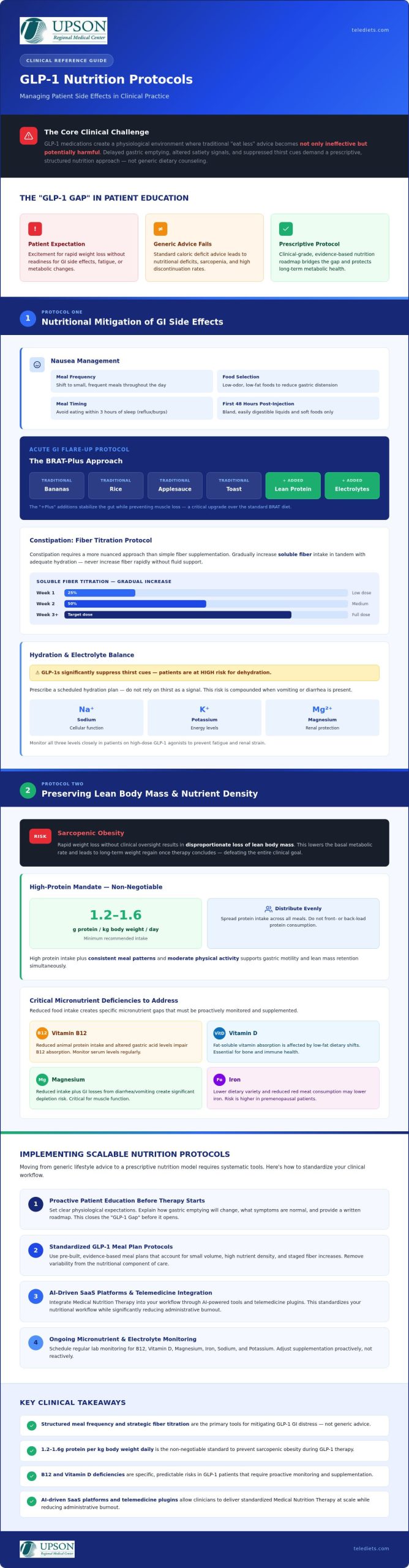
Gastrointestinal distress is the primary reason patients discontinue therapy. Effective GLP-1 nutrition protocols for managing patient side effects in clinical practice prioritize digestive comfort without sacrificing nutrient density. To manage nausea, patients should shift to small, frequent meals consisting of low-odor, low-fat foods. This prevents the stomach from becoming overly distended or completely empty, both of which exacerbate symptoms.
Constipation requires a more nuanced approach than simple fiber supplementation. You should implement a fiber titration protocol, slowly increasing soluble fiber intake while ensuring adequate hydration. For patients experiencing “sulfur burps” or acid reflux, adjusting meal timing to avoid eating within three hours of sleep and reducing high-fat intake can significantly improve comfort. The ‘BRAT-plus’ approach for acute GI flare-ups involves adding lean protein and electrolytes to the traditional Bananas, Rice, Applesauce, and Toast diet to stabilize the gut while preventing muscle loss.
Step-by-Step GI Symptom Management
The first 48 hours post-injection are often the most difficult for patients. During this window, focus on bland, easily digestible liquids and soft foods. Long-term maintenance requires protocols that support gastric motility, such as incorporating moderate physical activity and consistent meal patterns. Utilizing standardized GLP-1 Meal Plan Protocols can help you provide these specific instructions instantly.
Hydration and Electrolyte Balance
GLP-1s can significantly suppress thirst cues, placing patients at high risk for dehydration. This is especially dangerous when paired with vomiting or diarrhea. You should prescribe a scheduled hydration plan that includes balanced electrolytes, specifically targeting a steady intake of sodium, potassium, and magnesium to maintain cellular function and energy levels. Monitoring these levels is vital for patients on high-dose agonists to prevent fatigue and renal strain.
Protocol 2: Preserving Lean Body Mass and Nutrient Density
Rapid weight loss without clinical oversight often results in a disproportionate loss of lean body mass. This phenomenon, sometimes called sarcopenic obesity, can lower the basal metabolic rate and lead to long-term weight regain once therapy concludes. Implementing GLP-1 nutrition protocols for managing patient side effects in clinical practice requires a strict “Protein-First” mandate. Patients should aim for high-quality protein at every meal to signal muscle protein synthesis and maintain metabolic health. Additionally, consistent resistance training is essential to provide the mechanical stimulus needed to preserve muscle tissue while the body is in a significant caloric deficit.
Designing the High-Protein Clinical Protocol
In a volume-restricted state, every bite must be intentional. The Advanced Medical Series Meal Plans utilize specific macronutrient distributions that prioritize protein density over empty calories. For example, focusing on whey isolate, lean poultry, or Greek yogurt allows patients to hit their targets without feeling uncomfortably full. These plans provide a structured framework that moves beyond vague advice, giving patients exact portions that fit their reduced appetite. This prevents the malnutrition often seen when patients simply “eat less” without a professional guide.
Preventing Micronutrient Deficiencies
Long-term use of GLP-1 agonists can lead to deficiencies in B12, Vitamin D, and Iron due to reduced overall intake and changes in gastric acidity. Carbohydrate selection should favor low-glycemic, high-fiber options like quinoa or berries to stabilize blood glucose and provide essential micronutrients. Using AI-driven software helps you identify these nutrient gaps based on patient lab data in seconds. You can prescribe precise GLP-1 Meal Plan Protocols that ensure clinical-grade nutrition is maintained throughout the treatment journey. This level of precision is vital for sustaining metabolic health and improving long-term adherence.
Implementing Scalable Nutrition Protocols in Your Workflow
Clinicians often face a significant time barrier when trying to provide specialized nutritional support. Manual meal planning is simply unsustainable in a high-volume clinical setting. Leveraging AI-driven SaaS allows you to generate customized GLP-1 nutrition protocols for managing patient side effects in clinical practice from lab results in seconds. This level of automation ensures that every patient receives clinical-grade guidance without increasing your administrative burden. It transforms a complex task into a streamlined, repeatable process that fits into your existing schedule.
Automating the Prescription Process
Moving from lab data to a finalized meal plan should be a seamless transition. By using standardized protocols, you eliminate the guesswork and ensure consistency across large provider groups. TeleDIETS’ GLP-1 Meal Plan Protocols provide this structure, ensuring HIPAA-compliant delivery of nutritional guidance directly to the patient’s device. For remote care, integrating these tools into your existing telemedicine platform via dedicated plugins allows for continuous support between visits. This connectivity keeps patients engaged and reduces the likelihood of dropout due to unmanaged symptoms.
Revenue Generation through Nutrition Therapy
Specialized nutrition isn’t just a clinical necessity; it’s a sustainable business model. You can scale your practice by utilizing CPT codes like 97802 for initial assessments and 97803 for follow-up Medical Nutrition Therapy. Offering these services as part of a specialized GLP-1 support series creates a recurring revenue stream while significantly improving patient outcomes. To get started, you can explore our clinical billing and protocol tools designed to streamline this integration. By professionalizing the MNT component of your workflow, you ensure your practice remains at the forefront of modern obesity medicine while maximizing clinical efficiency.
Modernizing Your GLP-1 Treatment Model
Effective obesity management now requires a shift from simple medication titration to comprehensive, prescriptive nutrition. By addressing gastrointestinal distress through strategic meal patterns and prioritizing protein to prevent muscle wasting, you ensure that weight loss is both sustainable and healthy. Implementing GLP-1 nutrition protocols for managing patient side effects in clinical practice transforms these common barriers into manageable steps within your daily workflow.
TeleDIETS empowers your practice with evidence-based Advanced Medical Series plans and integrated CPT coding for seamless MNT reimbursement. Our AI engine generates these clinical-grade protocols in less than 30 seconds, allowing you to focus on patient care rather than administrative paperwork. You have the tools to provide superior metabolic support while building a more efficient, profitable practice. Scale your clinic’s GLP-1 support with TeleDIETS today and redefine the standard of care for your patients. Success in GLP-1 therapy is within reach when you pair innovative medication with expert nutritional guidance.
Frequently Asked Questions
What are the most common GI side effects of GLP-1s and how does nutrition help?
Nausea, constipation, and acid reflux are the most frequent complaints. Nutrition helps by reducing the load on the digestive system through smaller, low-fat meals and structured fiber titration. Implementing GLP-1 nutrition protocols for managing patient side effects in clinical practice provides patients with a clear roadmap so they don’t feel overwhelmed. This proactive approach improves drug tolerability and prevents severe dehydration.
How can I prevent muscle loss in my GLP-1 patients through diet?
Muscle preservation requires a combination of high-quality protein intake and resistance exercise. You should prescribe a “protein-first” diet that ensures amino acid availability for muscle protein synthesis even in a caloric deficit. Focus on nutrient-dense sources like lean poultry, Greek yogurt, and whey isolate. This strategy prevents sarcopenic obesity, so it’s easier to protect the patient’s long-term metabolic rate during rapid weight loss.
Which CPT codes should I use for billing GLP-1 nutrition counseling?
You should use CPT codes 97802 for the initial Medical Nutrition Therapy (MNT) assessment and 97803 for follow-up sessions. These codes allow for sustainable revenue while providing the high-touch support patients require. Proper documentation of medical necessity is vital for reimbursement. Utilizing integrated billing tools ensures your administrative team doesn’t struggle to track these claims efficiently.
Can I automate the creation of GLP-1 meal plans for my clinic?
Yes, you can automate this process using AI-driven SaaS platforms like TeleDIETS. These tools generate GLP-1 nutrition protocols for managing patient side effects in clinical practice based on specific patient lab data in seconds. Automation removes the time barrier of manual meal planning. It’s now possible to scale specialized support across your entire patient population without increasing provider burnout.
What is the recommended protein intake for patients on tirzepatide or semaglutide?
While individual needs vary based on body composition, many clinical guidelines suggest aiming for 1.2 to 1.5 grams of protein per kilogram of body weight. This intake is necessary to offset the muscle-wasting effects of rapid weight loss. High-protein mandates should be prioritized in volume-restricted diets. This ensures patients reach targets before satiety signals prevent further consumption, so they don’t fall into malnutrition.
Leave a Reply