
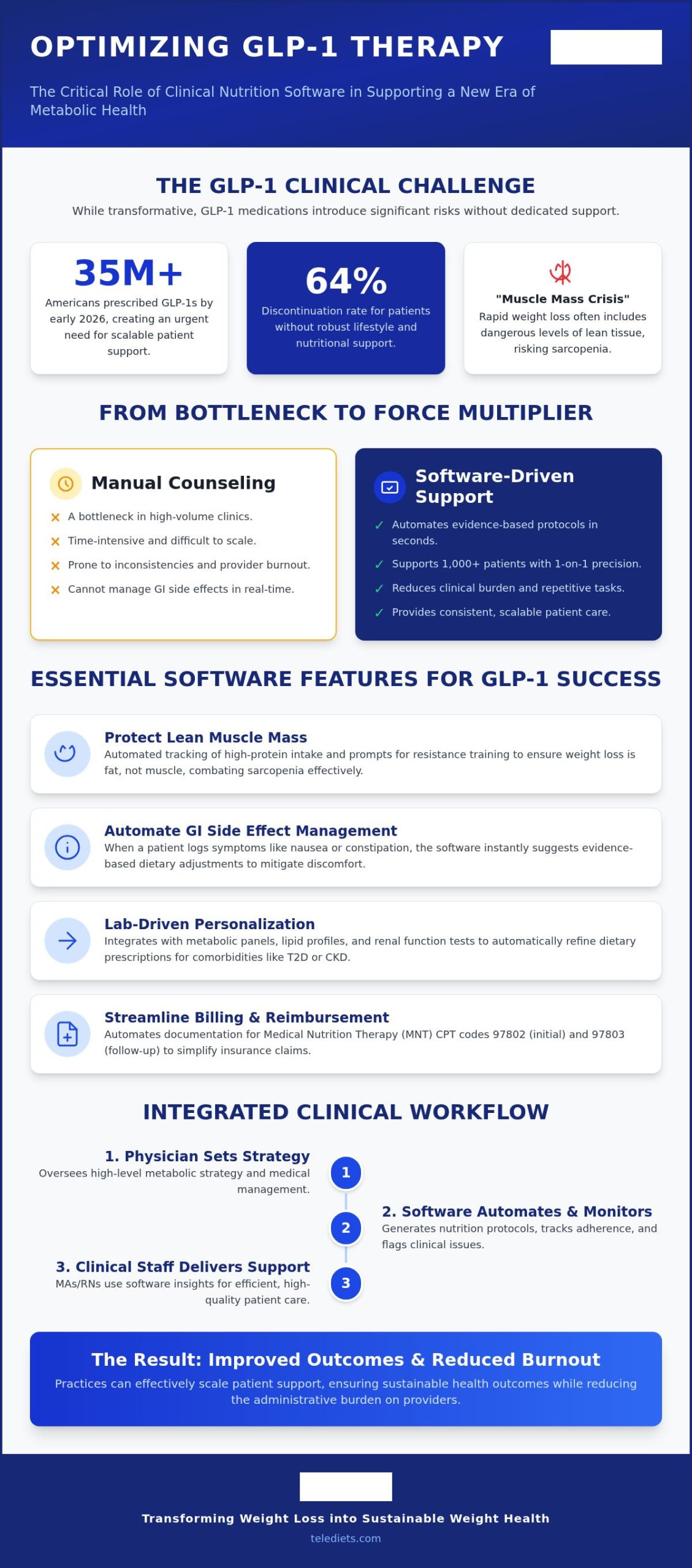
With over 35 million Americans now prescribed GLP-1 medications as of early 2026, the clinical challenge isn’t just getting the drug to the patient; it’s managing what happens after the first injection. You’ve likely seen the struggle firsthand. While these medications are transformative, they often lead to significant muscle loss and GI side effects that manual meal planning simply can’t address at scale. Finding the right software to support patients on GLP-1 agonists is now essential for any practice aiming for clinical excellence.
This guide explores how specialized medical nutrition therapy software bridges the gap between prescriptions and long-term metabolic health for your patients. You’ll discover how to automate evidence-based protocols, protect lean muscle mass, and streamline insurance billing for CPT codes 97802 and 97803. We’ll also look at how modern tools help you navigate new coverage options, like the Medicare GLP-1 Bridge Program starting July 1, 2026. By the end of this article, you’ll have a clear path to reducing provider burnout while ensuring your patients achieve the sustainable results they deserve.
Key Takeaways
- Protect patient health by learning how clinical software tracks protein intake to mitigate the risk of sarcopenia during rapid medication-induced weight loss.
- Streamline your clinical workflow by generating evidence-based nutrition protocols tailored to metabolic lab results in seconds rather than hours.
- Increase practice sustainability through integrated CPT coding tools that simplify insurance billing for medical nutrition therapy (MNT) services.
- Evaluate the essential features of specialized software to support patients on GLP-1 agonists, such as automated GI side effect tracking and seamless telemedicine integration.
The Clinical Necessity of GLP-1 Support Software
Clinical-grade software to support patients on GLP-1 agonists serves as the essential bridge between the pharmacy and the kitchen. While GLP-1 receptor agonists are highly effective for weight reduction, they don’t automatically improve metabolic quality. Without precise intervention, patients often face a “muscle mass crisis” where rapid weight loss includes a dangerous percentage of lean tissue. Specialized software mitigates this by tracking protein intake and prompting resistance training, ensuring that weight loss translates into improved body composition rather than sarcopenia.
Addressing the GLP-1 Support Gap
Medication alone is rarely a permanent solution. Industry data suggests a 64% discontinuation rate for these therapies when they aren’t paired with robust lifestyle support. By shifting the focus from simple weight loss to “weight health,” providers can use software to prevent GLP-1 induced malnutrition. These tools automate patient education and monitor nutrient density, ensuring patients receive the vitamins and minerals they need even as their caloric intake drops significantly.
Software vs. Manual Counseling
Manual meal planning is a bottleneck in high-volume clinics. It’s impossible for a provider to hand-craft protocols for every patient while managing GI side effects at scale. Software transforms this workflow by automating clinical protocols. This allows a single practice to support 1,000 or more patients with the same precision as a 1-on-1 consultation. It reduces clinical burden by handling the repetitive tasks of monitoring and dietary adjustment, allowing you to focus on high-level medical management and patient outcomes.
Key Features of Effective GLP-1 Support Platforms
Effective clinical software must move beyond basic calorie tracking. Choosing the right software to support patients on GLP-1 agonists means prioritizing clinical integration over simple consumer tracking. Instead of generic templates, these platforms use evidence-based protocols that prioritize high protein and fiber. These GLP-1 specific macro targets are essential for preserving lean muscle mass while managing common side effects.
Lab-Driven Personalization
Clinical precision requires deep data integration. Advanced platforms incorporate results from metabolic panels, lipid profiles, and renal function tests to refine dietary prescriptions. This level of personalization is crucial for managing comorbidities like type 2 diabetes or chronic kidney disease. AI-powered engines can adjust macro targets in seconds, keeping the nutrition plan safe and effective as lab values change over time.
Patient Engagement and Adherence
Long-term success depends on consistent support. Automated check-ins and push notifications help patients stay on track with both their medication and their nutritional goals. These tools are increasingly vital as the government expands access to lifestyle support programs to improve outcomes for beneficiaries. By collecting this adherence data, your practice can demonstrate clear value to payers and secure reimbursement more effectively. You can see these engagement tools in action through the TeleDIETS platform interface.
Managing GI symptoms at scale requires automated triggers. When a patient logs nausea or constipation, the software should instantly suggest dietary adjustments to mitigate discomfort. Integrating these features into a native telemedicine plugin provides a seamless experience. It keeps patients within your clinical ecosystem rather than forcing them to use external, unmonitored apps.
Integrating Nutrition Software into Clinical Workflow
Implementing specialized software to support patients on GLP-1 agonists shouldn’t create more work for your clinical team. Instead, it acts as a force multiplier. By integrating these tools into your existing EHR or telemedicine platform, you can delegate high-level nutrition support to medical assistants or registered nurses. This allows your physicians to oversee the metabolic strategy while the software handles the granular details of meal planning and patient monitoring.
Billing and Reimbursement Strategy
Capturing revenue for Medical Nutrition Therapy (MNT) is often overlooked due to documentation hurdles. Modern software simplifies this by utilizing CPT codes 97802 for initial assessments and 97803 for follow-up sessions. The platform automates the necessary documentation for insurance claims, ensuring your practice is fairly compensated for the time spent on lifestyle counseling. You can easily integrate these practice-ready billing tools into your clinical workflow to start capturing MNT revenue immediately.
The 60-Second Consultation
Efficiency is the hallmark of a modern clinic. The transition from diagnosis to a delivered meal plan happens in three simple steps:
- Data Entry: Input lab results and metabolic markers.
- Protocol Selection: Select a GLP-1 specific plan from the library.
- Digital Delivery: Send the plan directly to the patient’s HIPAA-compliant portal.
This rapid workflow ensures that patients leave their appointment with a clear, evidence-based roadmap. It also addresses the 2026 HIPAA Security Rule updates by ensuring all electronic protected health information (ePHI) is encrypted and accessed through secure, multi-factor authentication systems. By automating these processes with the right software to support patients on GLP-1 agonists, your practice can scale its weight health program without increasing administrative overhead.
TeleDIETS: The Provider-First GLP-1 Solution
TeleDIETS stands as the definitive choice for clinicians seeking sophisticated software to support patients on GLP-1 agonists. While the market is currently saturated with consumer-grade tracking apps, TeleDIETS leverages over 25 years of clinical nutrition expertise to provide a medical-grade solution. This platform doesn’t simply monitor caloric intake; it manages the intricate nutritional requirements of patients undergoing pharmacological weight loss. It provides the quiet confidence you need to ensure patient safety and long-term metabolic success.
Specialized GLP-1 Protocols
Our GLP-1 Meal Plan Protocols are specifically engineered to address the physiological challenges of rapid weight loss. These high-protein, moderate-fiber plans are designed to protect lean muscle mass while reducing the incidence of nausea and other GI symptoms. Practices can choose between our Standard Series Meal Plans for general weight health or the Advanced Medical Series Meal Plans for patients with complex metabolic profiles or significant comorbidities. This tiered approach ensures that every patient receives the precise level of care their condition requires.
Scaling Your Practice with AI
Scalability is a core component of the TeleDIETS architecture. For larger healthcare organizations, our AI engine can be licensed to power enterprise-level telemedicine platforms, ensuring clinical-grade nutrition is available at every patient touchpoint. The native Telemedicine Plugin enables seamless remote delivery of Medical Nutrition Therapy (MNT), which reduces operational overhead while simultaneously increasing patient satisfaction. It’s a modern, technology-forward solution that remains grounded in traditional clinical standards.
To ensure your practice remains financially sustainable, the platform includes integrated Insurance Billing & CPT Coding Tools. These features allow you to capture revenue for the critical lifestyle support your patients need for long-term success. You can empower your clinical team and enhance patient outcomes when you start your clinical subscription today or request a professional demo of our full capabilities.
Elevating Your Clinical Weight Health Strategy
Achieving long-term metabolic success requires more than just a prescription pad. It demands a structured, evidence-based approach to nutrition that protects patient health while scaling with your practice. By implementing professional software to support patients on GLP-1 agonists, you’ll transition from simple weight management to comprehensive weight health. You’ve seen how clinical-grade tools can automate complex protocols, mitigate side effects like sarcopenia, and secure practice revenue through integrated CPT coding tools.
TeleDIETS provides the specialized GLP-1 Advanced Medical Series and an AI-driven nutrition engine needed to bridge the gap between medication and metabolic success. This partnership allows you to focus on high-level medical care while our technology handles the precision of medical nutrition therapy. It’s time to transform your workflow and deliver the sustainable outcomes your patients deserve. Empower your practice with GLP-1 meal plan protocols today and lead the way in modern clinical care.
Frequently Asked Questions
What CPT codes are used for GLP-1 nutritional support?
The primary codes are 97802 for the initial assessment and 97803 for follow-up sessions. These codes are specifically for Medical Nutrition Therapy (MNT) delivered by a qualified professional. Some practices also utilize G-codes or CCM codes depending on the patient’s specific chronic conditions. Using integrated software ensures your documentation meets the rigorous requirements for these specific reimbursement codes.
Can GLP-1 support software integrate with my current EHR?
Yes, modern platforms are designed for seamless integration with major EHR systems to maintain a unified patient record. This connectivity ensures that lab results and metabolic markers flow directly into the software to support patients on GLP-1 agonists without manual data entry. It reduces administrative friction and ensures that your nutrition protocols remain synchronized with the patient’s broader clinical treatment plan and medication titration schedule.
How does nutrition software help prevent muscle loss on Wegovy or Zepbound?
Software prevents sarcopenia by automating high-protein, evidence-based dietary protocols that prioritize lean tissue preservation. These tools track daily protein intake against specific metabolic targets and can trigger reminders for resistance training. By providing real-time feedback and nutrient-dense meal plans, the platform helps patients maintain a positive nitrogen balance. This is critical for ensuring that weight loss comes from adipose tissue rather than skeletal muscle.
Is medical nutrition therapy for GLP-1 patients covered by insurance?
Insurance coverage for MNT is increasingly common, especially for patients with obesity, type 2 diabetes, or other metabolic comorbidities. The Medicare GLP-1 Bridge Program, set to begin on July 1, 2026, highlights the growing recognition of lifestyle support in medication success. Effective software to support patients on GLP-1 agonists includes built-in coding tools that help clinicians identify billable opportunities and generate the documentation required for successful claims.
How long does it take to generate a patient meal plan with TeleDIETS?
You can generate a clinical-grade meal plan in under 60 seconds using the TeleDIETS AI engine. Once you enter the patient’s lab data and select a protocol, the system instantly builds a personalized nutrition roadmap. This speed allows your staff to deliver high-level support during the consultation without adding hours of manual planning. It’s an efficient way to provide specialized care while maintaining a high patient volume.
Leave a Reply