
Your patient’s lab results aren’t just data points; they’re the blueprint for a billable medical prescription that many practices are currently leaving on the table. You likely agree that manual nutrition planning is an exhausting hurdle, particularly when using legacy tools that lack clinical integration. It’s difficult to align complex biomarkers with precise dietary protocols while managing a full patient load, which is why advanced lab-based nutrition planning software has become essential for modern clinical precision.
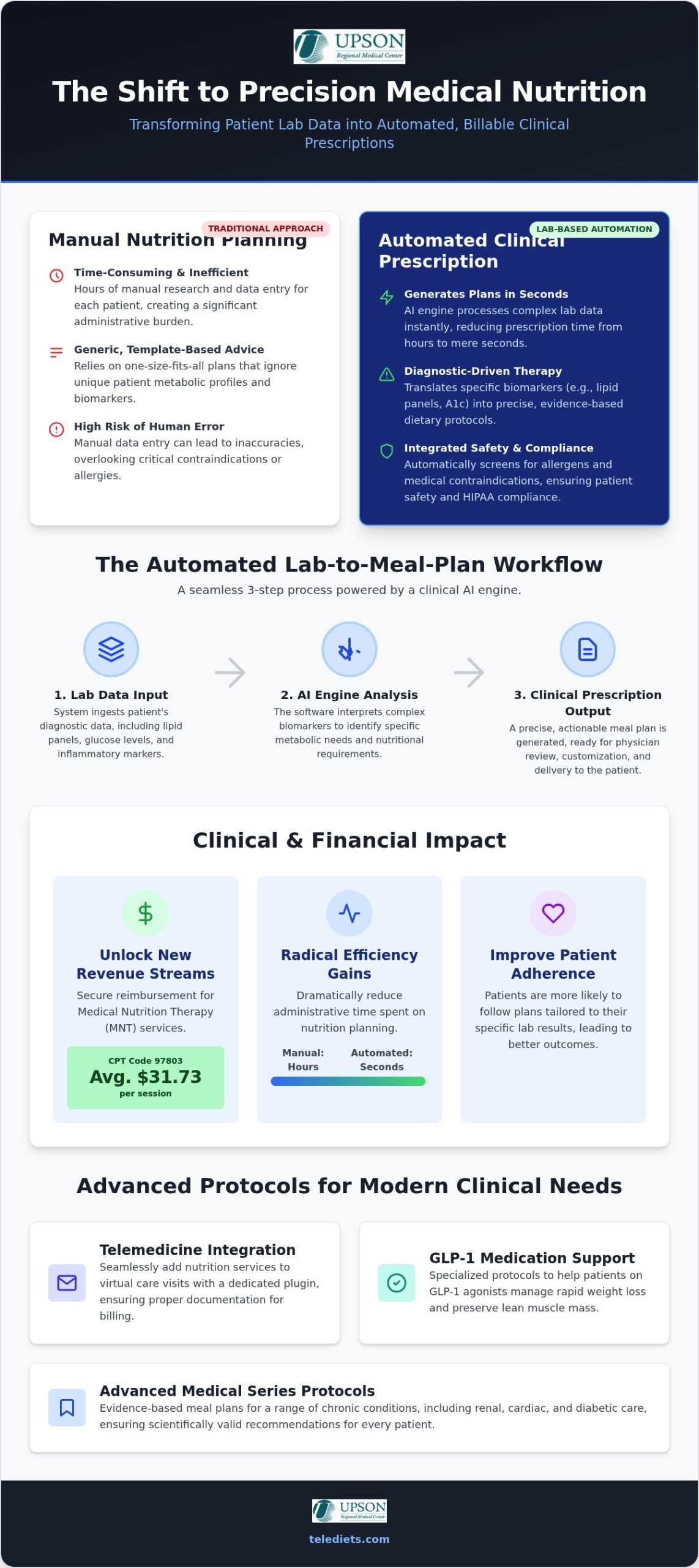
This guide reveals how to automate clinical prescriptions and scale your revenue through billed Medical Nutrition Therapy (MNT) services. We’ll show you how to leverage Advanced Medical Series protocols and GLP-1 support to drive higher patient adherence. You’ll discover how to streamline your clinical workflow and secure reimbursement for CPT code 97803, which currently averages $31.73 per session. It’s time to move beyond generic advice and provide the data-driven precision your patients deserve.
Key Takeaways
- Learn how to transition from generic dietary advice to diagnostic-driven therapy by aligning nutritional protocols with a patient’s specific clinical markers.
- Discover how lab-based nutrition planning software uses an AI engine to process complex biomarkers like lipid panels into automated clinical prescriptions within seconds.
- Master the integration of nutrition into virtual care via a telemedicine plugin, ensuring every session is backed by the documentation required for CPT coding.
- Identify the essential criteria for a scalable clinical practice, including HIPAA-compliant data handling and specialized protocols like the Advanced Medical Series.
The Shift to Lab-Based Precision Nutrition in Clinical Practice
Traditional dietary guidance often relies on generic templates that fail to account for a patient’s unique metabolic profile. Lab-based nutrition planning software changes this dynamic by moving beyond simple calorie counting toward diagnostic-driven therapy. Lab-based nutrition planning software serves as a clinical tool designed to translate complex patient biomarkers into precise, actionable dietary protocols. For patients managing chronic diseases, general advice isn’t just insufficient; it’s often counterproductive when markers like elevated A1c or systemic inflammatory signals are ignored. This technology bridges the gap between blood chemistry and daily intake, ensuring every meal supports a specific medical goal.
From General Wellness to Medical Nutrition Therapy (MNT)
Clinical precision requires a shift from consumer-grade apps to sophisticated, clinical-grade SaaS solutions. While consumer tools focus on general wellness, a professional platform enables the delivery of Medical Nutrition Therapy (MNT) through evidence-based protocols. This transition is supported by the science of Nutritional Genomics, which explores how nutrients and genes interact to influence metabolic health. In high-volume practices, using standardized protocols like the Advanced Medical Series ensures that your recommendations remain scientifically valid without requiring hours of manual research for every patient.
The Impact of Real-Time Lab Integration
Manual data entry is a significant source of error and inefficiency in nutrition prescriptions. Real-time lab integration automates this process, pulling data directly from diagnostic reports to generate plans within seconds. This automation doesn’t just save time; it ensures that prescriptions are based on the most current data available. Accuracy in these prescriptions is directly linked to improved patient outcomes. Patients are more likely to adhere to a plan that they know is tailored to their specific laboratory findings. Utilizing tools like Advanced Medical Series Meal Plans allows you to scale these results across your entire patient base while maintaining the highest standards of care.
How Automated Lab-to-Meal-Plan Technology Works
Modern lab-based nutrition planning software functions as a high-velocity AI engine that translates diagnostic results into clinical action. It doesn’t just store data; it interprets it. By processing lipid panels, glucose levels, and inflammatory markers, the system identifies specific metabolic requirements for each patient. This automation reduces the time-to-prescription from hours of manual calculation to just a few seconds. Physicians can now generate comprehensive plans during the patient encounter rather than spending hours on administrative work after clinic doors close.
Safety is integrated into every step of the automated process. The software automatically screens for allergens and medical contraindications, ensuring that the generated plan aligns with the patient’s current health status. This reduces the risk of human error in complex cases where multiple chronic conditions overlap. It provides a layer of clinical security that manual spreadsheets simply cannot match.
Specialized Protocols for Modern Metabolic Health
The rise in GLP-1 receptor agonist prescriptions has created a unique clinical challenge for providers. Patients on these medications often face rapid weight loss that can compromise lean muscle mass if nutrition isn’t managed precisely. Utilizing research findings from NIH’s Nutrition for Precision Health program, specialized algorithms now select the most appropriate GLP-1 meal plan protocols. These tools also integrate specialized medical series for renal, cardiac, and diabetic care, ensuring that every patient receives a plan tailored to their primary diagnosis.
Customization vs. Automation
Efficiency doesn’t have to come at the cost of clinical nuance. While the AI provides an evidence-based starting point, physicians maintain full control through clinical overrides. This balance allows you to scale nutrition therapy across a large patient population without adding headcount to your practice. If you’re ready to modernize your clinical workflow, you can explore clinical integration options to start automating your delivery of Advanced Medical Series Meal Plans today.
Clinical Workflow Integration and MNT Reimbursement
Integrating nutrition into a clinical workflow shouldn’t feel like an administrative burden. The Telemedicine Plugin model allows you to add nutrition services to virtual care visits seamlessly. Lab-based nutrition planning software automatically generates the documentation required to prove medical necessity, bridging the gap between diagnostic testing and dietary intervention. By applying cutting-edge methods in metabolomics and nutrigenetics, the software reduces the administrative load of Medical Nutrition Therapy (MNT), allowing you to focus on patient care rather than paperwork.
Mastering CPT Codes for Nutrition Therapy
Proper reimbursement starts with accurate coding. You’ll typically use CPT code 97802 for initial 15-minute assessments and 97803 for follow-up care. As of August 2026, the national reimbursement rate for 97803 is approximately $31.73. The software automates the tracking of these units and the time spent, ensuring that your clinical documentation meets payer requirements. This precision maximizes your revenue while minimizing the risk of audit. Medicare Part B even covers MNT at 100% for specific conditions like diabetes and non-dialysis chronic kidney disease when a physician referral is present.
Scaling Revenue with SaaS and AI Engine Licensing
Many practices treat nutrition as a referral-out cost center. By bringing these services in-house, you turn a missed opportunity into a scalable revenue driver. Integrating MNT billing into your standard workflow allows you to capture value that previously left your practice. You can Explore the Standard Series Meal Plans for immediate clinical implementation. This approach empowers your team to provide comprehensive care without the need for additional specialized staff. To see how this fits your practice, schedule a workflow consultation.
Selecting the Right Lab-Based Nutrition Platform
Choosing the right lab-based nutrition planning software is a pivotal decision for any modern medical practice. You need a partner that understands the nuance of clinical data, not just a generic meal planner. Key criteria must include strict HIPAA-compliant data handling and deep lab integration. A platform should offer a robust SaaS interface for daily use while providing an AI engine for custom integration into your existing EHR or telemedicine stack. It’s essential to evaluate whether the software supports complex conditions like metabolic syndrome and provides specific GLP-1 meal plan protocols to protect patient health during rapid weight loss.
Future-proofing your practice requires more than just digital records; it requires AI-powered nutrition therapy that evolves with clinical research. A system that can’t interpret a lipid panel or a glucose level in real-time will eventually become a bottleneck. By selecting a platform built for clinical precision, you ensure that your practice remains at the forefront of personalized medicine.
Why TeleDIETS is the Clinical Choice
TeleDIETS stands as the premier choice for physicians who prioritize evidence-based outcomes. By leveraging the Advanced Medical Series, you can manage complex chronic diseases with a level of precision that manual methods simply can’t reach. The advantage of built-in insurance billing and CPT coding tools means your practice can scale without increasing administrative overhead. This positions your clinic as a leader in the precision nutrition space, offering a standard of care that distinguishes you from competitors still using generic dietary advice.
Next Steps for Implementation
Start by assessing your current lab-to-patient workflow for inefficiencies. Many practices find that manual data entry is their biggest bottleneck. You might begin with a pilot program for specific patient cohorts, such as those on GLP-1 receptor agonists, to measure the impact on adherence and clinical markers. Once you’ve seen the results, it’s easy to expand the service across your entire population. You can get started by choosing the right clinical level for your practice today.
Modernizing Clinical Outcomes with Precision Nutrition
Transitioning your practice to a diagnostic-driven model is a vital step toward ensuring patient safety and fostering clinical growth. By integrating lab-based nutrition planning software, you replace manual guesswork with AI-driven medical nutrition therapy protocols that respond directly to real-time biomarkers. This technology streamlines your workflow, allowing your team to provide specialized GLP-1 and Advanced Medical Series plans without increasing your administrative burden. Beyond clinical accuracy, these tools provide the integrated CPT coding and insurance billing documentation needed to turn nutrition into a sustainable, in-house revenue driver.
This shift empowers you to lead the way in personalized care, ensuring every patient receives a prescription tailored to their unique metabolic needs. It’s time to bridge the gap between diagnostics and dietary intervention to achieve superior results. You can empower your practice with lab-based nutrition software and start seeing the impact on your clinical efficiency immediately. We’re here to help you navigate this transition with quiet confidence and clinical precision.
Frequently Asked Questions
What is lab-based nutrition planning software?
Lab-based nutrition planning software is a clinical SaaS platform that translates a patient’s unique biomarkers into automated medical prescriptions. Unlike generic calorie counters, this software interprets diagnostic data such as lipid panels and glucose levels to select evidence-based protocols. It bridges the gap between laboratory results and daily dietary intake, ensuring that every meal plan supports a specific clinical diagnosis and addresses complex metabolic needs with precision.
Which CPT codes are used for medical nutrition therapy reimbursement?
Clinicians typically use CPT codes 97802 and 97803 to bill for Medical Nutrition Therapy. Code 97802 covers the initial assessment, while 97803 is for follow-up visits. As of August 2026, the national average reimbursement for 97803 is approximately $31.73. Medicare Part B provides 100% coverage for these services for patients with diabetes or non-dialysis chronic kidney disease, provided there’s a physician referral on file.
Can lab-integrated nutrition software handle GLP-1 patient protocols?
Yes, advanced lab-based nutrition planning software includes specialized GLP-1 meal plan protocols designed for patients on receptor agonist medications. These protocols focus on maintaining lean muscle mass and managing caloric intake as appetite shifts. By integrating these specialized medical series, providers can ensure their patients receive the nutritional support necessary to prevent common side effects of rapid weight loss while maximizing the therapeutic benefits of their medication.
Is automated nutrition software HIPAA compliant?
Clinical-grade nutrition software must be HIPAA compliant when it handles Protected Health Information (PHI) for a covered entity. This requires a signed Business Associate Agreement (BAA) between the practice and the software vendor. While there’s no official government HIPAA certification for software, a professional platform ensures data is encrypted and stored according to federal standards, protecting both the patient’s privacy and the practice’s legal standing.
How does nutrition planning software integrate with telemedicine platforms?
Modern platforms integrate with telemedicine through specialized plugins or AI engine licensing. This allows physicians to prescribe Medical Nutrition Therapy directly within their existing virtual care environment. The software generates necessary documentation for medical necessity and billing during the patient encounter. This seamless integration ensures that nutrition becomes a standard part of the clinical workflow, improving patient access to care without adding significant administrative overhead to the practice.
Leave a Reply