
A meal can be clinically appropriate and still fall short of what a patient needs from nutrition support. Improving patient satisfaction with nutrition support means aligning meal quality, dietary education, and expectations with the care plan and the realities of recovery. Clear communication and attention to preferences can help patients feel informed and involved.
For healthcare professionals, satisfaction is about more than whether a patient accepts a meal. Patients also notice whether food is appealing, dietary needs are explained clearly, and nutrition feels connected to recovery. Addressing these elements together can make nutrition support feel more relevant and responsive.
This article explores how meal quality and expectations shape the patient experience, why taste and presentation matter, and how education helps patients understand dietary needs. It also considers nutrition’s role in recovery and how structured, evidence-based meal plans can support care for people with specific clinical needs.
Key Takeaways
- Compare patients’ expectations with their experience of meal service to identify where communication, choice, and timeliness could improve.
- Explain how dietary needs shape meal options so patients can better understand the purpose of nutrition support.
- Consider taste, presentation, and food quality alongside clinical suitability when evaluating the meal experience.
- Connect nutrition support to recovery goals, using structured plans that reflect patients’ clinical needs.
Patient expectations compared with perceived meal-service quality
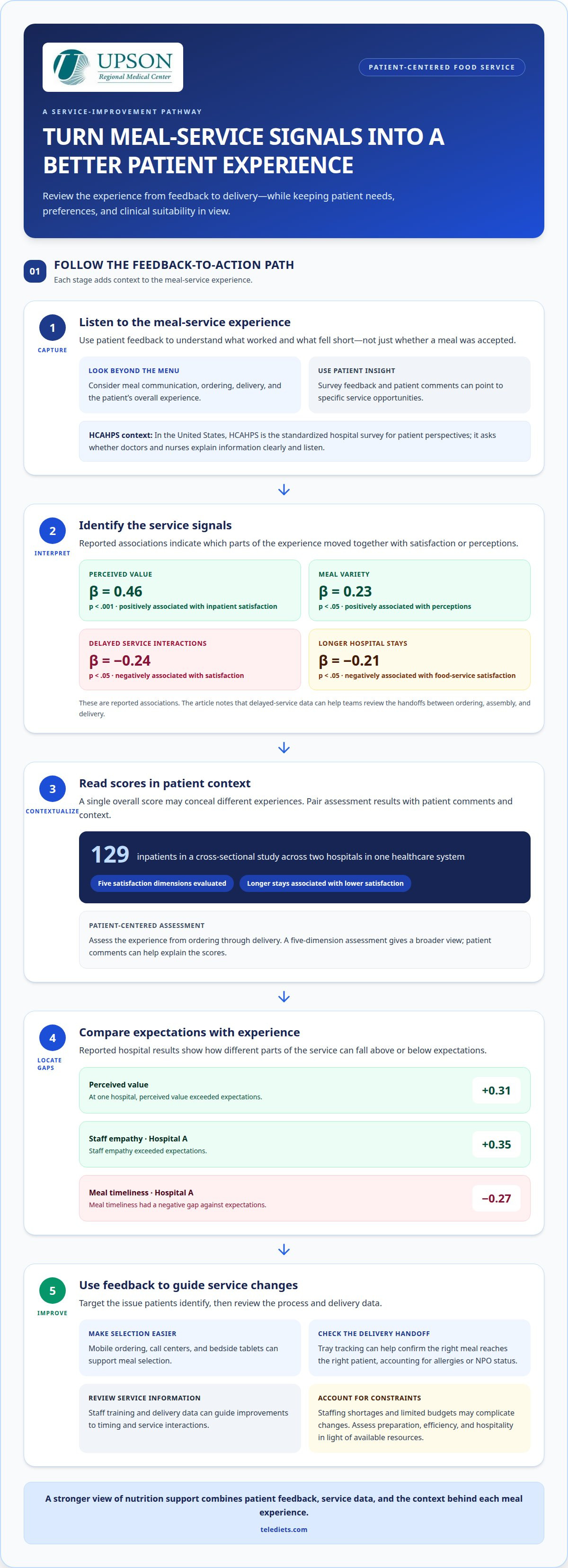
Hospital food-service satisfaction reflects how patients experience meals, communication, and delivery, not just menu design. In the United States, HCAHPS is the standardized hospital survey for patient perspectives; it asks whether doctors and nurses explain information clearly and listen. For a hospital team, improving patient satisfaction with nutrition support means examining these interactions alongside meal-service feedback.
Patient Insights for Service Improvement
Patient insights are reports about what worked or fell short during meal service. Reviewing survey feedback helps foodservice teams find specific opportunities, such as improving meal timing or explaining menu choices. Perceived value was positively associated with inpatient satisfaction (β = 0.46, p < .001), while meal variety was also positively associated with perceptions (β = 0.23, p < .05). These findings help teams prioritize changes and identify concerns that may affect nutrition.
Timely screening and assessment help teams identify nutrition needs early; meal-delivery data can reveal delays between ordering, assembly, and delivery. Delayed service interactions were negatively associated with satisfaction (β = -0.24, p < .05), supporting routine review of each handoff.
Characteristics Shaping Food-Service Satisfaction
Patient characteristics can shape how people assess hospital food service, so results need context. A cross-sectional study included 129 inpatients from two hospitals in one healthcare system and evaluated satisfaction across five dimensions. Longer hospital stays were negatively associated with food-service satisfaction (β = -0.21, p < .05). This relationship suggests a single overall score may conceal different experiences across lengths of stay.
Restrictions and personal preferences both affect whether a meal feels suitable. Offering hospitalized patients choices can provide a sense of control in an uncertain environment. A room-service-style model has been shown to increase meal intake, reduce food waste, improve nutritional status, and boost satisfaction. Improving patient satisfaction with nutrition support also means balancing choice with clinical needs.
Patient-Centered Service Measures
Patient-centered measures capture the experience from ordering through delivery, rather than judging food service by one element alone. A five-dimension assessment offers a broader view, while patient comments can explain scores. In one hospital, perceived value exceeded expectations by 0.31; at Hospital A, staff empathy exceeded expectations by 0.35, while meal timeliness had a negative gap of -0.27.
Mobile ordering, call centers, and bedside tablets can make meal selection easier. Tray tracking can help confirm that the right meal reaches the right patient and account for allergies or NPO status. Staff training and delivery data can guide service improvements. Staffing shortages and limited budgets may complicate changes, so teams can assess preparation, efficiency, and hospitality in light of available resources.
Dietary education for patients with specific needs
Useful dietary education connects meal choices with a patient’s needs, restrictions, and preferences. Clear explanations help patients and families understand why a modification matters and which alternatives remain available.
Dietary Restrictions and Preferences
First, distinguish clinical restrictions from personal preferences, then explain how each affects the available meal choices. For example, low-sodium or renal limits can guide staff when patients order meals. Allergy information should also be communicated clearly from ordering through delivery so the selected food reflects documented requirements.
Use plain language to explain ingredients and substitutions. Instead of presenting a restriction as a list of foods to avoid, describe which menu options fit and why. When patients understand the reason for a change, they can make more informed choices. This keeps education grounded in the care plan while recognizing that taste and familiarity affect whether a meal feels acceptable.
Cultural Dietary Modifications
Culturally appropriate meal choices reflect a person’s food traditions and preferences while respecting clinical restrictions. A technically appropriate meal may still feel unfamiliar or unsuitable. Ask patients which ingredients, preparation methods, or customary foods matter to them rather than assuming preferences based on background.
For example, a patient may prefer a familiar staple prepared to fit their dietary needs. Explain possible substitutions and invite the patient to describe what would make the meal more acceptable. This exchange gives foodservice teams useful details without treating a cultural preference as a medical restriction or making assumptions about an entire community.
Communication with Patients and Families
Clear communication means explaining the purpose of dietary changes, listening to concerns, and confirming the patient’s understanding. Nutrition support teams can ask about allergies, restrictions, preferred foods, and questions about the care plan. With the patient’s involvement, family members can help identify familiar meals or preferences and reinforce consistent information.
Use the same terms across discussions, menus, and meal orders. If an option changes, explain the reason and identify an alternative rather than leaving the patient uncertain. Clinical nutrition planning tools can support structured, evidence-based dietary plans for healthcare teams.
Food taste, presentation, and quality
Taste, appearance, and dining experience influence how patients judge a hospital meal. In a study comparing two U.S. hospitals, food-quality ratings differed significantly (p = .02), with Hospital A rated higher for taste, presentation, and dining experience. This finding shows why clinical suitability alone may not capture patients’ views. Teams can review comments and scores alongside meal acceptance to identify which part of service needs attention.
Review quality at each stage, from preparation to tray delivery. Northern Westchester Hospital’s Food Is Care program eliminated production batch cooking. The Planetree Organization recognized the program for best practices in delivering quality food and nutrition. This example gives foodservice leaders a specific operational change to consider when assessing meal preparation and service.
Presentation is part of the meal experience, but it does not replace clinical appropriateness. Teams can check whether food is arranged clearly, components look as intended, and the meal matches the order. Staff interactions matter, too. Briefly explaining an unfamiliar item can help patients understand what they received and raise order concerns promptly.
To connect quality with outcomes, review patient feedback alongside meal-service observations. Compare comments about taste or appearance with the dishes and preparation processes patients describe. If feedback repeatedly identifies one meal, investigate its preparation and presentation before changing the wider menu. This targeted approach uses satisfaction scores to guide a specific improvement rather than prompting a broad menu overhaul.
Patient preferences differ, so one measure may not capture every dining experience. Combining direct feedback with operational review gives teams a clearer picture of what patients value. In hospitals, improving meal quality means pairing appealing food and careful presentation with the nutrition plan, while grounding each change in patient experience and clinical needs.
Nutrition’s role in healing and recovery
Nutrition support connects a patient’s clinical needs with a practical plan for intake during recovery. In hospitals, this means considering the diagnosis, available meal options, and whether the patient can follow the plan. Clear explanations help patients understand how nutrition fits into their care without promising a particular outcome.
A stage 1 pressure ulcer is one example where nutritional protocols may provide necessary supplementation as part of patient support. The care team can explain the purpose of the protocol, how it relates to the patient’s needs, and how the plan fits alongside other clinical care. Patients should also know whom to tell if they have difficulty following the nutrition plan.
Recovery needs vary, so nutrition support should reflect the clinical context rather than rely on one standard approach. A plan may account for a diagnosis, laboratory results, dietary restrictions, and the patient’s ability to eat. Connecting these factors makes support more relevant and helps patients understand the reasons for specific recommendations.
Patient feedback can show teams whether nutrition support is understandable and workable. Surveys and satisfaction scores may highlight issues with explanations, meal access, or how well a plan seems to fit recovery needs. Reviewing comments alongside clinical information can help distinguish communication concerns from problems that call for a change to the nutrition plan.
For example, if a patient reports difficulty with a recommended supplement, the care team can explain its role and discuss suitable options within the clinical plan. That conversation turns feedback into a useful care interaction. Structured medical nutrition planning can help healthcare teams align evidence-based plans with clinical diagnoses and patient needs.
Explore clinical nutrition planning to support evidence-based care for recovery.
TeleDIETS
TeleDIETS helps healthcare professionals incorporate structured nutrition support into clinical care. Its platform enables physicians and clinics to prescribe evidence-based plans tailored to lab results and clinical diagnoses, supporting a consistent approach to nutrition planning.
Practices can use Standard Series Meal Plans for general nutrition support or Advanced Medical Series Meal Plans and GLP-1 Meal Plan Protocols for specialized needs. Insurance Billing & CPT Coding Tools can support related practice workflows. These offerings are relevant when a care team wants structured resources to connect nutrition plans with patient needs, rather than meal delivery or direct patient consultations.
To discuss how TeleDIETS can fit your practice’s nutrition workflow, contact TeleDIETS.
Build Nutrition Support Into the Next Step
Improving patient satisfaction with nutrition support takes ongoing attention to how well care plans respond to patient needs. A useful next step is to connect nutrition planning with your team’s existing workflows so clinical decisions translate into clear, consistent support.
TeleDIETS provides healthcare professionals with Standard Series Meal Plans, Advanced Medical Series Meal Plans, and GLP-1 Meal Plan Protocols. These tools can help practices structure nutrition plans around clinical needs and diagnoses. The right approach depends on your patients and how your team integrates nutrition into care.
If you’re considering how structured meal plans could support your practice, contact TeleDIETS for nutrition support. A thoughtful workflow can help your team make nutrition a more connected part of patient care.
Frequently Asked Questions
How can hospitals assess patient satisfaction with nutrition support services?
Hospitals can combine patient survey responses with operational records and meal observations. Ask patients about ordering, delivery, meal acceptability, and whether staff explained their nutrition choices clearly. Then compare comments with meal assembly, delivery, and pickup data to identify recurring problems. For example, repeated complaints about late trays alongside delivery delays suggest a different service issue than dissatisfaction with menu options.
What are evidence-based ways to improve hospital food quality, taste, and menu choice?
Use patient feedback and meal-service data to target changes, then review whether they address the reported issue. If patients consistently dislike a dish, for example, examine its preparation and presentation before revising other menu items. Offering choices can give patients greater control; room-service-style approaches have been associated with increased intake, less food waste, improved nutritional status, and higher satisfaction.
How can hospitals accommodate cultural, religious, allergy, and therapeutic dietary needs?
Hospitals can collect each patient’s dietary requirements and preferences during care, then make that information accessible to staff handling orders and delivery. Record a requested cultural food preference separately from a clinical restriction, for example, and apply nutrient limits such as low-sodium or renal limits when available. Clear handoffs help prevent preferences from being mistaken for therapeutic requirements or allergies from being overlooked.
What metrics and benchmarks measure patient satisfaction with hospital food and nutrition care?
Track patient ratings and comments alongside service measures such as order-to-delivery time, meal acceptance, and food left uneaten. HCAHPS measures patients’ perspectives of hospital care, including communication with doctors and nurses, but it does not measure food-service satisfaction. Food-service teams can use a dedicated patient survey and compare results over time, interpreting changes alongside patient characteristics and service conditions.
What risks arise when improving patient choice while meeting clinical diet restrictions?
More choice can create risk if menu options conflict with an allergy, a therapeutic limit, or NPO status. Ordering and delivery systems should carry relevant restrictions through each handoff, while tray tracking can help staff verify that the right meal reaches the right patient. A practical safeguard is to make suitable choices visible and screen orders against recorded clinical requirements before trays leave meal assembly.
What U.S. regulations and patient experience standards apply to hospital food and nutrition services?
The article identifies HCAHPS as the standardized U.S. survey for measuring patients’ perspectives of care, including whether doctors and nurses explain information clearly and listen. It does not describe specific food-service regulations.
Leave a Reply