
Rapid weight loss on GLP-1 receptor agonists is a clinical victory, but without a specific nutritional framework, your patients may be trading metabolic health for significant muscle wasting. You’ve likely seen the struggle first-hand: patients suffering from severe GI distress or losing lean body mass so quickly it borders on sarcopenic obesity. It’s frustrating to watch clinical progress undermined by side effects that lead to non-compliance. You want to provide the best care, yet the time required to build custom meal plans often feels like an impossible hurdle.
This guide provides the evidence-based GLP-1 patient nutrition protocols for clinicians needed to shift the focus from simple weight loss to high-quality body composition. You’ll learn how to implement an anabolic nutrition strategy that preserves muscle and minimizes GI issues. We’ll also explore how to automate these workflows and unlock new revenue through MNT billing, ensuring your practice thrives while your patients achieve lasting, healthy results.
Key Takeaways
- Shift your clinical focus from simple weight loss to the preservation of lean body mass to prevent the risks of sarcopenic obesity.
- Deploy evidence-based GLP-1 patient nutrition protocols for clinicians that utilize specific protein-to-energy ratios to protect metabolic health.
- You’ll scale your practice efficiency by using automated tools that generate personalized dietary protocols in seconds based on patient lab results.
- Unlock new revenue opportunities by integrating professional billing tools to capture reimbursement for CPT codes 97802 and 97803.
The Clinical Necessity of GLP-1 Patient Nutrition Protocols
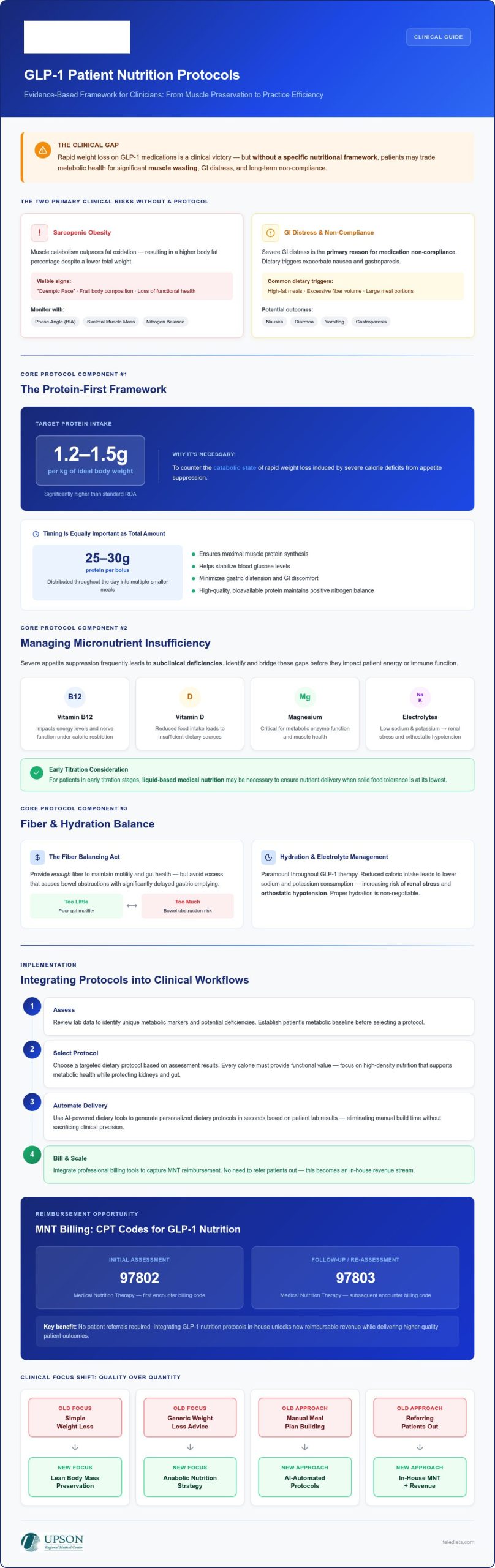
The surge in GLP-1 receptor agonist prescriptions has revealed a significant clinical gap between rapid weight loss and quality weight loss. Clinicians often observe a troubling decline in lean body mass, which manifests physically as “Ozempic Face” or a frail body composition. Implementing standardized GLP-1 patient nutrition protocols for clinicians is now a fundamental requirement for ensuring patient safety and metabolic stability. Without a structured plan, patients risk achieving a lower weight at the cost of their functional health and long-term medication efficacy.
Addressing Muscle Wasting and Sarcopenia
Sarcopenic obesity in the context of GLP-1 therapy occurs when the rate of muscle catabolism outpaces fat oxidation, leaving the patient with a higher body fat percentage despite a lower total weight. To prevent this, you must prioritize high-quality, bioavailable protein to maintain a positive nitrogen balance. This is especially critical during the severe calorie deficits induced by appetite suppression. In your practice, monitoring clinical markers like Phase Angle or skeletal muscle mass via bioelectrical impedance analysis (BIA) provides the data needed to adjust dietary intake before significant wasting occurs.
Mitigating Gastrointestinal Side Effects
Severe GI distress is the primary reason for medication non-compliance. Dietary triggers such as high-fat meals or excessive fiber volume can exacerbate nausea and gastroparesis in patients on these medications. Effective GLP-1 patient nutrition protocols for clinicians focus on volume reduction while maintaining high nutrient density. By shifting patients toward smaller, frequent, protein-rich meals, you can minimize gastric distension and reduce the incidence of diarrhea or vomiting. Utilizing specialized GLP-1 Meal Plan Protocols allows you to deliver these evidence-based interventions instantly without taxing your clinic’s limited staff resources.
Core Components of an Evidence-Based GLP-1 Dietary Protocol
Designing effective GLP-1 patient nutrition protocols for clinicians requires moving beyond general weight-loss advice. Because these medications significantly suppress appetite, every calorie must provide functional value. You should focus on high-density nutrition that supports metabolic health while protecting the kidneys and gut from the stress of rapid physiological changes. Proper hydration and electrolyte management are also paramount; reduced caloric intake often leads to lower sodium and potassium consumption, which increases the risk of renal stress and orthostatic hypotension.
Managing fiber intake requires a delicate balance. You must provide enough to maintain motility and gut health without causing the bowel obstructions sometimes associated with significantly delayed gastric emptying. Balancing these factors manually is time-consuming, which is why many practices integrate AI-powered dietary tools to standardize care.
The Protein-First Framework
Standardizing protein intake at 1.2g to 1.5g per kg of ideal body weight is the cornerstone of muscle preservation. This is significantly higher than the standard RDA, but it’s necessary to counter the catabolic state of rapid weight loss. Timing is just as important as the total amount. Distributing this intake into 25g to 30g protein boluses throughout the day ensures maximal muscle protein synthesis and helps stabilize blood glucose levels.
Managing Micronutrient Insufficiency
Severe appetite suppression often leads to subclinical deficiencies in B12, Vitamin D, and Magnesium. Utilizing evidence-based dietary planning for GLP-1 patients helps you identify and bridge these gaps before they impact patient energy or immune function. For patients in the early stages of titration, liquid-based medical nutrition may be necessary to ensure nutrient delivery when solid food tolerance is at its lowest. To streamline this delivery, you can implement automated GLP-1 Meal Plan Protocols that adjust for these specific clinical needs instantly.
Integrating Nutrition Protocols into Clinical Workflows
Standardizing care within a busy practice requires a methodical approach that prioritizes efficiency without sacrificing clinical precision. You don’t need to refer patients out to provide high-quality medical nutrition therapy. Instead, you can integrate GLP-1 patient nutrition protocols for clinicians directly into your existing workflow. This transition begins with a comprehensive assessment of the patient’s metabolic baseline and lab results, followed by the selection of a targeted dietary protocol.
- Assess: Review lab data to identify unique metabolic markers and potential deficiencies.
- Select: Use AI-driven engines to choose the appropriate GLP-1 Meal Plan Protocol based on the diagnosis.
- Deliver: Send the plan instantly via a telemedicine plugin or a secure patient portal.
- Monitor: Track compliance and adjust protocols as the medication dose titrates over time.
Lab-Based Nutrition Prescriptions
TeleDIETS AI bridges the gap between complex lab data and practical dietary action. This automated system generates protocols in seconds, which significantly reduces the clinician burden while maintaining high precision. For patients with comorbidities, you can utilize the Advanced Medical Series Meal Plans to manage complex cases with confidence. This ensures that every dietary recommendation is scientifically validated and tailored to the patient’s specific metabolic needs.
Telemedicine and Remote Patient Monitoring
Scaling your nutrition services is possible through integrated telemedicine plugins that increase patient touchpoints without requiring additional staff. By moving from subjective patient reporting to objective dietary tracking, you gain a clearer picture of compliance. This real-time data allows you to make proactive adjustments, ensuring the nutrition plan evolves alongside the patient’s titration schedule. To see how these tools can transform your workflow, explore our clinical integration options.
Reimbursement and Scaling: The Business of GLP-1 Nutrition
Many clinicians mistakenly view nutrition services as a non-reimbursable cost center, but the right framework transforms this into a sustainable revenue stream. Integrating GLP-1 patient nutrition protocols for clinicians doesn’t just improve patient outcomes; it secures the financial health of your practice. By proactively managing side effects through structured nutrition, you increase patient retention and significantly reduce medication discontinuation rates. This improved compliance creates a stable patient base and a predictable ROI for your weight management program.
Mastering CPT Codes for MNT
You can capture revenue for medical nutrition therapy (MNT) by utilizing specific CPT codes that reflect the time spent on patient education. Code 97802 covers the initial face-to-face assessment and intervention, whereas 97803 is used for follow-up visits and ongoing reassessments. To ensure successful reimbursement for these services, your documentation must clearly establish medical necessity by linking the nutritional intervention to the patient’s primary diagnosis and their current medication titration schedule. Professional billing tools can help you track these interactions with the precision required for insurance audits.
Implementation Strategy for 2026
Scaling these services doesn’t require the overhead of hiring additional full-time staff. You have the flexibility to choose between an AI engine license or a comprehensive SaaS application to automate the delivery of dietary protocols. Onboarding your clinical team to the TeleDIETS platform ensures that every provider can generate high-precision GLP-1 patient nutrition protocols for clinicians in seconds. This efficiency allows you to focus on high-level clinical oversight while the software handles the complexities of meal planning. To begin integrating these tools into your workflow, Subscribe to TeleDIETS for Clinical GLP-1 Protocols and unlock a new level of practice efficiency.
Optimizing Patient Outcomes and Practice Efficiency
Transitioning your practice to an anabolic-focused nutrition model ensures that rapid weight loss results in improved metabolic health rather than muscle wasting. By implementing standardized GLP-1 patient nutrition protocols for clinicians, you bridge the gap between medication efficacy and functional wellness. You’ve already seen how automated tools like the AI-powered TeleDIETS engine generate precise dietary plans in seconds. This allows your team to focus on clinical care. This approach doesn’t just protect your patients; it transforms nutrition into a reliable revenue stream through integrated CPT coding tools. Whether you utilize the Standard or Advanced Medical Series, you’re equipped to provide the highest standard of care while scaling effortlessly. Now is the time to empower your clinical team with the technology needed to master modern weight management. Access Evidence-Based GLP-1 Protocols and Billing Tools Today to start optimizing your practice. Your commitment to quality care, combined with these tools, will lead your patients to lasting success.
Frequently Asked Questions
What are the most common nutritional deficiencies for patients on GLP-1 medications?
Patients on GLP-1 medications frequently experience subclinical deficiencies in Vitamin B12, Vitamin D, and Magnesium. These insufficiencies often stem from severe appetite suppression and reduced caloric intake, which can lead to inadequate micronutrient density. By implementing GLP-1 patient nutrition protocols for clinicians, you can proactively identify these gaps through lab data. Bridging these deficiencies is essential for maintaining patient energy levels and immune function during rapid weight loss.
How much protein should a clinician prescribe for a patient on a GLP-1 protocol?
Clinicians should typically prescribe between 1.2g and 1.5g of protein per kilogram of ideal body weight. This higher threshold is necessary to counteract the catabolic risk of rapid weight loss and preserve lean muscle mass. Distributing this protein into 25g to 30g boluses throughout the day optimizes muscle protein synthesis. Standardizing these targets through evidence-based protocols ensures patients maintain metabolic health while achieving their weight loss goals safely.
Can physicians bill for medical nutrition therapy (MNT) using CPT codes?
Physicians and clinics can indeed bill for medical nutrition therapy using specific CPT codes. Code 97802 is utilized for the initial assessment and intervention, while 97803 covers subsequent follow-up visits and reassessments. TeleDIETS provides integrated insurance billing and CPT coding tools to help your practice capture this revenue. Proper documentation of medical necessity is required to ensure successful reimbursement for these essential clinical nutrition services.
What is the best way to manage GLP-1 induced nausea through diet?
The most effective way to manage medication-induced nausea is through volume reduction and increased nutrient density. Prescribing small, frequent, protein-rich meals helps minimize gastric distension while maintaining nutritional status. Patients should avoid high-fat foods and excessive fiber volume, as these can exacerbate delayed gastric emptying. Utilizing GLP-1 patient nutrition protocols for clinicians allows you to provide patients with clear, actionable dietary triggers to avoid during their titration schedule.
How does TeleDIETS integrate with existing telemedicine platforms?
TeleDIETS integrates seamlessly with existing telemedicine platforms through a dedicated telemedicine plugin. This allows clinicians to deliver personalized meal plans and monitor patient compliance directly within their remote care workflow. The platform is available as a full SaaS application or as an AI engine license for larger clinics. This flexibility ensures that you can scale your nutrition services and increase patient touchpoints without adding significant administrative overhead to your staff.
Leave a Reply