
What if your nutrition software functioned less like a digital cookbook and more like a high-precision diagnostic tool? For many high-volume clinics, the reality of manual meal planning is a constant struggle against the clock; it’s often too time-consuming to tailor every plate to specific lab results and complex diagnoses. You likely recognize that generic advice isn’t enough for patients with chronic conditions, yet the administrative burden of detailed medical nutrition therapy can feel overwhelming.
This guide helps you identify the right prescribe diet plans software to bridge that gap, turning nutritional guidance into a sophisticated, billable medical service. You’ll discover how to implement clinical-grade platforms that offer automated, lab-verified prescriptions and specialized protocols for chronic diseases or GLP-1 patients. We will also examine how streamlined insurance billing and integrated CPT coding can finally capture the revenue your specialized care generates. By the end of this article, you’ll have a clear roadmap for selecting a platform that ensures your practice remains both medically effective and financially sound.
Key Takeaways
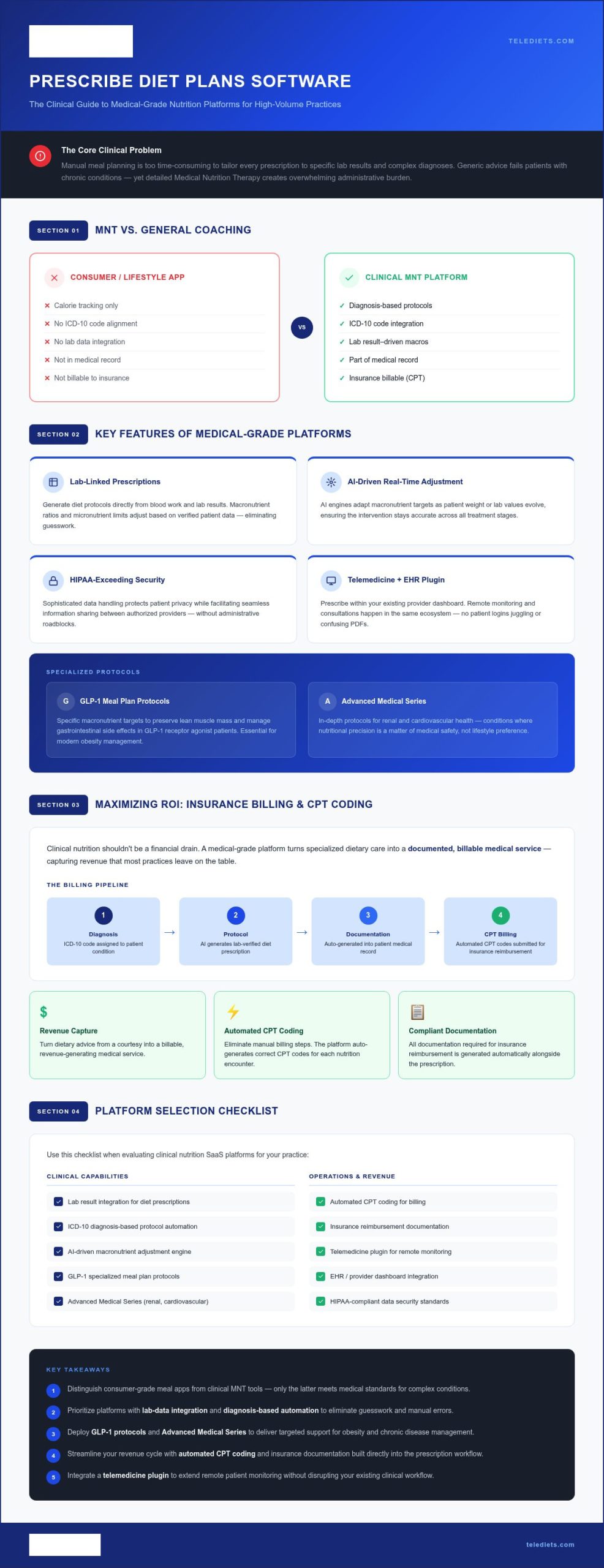
- Distinguish between consumer-grade meal apps and clinical Medical Nutrition Therapy tools to ensure your practice meets medical standards.
- Identify the best prescribe diet plans software for your clinic by evaluating lab-data integration and diagnosis-based automation capabilities.
- Utilize specialized protocols, such as GLP-1 meal plans and advanced medical series, to provide targeted support for chronic disease management.
- Streamline your revenue cycle by using integrated tools that automate CPT coding and the documentation required for insurance reimbursement.
- Enhance remote patient care and monitoring by integrating a dedicated telemedicine plugin into your clinical nutrition workflow.
Beyond Meal Planning: Why Physicians Need Prescriptive Nutrition Software
The digital health market is saturated with “lifestyle” apps designed for general wellness, but these tools often fail the rigors of a clinical environment. For a physician, nutrition isn’t just about calorie tracking or aesthetic meal photos; it’s a therapeutic intervention. The shift from general dieting to Medical Nutrition Therapy (MNT) requires a level of precision that standard software simply cannot provide. When you choose to prescribe diet plans software, you’re implementing a system built for diagnostic depth rather than casual coaching.
Lifestyle software lacks the underlying logic to manage complex chronic diseases. Evidence-based protocols are the backbone of effective care, and manual dietary calculations are notoriously prone to error and time-consuming. By automating these complex processes, you significantly reduce the administrative burden that contributes to physician burnout. You gain the ability to provide high-level nutritional guidance without sacrificing hours of your clinical day to manual planning.
The Clinical Difference: MNT vs. General Coaching
Prescribing nutrition involves a clear legal and professional distinction. Clinical platforms use ICD-10 codes to align every meal protocol with a specific diagnosis. This ensures that the nutritional advice you provide is a documented part of the patient’s medical record. It moves the conversation from vague “healthy eating” to a targeted, evidence-based therapy that supports your broader treatment plan.
Diagnostic Integration: Linking Lab Results to Diet
True clinical nutrition must be responsive to a patient’s unique physiology. Advanced prescribe diet plans software allows you to generate protocols directly from patient blood work and lab results. Whether you’re managing metabolic syndrome or renal issues, the software adjusts macronutrient ratios and micronutrient limits based on verified data. This integration eliminates guesswork and ensures that every prescription is scientifically valid and safe for the patient’s specific condition.
Key Features of Medical-Grade Prescription Platforms
Selecting the right prescribe diet plans software means looking for an engine that does more than provide static templates. A modern clinical platform uses AI-driven logic to adapt protocols in real-time as patient metrics evolve. This ensures that the intervention remains accurate even as the patient progresses through different stages of treatment. For a platform to truly support a high-volume clinic, it must offer several core capabilities:
- Automated clinical nutrition prescriptions based on real-time diagnostic data.
- AI-driven engines that adjust macronutrient targets as patient weight or lab results change.
- Security protocols that exceed basic HIPAA requirements for clinical-grade data handling.
Security must be a priority. Medical-grade platforms implement sophisticated data handling that protects patient privacy while facilitating seamless information sharing between authorized providers. It’s about building a digital environment where data flows securely to support clinical decisions without creating administrative roadblocks.
Specialized Protocols: GLP-1 and Advanced Medical Series
With the surge in GLP-1 receptor agonist prescriptions, specialized GLP-1 Meal Plan Protocols have become essential for modern obesity management. These patients require specific macronutrient targets to preserve lean muscle mass and manage gastrointestinal side effects effectively. Similarly, an Advanced Medical Series provides the necessary depth for complex cases, such as renal or cardiovascular health, where nutritional precision is a matter of medical safety rather than just a lifestyle choice.
Workflow Integration: Telemedicine and EHR Plugins
Friction is the enemy of patient adherence. By prescribing within your existing provider dashboard, you eliminate the need for patients to juggle multiple logins or confusing PDFs. Integrating a Telemedicine Plugin allows you to conduct remote monitoring and consultations within the same ecosystem where you manage prescriptions. If you’re looking to streamline your clinical workflow and improve patient outcomes, you can access professional-grade tools that bridge the gap between diagnosis and dietary therapy.
Maximizing ROI Through Insurance Billing and CPT Coding
Clinical nutrition shouldn’t be a financial drain on your practice. While many providers offer dietary advice as a courtesy, a clinical-grade platform allows you to treat these consultations as billable medical therapy. By using prescribe diet plans software with integrated billing tools, you can automate the rigorous documentation required for Medical Nutrition Therapy (MNT) reimbursement. This shift reduces administrative overhead and ensures that your specialized care is properly compensated by third-party payers.
The financial impact of integrating these services is substantial. Practice owners often find that capturing previously unbilled time creates a new, sustainable revenue cycle. Automated CPT coding increases practice revenue by identifying billable opportunities and generating the precise documentation insurers require for claim approval.
Navigating CPT Codes: 97802 and 97803
To maximize your ROI, you must master the specific codes for MNT. Use CPT 97802 for your initial nutrition assessments, which typically involve a comprehensive review of the patient’s medical history and dietary habits. For follow-up medical nutrition therapy sessions, CPT 97803 allows you to bill for ongoing interventions and plan adjustments. High-quality prescribe diet plans software tracks the duration of these encounters, making it easier to submit accurate, time-based claims without manual tracking.
Scaling the Practice with Automated Reimbursement
Transitioning from a traditional fee-for-service model to a comprehensive care model is the key to long-term growth. Clinical nutrition plays a vital role in meeting Value-Based Care (VBC) metrics, such as improving glycemic control or reducing hospital readmissions. When your documentation is automated, you can scale these services across your entire patient population without hiring additional administrative staff. To begin optimizing your revenue cycle, you can explore our integrated billing and coding tools to see how they fit your current workflow.
Selecting the Right Clinical Nutrition SaaS for Your Practice
Choosing a platform is a pivotal decision that impacts your clinical workflow and patient outcomes. It requires moving beyond aesthetic interfaces to find a tool that stands up to medical scrutiny. When you evaluate prescribe diet plans software, your goal is to find a system that functions as a seamless extension of your expertise. Follow these four steps to ensure you select a platform that meets the highest professional standards.
- Step 1: Evaluate the evidence base. Protocols must be grounded in clinical research rather than fleeting wellness trends. Ensure the meal plans are designed for therapeutic intervention.
- Step 2: Test the lab-data integration. A truly automated system should ingest blood work and diagnostic data to output a precise prescription. This reduces human error and saves valuable clinical time.
- Step 3: Verify specialized medical series. Modern clinics require specific protocols for obesity management, such as GLP-1 support, along with series dedicated to chronic disease.
- Step 4: Audit the billing toolset. The software must simplify the documentation for CPT codes like 97802 and 97803. If the coding assistant isn’t intuitive, your ROI will suffer.
The right SaaS provider acts as a stable partner in your practice’s growth. It should offer the technical reliability you need to focus on patient care without worrying about the underlying infrastructure or data security.
Why TeleDIETS is the Clinical Standard
TeleDIETS stands out as a premier choice for providers who demand clinical precision. By offering the Advanced Medical Series and specialized GLP-1 Meal Plan Protocols, it addresses the most complex needs of modern patient populations. The integrated Telemedicine Plugin further empowers your clinic by facilitating remote care and monitoring within a single, secure environment. This comprehensive approach ensures that your nutritional guidance is always evidence-based and professionally delivered. You can upgrade your clinical workflow with professional MNT software to begin transforming your nutritional therapy into a scalable, billable service.
Empowering Your Practice Through Clinical Precision
The transition from manual meal planning to an automated, diagnostic-driven workflow isn’t just an efficiency gain; it’s a fundamental shift in how you deliver care. By integrating evidence-based protocols such as the Advanced Medical Series, you ensure that every intervention is tailored to the patient’s specific lab results and medical needs. This level of precision elevates your practice, moving nutritional guidance from a general suggestion to a documented, billable medical therapy.
Implementing the right prescribe diet plans software allows you to capture lost revenue through integrated CPT 97802 and 97803 billing tools while providing essential support for complex cases like those requiring specialized GLP-1 protocols. You don’t have to navigate these technical and administrative hurdles alone. With the right clinical partner, you can focus on what matters most: achieving successful patient outcomes through scientifically validated nutrition.
Start Prescribing Clinical-Grade Nutrition Plans Today. We’re here to support your journey toward a more efficient, evidence-based, and profitable clinical environment.
Frequently Asked Questions
How does diet plan software integrate with my current EHR?
Medical nutrition platforms typically integrate with your Electronic Health Record (EHR) through secure API connections or dedicated plugins. This allows you to use your prescribe diet plans software directly from your provider dashboard. It ensures every prescription is automatically saved to the patient’s chart. By centralizing this data, you maintain a single source of truth for all interventions. It’s a method that significantly improves coordination among your clinical staff.
Can I bill insurance for medical nutrition therapy using this software?
You can bill insurance for medical nutrition therapy when using a platform equipped with clinical billing tools. These systems automate the documentation required by payers, turning nutritional guidance into a legitimate revenue stream. By integrating these tools into your workflow, you’ll move away from a fee-for-service model and capture reimbursement for the specialized care you already provide. It’s about ensuring your expertise is properly valued by insurers.
Is there specific software for prescribing GLP-1 meal plans?
Dedicated platforms now offer specialized GLP-1 Meal Plan Protocols tailored to the unique needs of patients on receptor agonist therapies. These protocols focus on high-protein, nutrient-dense plans that help manage common side effects. They’re essential for preventing the loss of lean muscle mass during rapid weight loss. Utilizing this clinical technology ensures your obesity management protocols remain evidence-based and effective for this specific patient population.
How do I prescribe a diet plan based on patient lab results?
Prescribing a diet plan based on lab results involves entering patient biomarkers into the platform’s AI-driven diagnostic engine. The software then cross-references this data with evidence-based protocols to generate a customized nutritional intervention. This process ensures that macronutrient and micronutrient levels are precisely adjusted for conditions like chronic kidney disease. It doesn’t require manual calculations, which reduces the risk of human error in complex cases.
What CPT codes are used for medical nutrition therapy software?
The primary CPT codes used for medical nutrition therapy are 97802 for the initial assessment and 97803 for follow-up sessions. Clinical platforms often include built-in coding assistants that track time and documentation to support these codes. This ensures your prescribe diet plans software remains a vital asset for practice revenue. It helps maintain a compliant billing cycle for every patient encounter without adding to your administrative burden.
Leave a Reply