
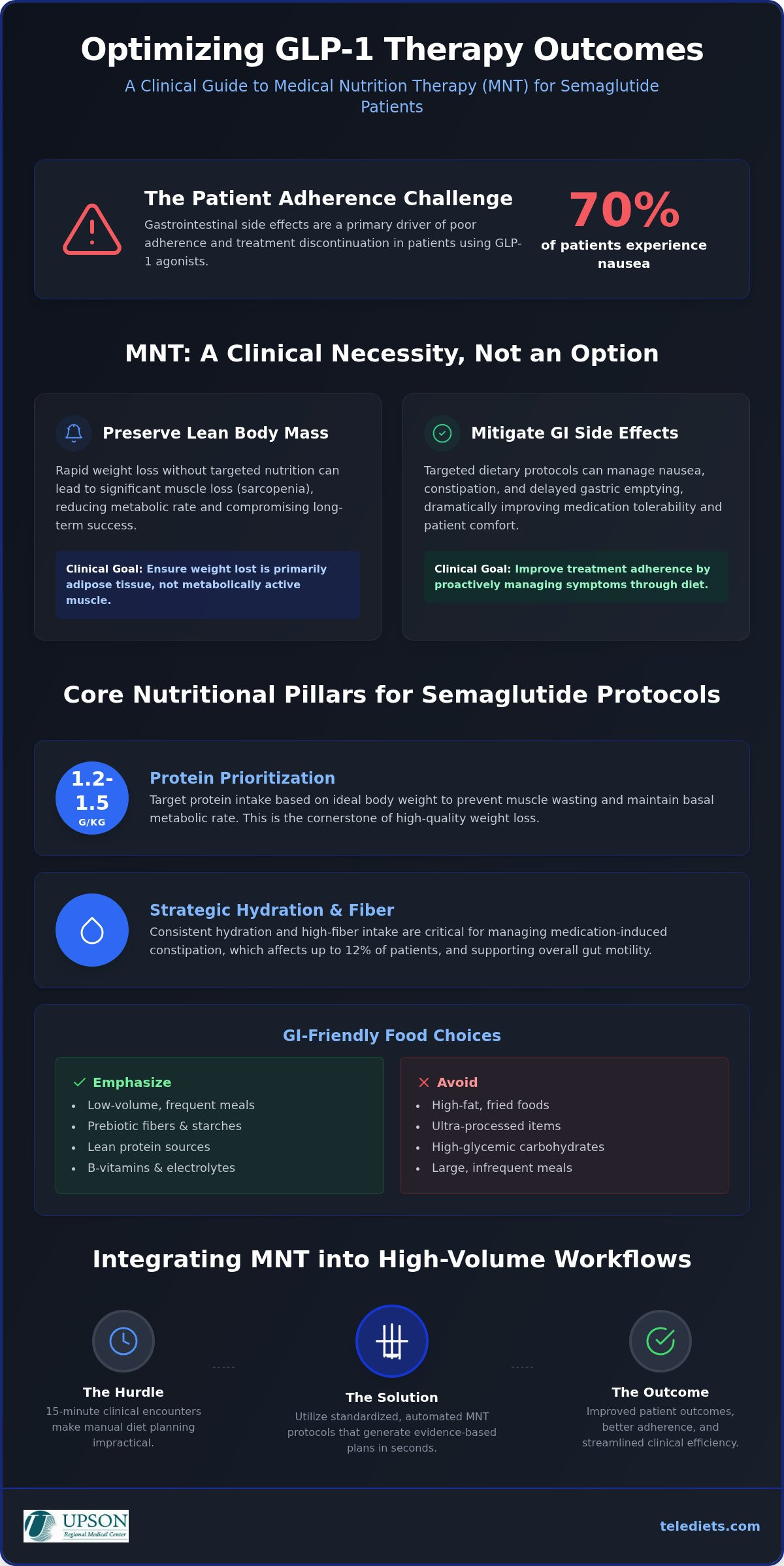
Did you know that up to 70% of patients on semaglutide experience nausea, often leading to poor adherence or treatment discontinuation? Implementing specialized nutrition protocols for semaglutide patients is no longer optional; it’s a clinical necessity for long-term success. You’ve likely seen the struggle firsthand in your own practice. Between managing rapid lean mass loss and navigating the time constraints of a high-volume clinic, providing detailed dietary counseling often feels like an impossible task. You need solutions that work within your existing workflow without sacrificing the quality of care.
This clinical guide introduces evidence-based medical nutrition therapy (MNT) protocols designed to mitigate gastrointestinal side effects and prevent sarcopenia. You’ll discover how to deploy standardized workflows that optimize patient outcomes while learning the framework to effectively bill for these essential nutritional services. By shifting the focus from simple calorie restriction to clinical protein density and strategic hydration, you can ensure your patients achieve high-quality weight loss that lasts. Let’s explore how to transform GLP-1 management into a streamlined, profitable, and patient-centered service.
Key Takeaways
- Understand why medical nutrition therapy is a strategic clinical requirement to prevent sarcopenia and preserve lean muscle mass during rapid weight loss.
- Identify specific protein and hydration targets required to build effective nutrition protocols for semaglutide patients while mitigating medication-induced GI side effects.
- Discover how to integrate standardized nutrition counseling into high-volume clinical workflows using automated software that generates protocols in seconds.
- Learn how to leverage specialized GLP-1 meal plans and the Advanced Medical Series to support patients with complex comorbidities like Type 2 Diabetes.
The Clinical Necessity of Medical Nutrition Therapy (MNT) in GLP-1 Care
Medical Nutrition Therapy (MNT) for patients prescribed Semaglutide represents far more than general dietary advice; it’s a strategic clinical intervention. While these medications are highly effective for weight loss, the therapeutic window requires precision. Without structured nutrition protocols for semaglutide patients, clinicians risk high discontinuation rates due to side effects or poor weight loss quality. MNT addresses the nutrient density challenge. When caloric intake is significantly suppressed, ensuring adequate micronutrient and protein intake becomes a medical priority to prevent deficiencies and optimize metabolic health. It’s a tool for success.
Preserving Lean Body Mass (LBM) During Rapid Weight Loss
Rapid weight loss often triggers a significant loss of lean body mass, increasing the risk of sarcopenic obesity. Standard low-calorie diets often fail because they don’t account for the protein-sparing requirements of GLP-1 therapy. Clinical protocols must prioritize protein-sparing modified approaches to ensure that the weight lost is primarily adipose tissue. Targeting specific protein goals helps maintain the basal metabolic rate. This preservation is essential for long-term weight maintenance once the medication is tapered or discontinued. You can’t ignore muscle health in obesity care.
Mitigating Gastrointestinal Side Effects Through Diet
Nausea and delayed gastric emptying affect up to 70% of the patient population. Standardized nutrition protocols for semaglutide patients focus on low-volume, high-frequency feeding patterns to manage these symptoms. By avoiding high-fat or ultra-processed foods that exacerbate GI distress, patients can maintain better adherence to their treatment plan. This proactive nutritional management directly improves medication tolerability. It reduces the likelihood of patients stopping therapy prematurely due to manageable side effects. Effective feeding patterns keep patients on track and comfortable.
Core Nutritional Pillars for Semaglutide Clinical Protocols
Developing effective nutrition protocols for semaglutide patients requires a shift from general wellness to clinical precision. It’s about more than calories; it’s about maintaining metabolic integrity during significant weight loss. The primary pillar is protein prioritization. Clinicians should target 1.2 to 1.5g per kilogram of ideal body weight. This level of intake is essential to prevent muscle wasting and maintain the patient’s basal metabolic rate. Without this focus, patients risk losing a disproportionate amount of lean tissue, which complicates long-term weight maintenance and metabolic health.
Managing medication-induced constipation is another critical clinical priority. Research indicates that constipation affects as many as 12% of users. Protocols must emphasize high-fiber intake and consistent hydration to ensure gastric motility remains stable. Additionally, incorporating B-vitamins and electrolytes helps mitigate common energy dips and the “fatigue factor” often reported during dose titration. To simplify this, you can prescribe evidence-based GLP-1 meal plans that automate these complex nutritional safeguards for your patients.
Macronutrient Distribution in GLP-1 Support Plans
Standardizing macronutrient ratios is vital for metabolic stability. While protein remains the priority, including complex, low-glycemic carbohydrates prevents reactive hypoglycemia. This balance ensures patients maintain steady energy levels throughout the day despite suppressed appetite. Clinical protocols should aim for a distribution that supports satiety while providing the necessary fuel for cellular function and physical activity.
Addressing Gastric Emptying and GI Health
Effective nutrition protocols for semaglutide patients must also account for altered gastric emptying rates. The choice of fiber matters; protocols should include prebiotic fibers and resistant starches to support the gut microbiome without causing excessive bloating. It’s equally important to identify and eliminate trigger foods like fried or highly processed items. These often exacerbate nausea and can lead to medication non-compliance if not addressed early in the treatment cycle.
Implementing Standardized Protocols in a High-Volume Clinical Workflow
High-volume clinics face a significant hurdle: the 15-minute clinical encounter. In this timeframe, manual diet planning isn’t just difficult; it’s practically impossible. You can’t provide the level of detail required for complex obesity care while managing titration and side effects. This is where diagnosis-based software becomes essential. By using digital tools to generate nutrition protocols for semaglutide patients in seconds, you remove the administrative burden while ensuring evidence-based guidance. Implementing standardized nutrition protocols for semaglutide patients ensures every patient receives the same high level of care regardless of clinic volume.
Integrating these tools into your EHR or telemedicine platform creates a seamless workflow. The nutrition plan becomes a permanent part of the medical record, allowing for better tracking of adherence. You don’t have to sacrifice quality for speed. If you’re ready to modernize your practice, you can get started with integrated GLP-1 nutrition tools today. This approach allows your team to focus on clinical outcomes rather than manual data entry.
Billing and Reimbursement for Nutrition Services
Standardizing care isn’t just about patient outcomes; it’s about practice sustainability. You can utilize CPT codes 97802 for initial assessments and 97803 for subsequent re-assessments. Structured protocols provide the clinical documentation necessary for insurance reimbursement, turning nutrition counseling into a billable medical service. This ensures your clinic is compensated for the specialized medical nutrition therapy required to support GLP-1 therapy.
Leveraging Telemedicine Plugins for Remote Patient Support
Telemedicine plugins allow you to deliver protocols via remote monitoring tools. This increases patient touchpoints without adding to your daily administrative overhead. It’s a scalable way to support patients between visits, ensuring they stay compliant with their nutritional goals and medication schedules. By providing remote support, you can scale your obesity management program while maintaining high standards of clinical oversight.
TeleDIETS: Automated GLP-1 Nutrition Protocols for Providers
TeleDIETS provides a sophisticated solution for providers looking to automate evidence-based nutrition protocols for semaglutide patients. Unlike static PDF handouts or generic advice, this AI-powered platform allows clinicians to prescribe specialized GLP-1 Meal Plan Protocols in seconds. The engine leverages patient lab data to tailor the Advanced Medical Series plans. This ensures that patients with comorbidities, such as Type 2 Diabetes, receive the precise support they need. By automating the complex calculations required for protein-sparing protocols, you empower your entire healthcare team. Medical assistants or nurses can deploy doctor-approved nutrition plans instantly. This allows you to scale your program without increasing your own administrative burden.
The focus extends beyond the duration of the medication. TeleDIETS helps patients transition from medication-assisted weight loss to sustainable lifestyle habits. This is critical for preventing weight regain once therapy concludes. It’s a tool for clinical precision.
Key Features of the TeleDIETS GLP-1 Support Series
The platform includes pre-built protocols specifically designed to counter common GLP-1 side effects like nausea and constipation. These plans prioritize nutrient density and protein-first eating patterns. Additionally, integrated telemedicine plugins allow for seamless remote care delivery. This keeps patients engaged and supported throughout their journey. You can monitor adherence and adjust plans without requiring additional in-office time.
Getting Started with Clinical-Grade Nutrition Software
A SaaS subscription offers modern obesity clinics the flexibility and scientific validity needed to thrive. You don’t need to spend hours on manual diet planning when technology can handle the precision for you. It’s time to streamline your GLP-1 clinical workflow with TeleDIETS and provide the high-quality care your patients deserve. This transition ensures your practice remains at the forefront of medical weight management while maximizing your team’s efficiency.
Scaling Success in Modern Obesity Care
Effective obesity management requires a shift from general dietary advice to precise, clinical interventions. By prioritizing protein-sparing protocols and managing gastrointestinal side effects through structured feeding patterns, you ensure that weight loss is both high-quality and sustainable. Implementing standardized nutrition protocols for semaglutide patients doesn’t have to be a burden on your clinical workflow. With the right digital tools, you can provide expert-level guidance in seconds while securing proper reimbursement for your services through integrated CPT coding tools.
TeleDIETS offers the infrastructure you need to excel. Our AI-powered clinical nutrition engine and Advanced Medical Series Meal Plans provide evidence-based support for even your most complex patients. These resources transform nutritional counseling into a seamless, billable part of your practice. It’s time to elevate your standard of care and improve long-term patient outcomes. Empower your practice with automated GLP-1 nutrition protocols and lead the way in evidence-based weight management. Your clinical expertise, supported by modern automation, will define the next generation of patient success.
Frequently Asked Questions
Why is protein intake so critical for patients on semaglutide?
High protein intake is essential to prevent sarcopenia and preserve lean muscle mass during the rapid weight loss phase of GLP-1 therapy. Research suggests targeting 1.2 to 1.5g/kg of body weight. Without adequate protein, patients lose muscle tissue, which lowers their basal metabolic rate and makes long-term weight maintenance significantly harder. Prioritizing protein ensures that the weight lost is primarily fat, protecting the patient’s metabolic health and overall physical strength.
Can physicians bill for medical nutrition therapy (MNT) provided via software?
Yes, clinicians can bill for MNT services using CPT codes 97802 for initial assessments and 97803 for follow-up sessions. Using software to deliver these services provides the necessary documentation of medical necessity and specific nutritional interventions required by insurance payers. This allows high-volume clinics to generate additional revenue while providing evidence-based nutrition protocols for semaglutide patients. It’s a scalable way to integrate billable nutritional care into existing medical workflows.
How do clinical nutrition protocols help manage semaglutide side effects like nausea?
Clinical protocols manage nausea by implementing low-volume, high-frequency feeding patterns and identifying specific trigger foods. High-fat and ultra-processed meals often worsen gastrointestinal distress due to delayed gastric emptying. By shifting to smaller, nutrient-dense meals and emphasizing proper hydration, patients can reduce the severity of nausea. This proactive dietary management improves medication tolerability and prevents patients from discontinuing their treatment prematurely. It’s a critical component of successful long-term GLP-1 therapy.
What is the difference between a standard weight loss diet and a GLP-1 support protocol?
Standard weight loss diets usually focus on simple calorie restriction, whereas a GLP-1 support protocol prioritizes nutrient density and muscle preservation. Because semaglutide significantly suppresses appetite, caloric volume is often too low to meet micronutrient needs without a structured plan. These specialized nutrition protocols for semaglutide patients also account for specific side effects like constipation and fatigue. They ensure every calorie consumed contributes to metabolic stability and treatment adherence.
How often should nutrition protocols be updated for patients on GLP-1 medications?
Nutrition protocols should be reviewed and updated during every dose titration phase or whenever a patient experiences a change in side effect severity. Regular reassessments allow clinicians to adjust protein targets and fiber intake based on the patient’s current tolerance and weight loss progress. Continuous monitoring ensures the protocol remains effective as the patient’s body composition and metabolic needs evolve. This iterative approach supports long-term success and helps maintain adherence throughout the treatment journey.
Leave a Reply