
Did you know that up to 40% of the total weight lost by patients on GLP-1 treatments can come from fat-free mass? While these medications offer transformative metabolic benefits, the risk of sarcopenic obesity is a growing clinical concern you likely face every day. Balancing rapid weight loss with muscle preservation requires a precise understanding of the protein requirements for patients on GLP-1 agonists. It’s no longer just about calorie deficits; it’s about protecting the metabolic engine through structured nutrition protocols.
You understand that early satiety often leads to patient non-compliance with traditional high-protein diets. This guide helps you master evidence-based protocols to preserve lean muscle mass and optimize metabolic outcomes without overwhelming your clinical workflow. We’ll explore the specific protein-to-weight ratios recommended by current 2026 standards and show you how to automate medical nutrition therapy prescriptions. By the end of this article, you’ll have a standardized framework to provide high-quality care while saving valuable time in your daily practice.
Key Takeaways
- Understand why standard protein guidelines are insufficient and how to apply the 1.2g/kg to 1.5g/kg clinical framework for effective muscle preservation.
- Identify practical methods for overcoming “protein aversion” and early satiety through strategic meal timing and clinical-grade supplementation.
- Establish precise protein requirements for patients on GLP-1 agonists to mitigate the risk of pathological muscle wasting and protect the resting metabolic rate.
- Learn to automate your medical nutrition therapy prescriptions using GLP-1 specific meal plan protocols that integrate directly into your clinical workflow.
The Clinical Necessity of High Protein Intake During GLP-1 Therapy
The therapeutic efficacy of GLP-1 receptor agonists presents a unique clinical paradox. While these medications excel at reducing adiposity, they simultaneously trigger a state of profound appetite suppression that often leads to pathological muscle wasting. For clinicians, the primary challenge isn’t just total weight loss; it’s ensuring that the weight lost is predominantly adipose tissue. Meeting the protein requirements for patients on GLP-1 agonists is the only way to prevent sarcopenic obesity and protect the patient’s resting metabolic rate (RMR). Research shows that patients consume up to 39% fewer calories on these therapies, making protein density the primary clinical concern. In 2026, clinical excellence in obesity medicine requires a “protein-sparing” approach where high-quality amino acid intake is prioritized to offset the catabolic risks of rapid fat-free mass reduction.
The Sarcopenia Risk: Understanding Lean Body Mass Loss
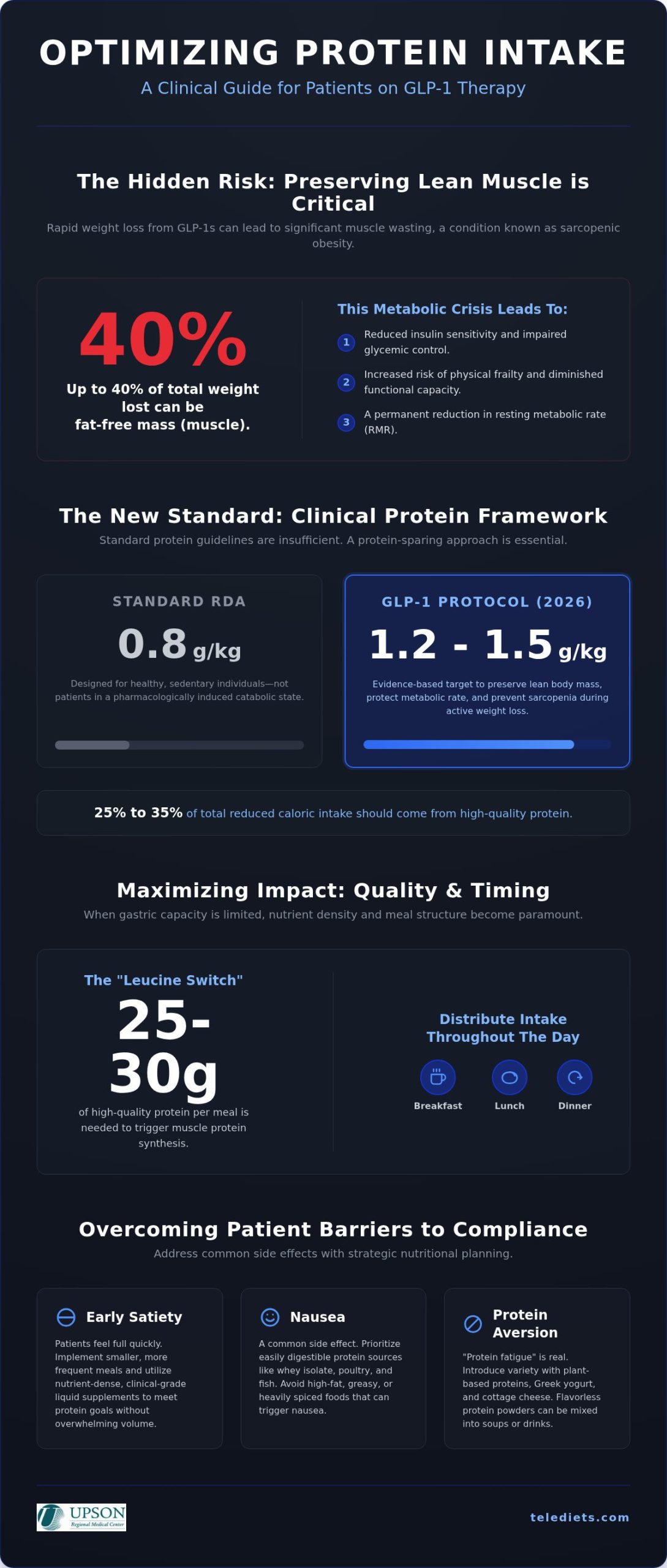
Recent data indicates that up to 40% of the total weight lost during GLP-1 therapy can come from fat-free mass, including skeletal muscle. This rapid degradation of lean body mass isn’t just a physical change; it’s a metabolic crisis. Losing muscle at this scale reduces the body’s ability to clear glucose and lowers the basal metabolic rate. Unmanaged muscle loss leads to several long-term issues:
- Reduced insulin sensitivity and impaired glycemic control.
- Increased risk of physical frailty and diminished functional capacity.
- A permanent reduction in the patient’s daily caloric expenditure.
Preserving Metabolic Integrity
High-protein protocols do more than just build muscle. They provide the necessary substrate for hormonal balance and help prevent the “rebound” weight gain often seen when medication is titrated. By combining resistance training with protein-rich medical nutrition therapy, you can help patients maintain their metabolic engine. Using tools like GLP-1 Meal Plan Protocols allows providers to standardize these interventions efficiently, ensuring every patient receives the metabolic protection they require.
Calculating Protein Requirements: Clinical Frameworks for 2026
The standard Recommended Dietary Allowance (RDA) of 0.8g/kg was never intended for patients in a pharmacologically induced catabolic state. For clinicians, establishing precise protein requirements for patients on GLP-1 agonists is the first step in preventing nitrogen imbalance and sarcopenia. Current evidence-based frameworks for 2026 suggest a target range of 1.2g/kg to 1.5g/kg of ideal body weight during active weight loss. To maintain metabolic health, protein should be calculated to represent approximately 25% to 35% of the patient’s total reduced caloric intake, ensuring that nutrient density remains high even as volume decreases.
Standard vs. GLP-1 Protein Targets
Patients on these medications experience a unique nutritional crisis. While a standard maintenance diet might be balanced, a GLP-1 induced caloric deficit requires aggressive protein titration to protect lean mass. You must adjust these targets based on patient comorbidities. For example, patients with Type 2 Diabetes often see improved glycemic control with higher protein, whereas those with advanced CKD require more nuanced limits. Successfully managing gastrointestinal side effects is often the deciding factor in whether a patient meets these goals. Using GLP-1 Meal Plan Protocols can help you generate these lab-based targets in seconds.
Bioavailability and Protein Quality
When gastric capacity is limited, protein quality becomes more important than raw quantity. Prioritize foods with high PDCAAS scores to ensure maximum nitrogen retention. Essential amino acids, specifically leucine, are the primary drivers of muscle protein synthesis. Aim for a bolus of 25-30g of high-quality protein at each meal. This distribution triggers the metabolic “leucine switch” throughout the day, preventing the muscle wasting often associated with rapid weight reduction. Focusing on bioavailability ensures that even with reduced intake, your patients maintain the structural integrity needed for long-term health.
Overcoming Patient Barriers: Nausea, Satiety, and Compliance
Clinical success depends on more than just a prescription. It requires managing the sensory and physiological barriers that prevent patients from eating. Many individuals develop a profound “protein fatigue” or aversion to heavy textures like red meat due to medication-induced nausea. Meeting the protein requirements for patients on GLP-1 agonists becomes a tactical challenge when every bite feels like a chore. Implementing “Z-mode” timing protocols allows patients to separate fluid intake from solid protein, maximizing the gastric volume available for essential nutrients.
Managing Gastric Emptying and Protein Absorption
Delayed gastric emptying is a hallmark of these therapies. While this helps with weight loss, it can make protein digestion uncomfortable. To maintain compliance, clinicians should prioritize protein as the first component of every meal. When solids are poorly tolerated, shifting to clinical-grade liquid isolates can bridge the gap. Consider these strategies for patients struggling with early satiety:
- Prescribing small, 10-15g protein-dense boluses every three hours.
- Prioritizing cold or room-temperature proteins, which are often better tolerated than hot, aromatic foods.
- Utilizing hydrolyzed whey or collagen peptides to reduce the digestive load on the stomach.
Patient Education for Long-term Adherence
Patients must undergo a psychological shift from calorie counting to macro-prioritization. You can help them visualize “protein-first” eating patterns by providing structured resources that rank foods by density. This education prevents the common mistake of filling up on low-protein vegetables or starches before the target amino acids are consumed. To streamline this process and improve patient outcomes, you can prescribe GLP-1 Meal Plan Protocols that automate these complex timing and density requirements for your practice.
Implementing GLP-1 Meal Plan Protocols in Your Practice
Transitioning from clinical theory to practical application is where many obesity medicine practices struggle. Standardizing the way you address the protein requirements for patients on GLP-1 agonists ensures that every patient receives metabolic protection without increasing your administrative load. By integrating automated MNT software, you can generate lab-based protocols in seconds rather than hours. This shift allows you to scale your practice through telemedicine-integrated nutrition engines that provide consistent, high-quality care to a growing patient population while maintaining strict clinical standards.
Automating the Prescription Workflow
Platforms like TeleDIETS translate complex lab data into actionable nutrition. The Advanced Medical Series Meal Plans are engineered for patients with suppressed appetites who must prioritize nutrient density. These standardized protocols ensure that patients receive the exact amino acid profiles discussed in previous sections without requiring you to build custom plans from scratch. Automation doesn’t just improve patient outcomes; it significantly reduces provider burnout by streamlining the most time-consuming aspects of medical nutrition therapy.
Billing and Revenue Cycle Management for MNT
A sustainable clinical model relies on efficient reimbursement. You can leverage CPT codes 97802 and 97803 to bill for the time spent on medical nutrition therapy. To facilitate this, use integrated insurance billing and CPT coding tools that fit directly into your telemedicine plugin workflow. Clear documentation of the patient’s metabolic needs and the prescribed protein targets is essential for successful insurance claims. By modernizing your revenue cycle, you turn nutritional support from a cost center into a value-added service.
Upgrade your clinical workflow with TeleDIETS GLP-1 protocols.
Standardizing Metabolic Excellence in GLP-1 Care
Mastering the protein requirements for patients on GLP-1 agonists is a clinical imperative to avoid the long-term metabolic consequences of sarcopenia. By moving beyond standard RDA guidelines and implementing targeted distribution strategies, you protect your patients’ lean body mass and resting metabolic rate. Overcoming barriers like early satiety and protein aversion requires a combination of patient education and precise, protocol-driven nutrition therapy.
TeleDIETS provides the essential framework to automate this complex process. Our platform features evidence-based GLP-1 support protocols and integrated CPT 97802/97803 billing tools to help scale your obesity medicine practice. The telemedicine-ready AI nutrition engine generates lab-based prescriptions in seconds, allowing you to focus on patient care rather than administrative overhead. Prescribe clinical-grade GLP-1 protocols in seconds with TeleDIETS and ensure your patients achieve their most successful outcomes. You’re now equipped to lead your practice into the next era of medical weight management with confidence.
Frequently Asked Questions
What is the recommended protein intake for patients on GLP-1 medications?
Current clinical consensus suggests a range of 1.2g/kg to 1.5g/kg of ideal body weight. This level is necessary to offset the catabolic state induced by rapid weight loss. Clinicians should ensure patients hit at least 20 to 30 grams per meal to stimulate muscle protein synthesis. Meeting these protein requirements for patients on GLP-1 agonists is essential for maintaining metabolic health and preventing the long-term risks associated with sarcopenic obesity.
Can patients meet protein requirements through whole foods alone on GLP-1s?
While possible, achieving these targets through whole foods is often difficult due to extreme appetite suppression. Patients typically consume 16% to 39% fewer calories, which makes high-volume foods like large chicken breasts or steaks physically challenging to finish. Incorporating nutrient-dense, low-volume options like Greek yogurt or lean fish helps. However, many clinicians find that a combination of whole foods and liquid protein is more sustainable for long-term patient compliance.
How do GLP-1 agonists affect muscle mass specifically?
These medications induce rapid weight loss that can result in up to 40% of the total loss coming from fat-free mass. This loss occurs because the body enters a significant caloric deficit where skeletal muscle is prioritized for energy if amino acid intake is insufficient. Protecting lean body mass is critical because muscle tissue is the primary driver of glucose disposal and resting metabolic rate. Without intervention, patients risk developing physical frailty.
Is protein supplementation necessary for all GLP-1 patients?
Supplementation isn’t mandatory for everyone, but it serves as a highly effective tool for those struggling with early satiety. Liquid protein isolates provide a high concentration of essential amino acids without the bulk of solid food. This is particularly useful during the titration phase when gastrointestinal side effects are most prominent. Clinicians should evaluate each patient’s daily intake to determine if supplements are needed to meet the protein requirements for patients on GLP-1 agonists.
How can physicians bill for medical nutrition therapy (MNT) consultations?
Physicians can utilize CPT codes 97802 for the initial assessment and 97803 for follow-up sessions. These codes are specifically designed for medical nutrition therapy provided by a registered dietitian or a qualified healthcare professional. Documentation must clearly state the medical necessity, such as obesity or diabetes management. Using integrated billing tools helps streamline the capture of these codes, ensuring that the nutritional component of GLP-1 therapy remains a financially viable service.
What are the best protein sources for patients with GLP-1 induced nausea?
Cold or room-temperature proteins are generally better tolerated than hot, aromatic dishes. Options like chilled shrimp, cottage cheese, or unflavored whey protein mixed into smoothies reduce the sensory triggers that exacerbate nausea. Small, frequent boluses of 10 to 15 grams are easier to digest than large meals. Prioritizing hydrolyzed proteins can also minimize the time food spends in the stomach, which is helpful given the delayed gastric emptying common with these medications.
Leave a Reply