
Clinical body composition trials reveal that up to 40% of total weight lost during GLP-1 receptor agonist therapy comes directly from lean muscle mass rather than adipose tissue. For healthcare providers, implementing structured MNT for GLP-1 induced sarcopenia prevention is no longer an optional wellness add-on; it’s a vital clinical intervention. Still, between 15-minute appointment slots and severe patient appetite suppression, helping individuals hit essential daily protein targets without triggering nausea is a persistent challenge.
You already recognize that rapid scale loss shouldn’t come at the expense of your patients’ long-term metabolic health and functional vitality. This clinical guide delivers evidence-based medical nutrition therapy protocols to protect skeletal muscle, support patient compliance through profound satiety, and integrate seamlessly into your daily workflow. Below, we review targeted macronutrient thresholds, standardized care templates, and compliant CPT coding pathways to establish sustainable, reimbursable nutrition care across your practice.
Key Takeaways
- Understand the underlying catabolic mechanisms of incretin therapy that drive muscle loss, shifting your clinical focus toward body composition optimization.
- Implement structured MNT for GLP-1 induced sarcopenia prevention by targeting 1.2 to 1.6 g/kg of daily protein alongside precise per-meal leucine thresholds.
- Establish an efficient four-step clinical pathway while securing legitimate practice reimbursement through CPT codes 97802 and 97803.
- Scale clinical efficiency and patient adherence across your panel using automated digital platforms and specialized GLP-1 meal plan protocols.
The Clinical Pathophysiology of GLP-1 Induced Sarcopenia
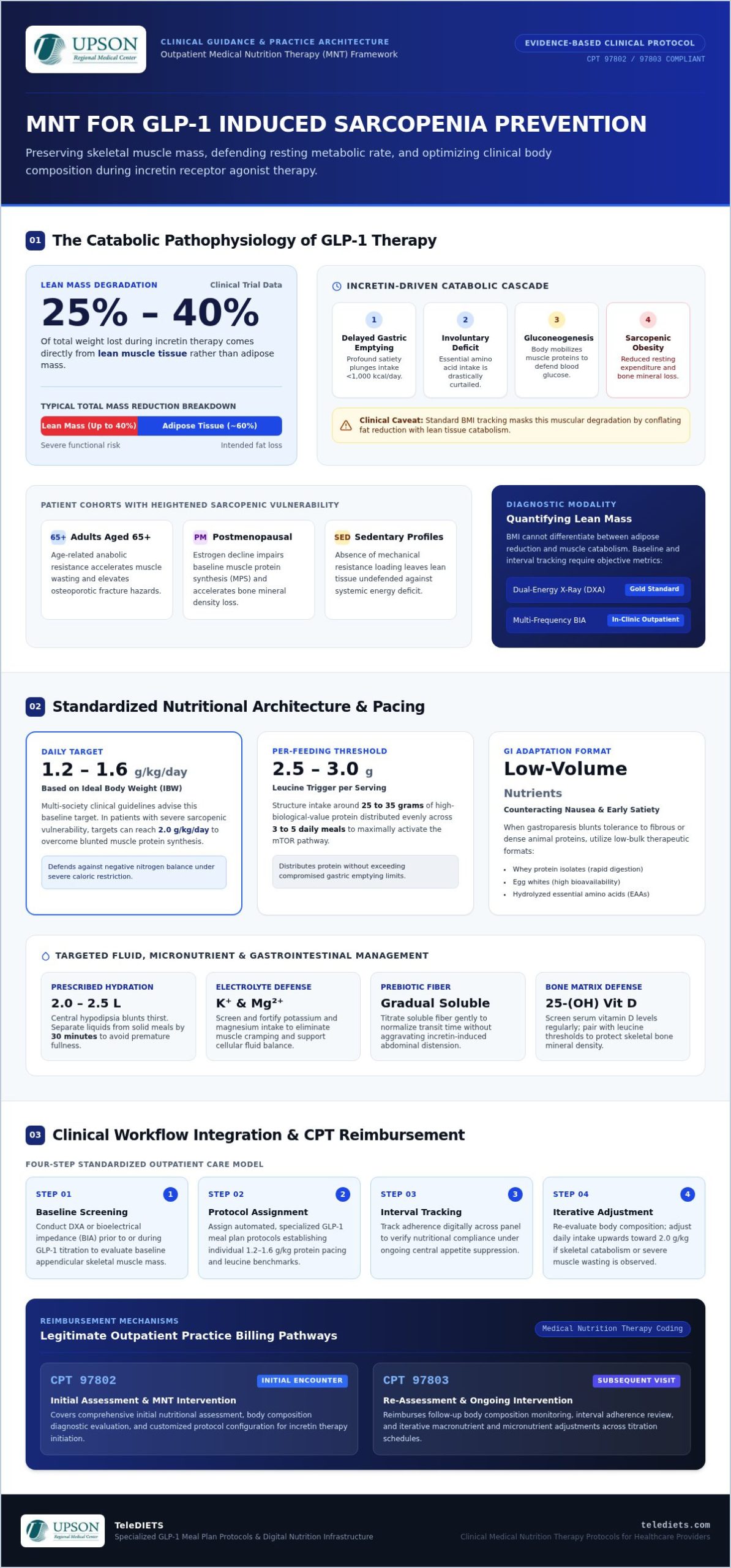
Pharmacological weight management has transformed obesity medicine, yet rapid reduction in scale weight frequently masks significant muscular wasting. Clinical trials indicate that non-adipose lean tissue accounts for 25% to 40% of total mass lost during incretin therapy. Without targeted MNT for GLP-1 induced sarcopenia prevention, patients risk developing sarcopenic obesity, characterized by decreased resting energy expenditure, metabolic deceleration, and diminished functional vitality.
Mechanisms Driving Skeletal Muscle Catabolism During Incretin Therapy
Muscle loss during GLP-1 therapy stems from severe energy deficits rather than direct receptor-mediated catabolism. Delayed gastric emptying and central satiety signaling suppress appetite so substantially that daily intake often plunges below 1,000 calories. This involuntary restriction blunts essential amino acid consumption, forcing a negative nitrogen balance. The body enters acute gluconeogenesis, mobilizing skeletal muscle proteins for baseline systemic glucose maintenance. Over time, accelerated lean tissue catabolism degrades bone mineral density and reduces functional capacity, aligning directly with classical clinical definitions of sarcopenia.
Diagnostic Criteria: Identifying Patients at Heightened Sarcopenic Risk
Protecting vulnerable patients begins by identifying baseline vulnerabilities prior to therapeutic titration. Standard BMI tracking fails to distinguish muscle volume from adiposity, making objective body composition quantification essential. Clinicians should evaluate appendicular skeletal muscle mass using dual-energy X-ray absorptiometry (DXA) or multi-frequency bioelectrical impedance analysis (BIA).
Several patient cohorts carry heightened physiological vulnerability:
- Adults aged 65 and older: Age-related anabolic resistance accelerates muscle atrophy and elevates fracture risks.
- Postmenopausal women: Estrogen decline impairs baseline muscle protein synthesis and bone mineral density.
- Sedentary individuals: Inactive patients lack the mechanical loading required to defend lean mass against systemic catabolism.
Evidence-Based MNT Protocols for Preserving Skeletal Muscle Mass
Executing structured MNT for GLP-1 induced sarcopenia prevention requires moving beyond generic caloric targets. Multi-society clinical guidelines advise maintaining a daily protein intake between 1.2 and 1.6 grams per kilogram of ideal body weight. In patients with severe sarcopenic vulnerability, targets can reach 2.0 g/kg/day to overcome blunted muscle protein synthesis.
Protein Pacing and Amino Acid Optimization Under Severe Appetite Suppression
Gastric delays make consuming voluminous whole foods difficult. Clinicians should structure intake around 25 to 35 grams of high-biological-value protein across three to five meals, delivering the critical 2.5 to 3.0 grams of leucine needed per feeding. When early satiety or nausea limits dense animal proteins, integrate whey protein isolates, egg whites, or hydrolyzed essential amino acids into low-volume formats. Utilizing specialized GLP-1 meal plan protocols ensures patients meet these precise thresholds without overwhelming gastrointestinal tolerance.
Fluid Balance, Electrolyte Management, and Gastrointestinal Tolerance
Central hypodipsia often accompanies incretin treatment, blunting the natural thirst mechanism and heightening dehydration risk. Standardized nutritional management must pair scheduled fluid intervals with targeted micronutrient monitoring:
- Hydration targets: Prescribe 2.0 to 2.5 liters of total fluids daily, separated from solid meals by 30 minutes to reduce premature fullness.
- Electrolyte defense: Screen and fortify daily intake of potassium and magnesium to mitigate muscle cramping and maintain cellular hydration.
- Soluble fiber titration: Introduce gentle, soluble prebiotic fibers gradually to support normal bowel transit without worsening abdominal distension.
- Bone matrix protection: Assess 25-hydroxyvitamin D serum levels regularly, pairing protein pacing with adequate vitamin D to protect underlying skeletal structure.
Integrating MNT into Outpatient Workflows and Clinical Billing
Establishing an effective pathway for MNT for GLP-1 induced sarcopenia prevention doesn’t require overhauling your entire clinical schedule. A standardized four-step model streamlines outpatient delivery: baseline body composition screening, automated protocol assignment, interval adherence tracking, and iterative macronutrient adjustment. This structured continuum defends patient muscle mass while capturing compliant reimbursement for your clinical team.
Operationalizing In-Clinic Nutrition Prescriptions in Under Five Minutes
Drafting customized high-protein meal plans manually during standard 15-minute encounters isn’t feasible. Practices can bypass administrative drag by leveraging automated, diagnosis-driven clinical nutrition software embedded directly into standard electronic workflows. Within minutes, your staff can deploy tailored nutritional directives aligned with baseline patient biometrics. You can access specialized clinical billing and dietary tools to operationalize evidence-based care across your patient panel effortlessly.
CPT Coding, Documentation Requirements, and Insurance Reimbursement Compliance
Structured nutritional interventions qualify for dedicated reimbursement when reported accurately. Bill CPT code 97802 for the initial face-to-face medical nutrition therapy assessment (15-minute units) and CPT code 97803 for subsequent reassessments and body composition monitoring encounters.
Maintain compliant billing by adhering to core payer guidelines:
- Diagnostic documentation: While Medicare restricts 97802 and 97803 to diabetes and non-dialysis renal disease, major commercial carriers cover standalone obesity (ICD-10 E66) under preventive Affordable Care Act mandates.
- Time-based accounting: Adhere strictly to the CMS midpoint rule, spending at least eight minutes to bill a single 15-minute unit, and document exact face-to-face start and stop times.
- Multidisciplinary coordination: Document collaborative referrals between prescribing physicians and registered dietitians, detailing specific functional goals and patient response to dietary titration.
Scaling Standardized GLP-1 Nutritional Protocols with Digital Platforms
Modern obesity medicine demands scalable infrastructure to bridge the gap between initial medication titration and day-to-day dietary execution. Relying on handwritten dietary advice leaves patients adrift when managing severe appetite suppression at home. By integrating cloud-based clinical platforms, practices can standardize MNT for GLP-1 induced sarcopenia prevention across broad panels while preserving valuable physician time.
Deploying Specialized GLP-1 Meal Plan Templates Across Clinical Panels
Turnkey, clinical-grade dietary protocols eliminate guesswork for both providers and patients. Automated nutrition engines dynamically calculate baseline macronutrient splits directly from biometric lab inputs, generating low-volume, nutrient-dense meal plans engineered for delayed gastric emptying. Tracking patient dietary adherence against objective DXA or BIA scans over six to twelve months ensures that weight lost reflects targeted adipose reduction rather than debilitating muscular atrophy.
Enhancing Telehealth Delivery Through Integrated Nutrition Platforms
Extending nutritional oversight between in-person appointments reinforces treatment adherence and protects lean tissue. Deploying a dedicated telemedicine plugin enables practices to deliver asynchronous dietary support directly to provider-branded patient mobile portals. Patients receive structured meal schedules, hydration prompts, and protein checkpoints right on their personal devices.
These integrated digital solutions transform routine chronic care workflows:
- Continuous adherence insight: Providers monitor meal logs and macro distribution without requiring repetitive, manual chart reviews.
- Asynchronous care touchpoints: Secure messaging features allow clinical staff to address medication-induced nausea or early satiety before adherence falters.
- Seamless software deployment: Practices can explore clinical MNT software options to standardize dietary delivery, elevate care quality, and establish comprehensive nutritional therapy as a true practice differentiator.
Transforming Incretin Care Through Standardized Clinical Nutrition
Preserving functional vitality requires shifting obesity medicine from arbitrary scale tracking to active body composition defense. Embedding structured MNT for GLP-1 induced sarcopenia prevention ensures your patients retain critical skeletal muscle while achieving genuine metabolic health. Combining targeted protein pacing with seamless CPT 97802 and 97803 billing workflows protects patient outcomes so you don’t sacrifice valuable consultation time or leave legitimate insurance reimbursement uncaptured.
Backed by over 25 years of nutrition software expertise from Lifestyles Technologies, modern clinical platforms deliver the automated infrastructure needed to manage complex incretin therapy at scale. You can equip your clinical practice with evidence-based GLP-1 meal plan protocols designed to simplify low-volume dietary prescriptions and reinforce patient compliance between appointments. Empower your team with the right clinical framework today, and guide your patients toward sustainable, long-term vitality.
Frequently Asked Questions
Why do patients taking GLP-1 receptor agonists lose significant lean muscle mass?
GLP-1 receptor agonists induce profound central appetite suppression and delay gastric emptying, causing patients to drastically cut their caloric intake. When daily energy drops steeply below basal requirements, the body enters a catabolic state and breaks down skeletal muscle for gluconeogenesis and energy. Without structured MNT for GLP-1 induced sarcopenia prevention, this severe nitrogen deficit drives up to 40% of overall weight reduction directly from functional lean tissue.
What daily protein intake is recommended during medical nutrition therapy for GLP-1 patients?
Clinical consensus guidelines recommend a target protein intake of 1.2 to 1.6 grams per kilogram of ideal body weight daily during active incretin therapy. For older adults, sedentary patients, or those exhibiting early sarcopenic markers, requirements may scale up to 2.0 g/kg/day. Structuring this intake into 25 to 35-gram boluses per meal ensures adequate leucine delivery to consistently stimulate muscle protein synthesis despite reduced overall food consumption.
Can medical nutrition therapy for sarcopenia prevention be billed under CPT codes?
Yes, qualified clinicians can bill medical nutrition therapy using CPT code 97802 for initial assessments and CPT code 97803 for subsequent reassessments. While Medicare restricts these specific codes to patients with documented type 1 or 2 diabetes and chronic kidney disease, many commercial health insurance plans cover them for obesity and metabolic risk under preventive health mandates. Accurate time documentation and diagnostic coding remain essential for compliant reimbursement.
How do clinicians overcome appetite suppression when prescribing high-protein dietary protocols?
Clinicians address incretin-induced satiety by prioritizing low-volume, high-density protein formulations rather than bulky, fibrous meals that trigger early fullness or nausea. Prescribing liquid whey protein isolates, hydrolyzed essential amino acids, and egg-white preparations delivers essential amino acids in minimal fluid volume. Dividing daily intake across three to five smaller feedings and separating beverage intake from solid meals further prevents gastric distension while supporting compliance.
How does automated MNT software integrate into high-volume outpatient clinical workflows?
Cloud-based platforms integrate directly into existing practice workflows to generate standardized, lab-aligned GLP-1 meal plan protocols in just seconds. Rather than spending valuable consultation time writing manual diets, providers use automated clinical software to calculate tailored macronutrient splits and deliver asynchronous guidance through a telemedicine plugin. This streamlined automation allows practices to scale MNT for GLP-1 induced sarcopenia prevention across expanding patient panels without increasing administrative burdens.
Leave a Reply