
A single “liver-cleansing” food isn’t the answer; an overall eating pattern matters more. For adults with NAFLD, dietary protocols for fatty liver disease (NAFLD) generally center on Mediterranean-style meals rich in vegetables, fruit, whole grains, legumes, nuts, fish, and unsaturated fats, while limiting saturated fat, especially from red and processed meat. Alcohol is also relevant: people managing fatty liver are generally advised to restrict or avoid it.
Changing familiar food and lifestyle habits can be challenging, especially when advice seems to conflict. Focus on sustainable choices rather than restrictive diets or claims about a single “superfood.”
This article covers foods to include, how alcohol relates to NAFLD, and how everyday habits such as physical activity can support liver health. It also explains how to make these changes part of a consistent eating pattern while adapting choices to individual medical needs.
Key Takeaways
- Build meals around minimally processed, high-fiber foods, and use a balanced-plate approach to make portions easier to plan.
- Consider how alcohol may interact with metabolic risk factors, including BMI, when supporting liver health.
- Look for practical swaps that reduce added sugars, refined carbohydrates, and saturated fats without relying on restrictive rules.
- Explore how regular physical activity and gradual, clinically appropriate weight changes can complement dietary adjustments.
1. Fatty liver disease diet: What foods help prevent and reverse fatty liver?
For people with metabolic dysfunction-associated steatotic liver disease, a Mediterranean-style eating pattern offers a flexible framework. A practical starting point for dietary protocols for fatty liver disease (NAFLD) is to build meals around vegetables, fruit, whole grains, legumes, fish, and unsaturated fats. Nonalcoholic fatty liver disease is now also called metabolic dysfunction-associated steatotic liver disease, or MASLD. The overall pattern matters more than relying on one food to reverse liver fat.
Choose olive oil, avocados, nuts, and seeds instead of butter or other sources of saturated fat. Include fish or seafood a couple of times a week, and keep red or processed meat occasional. Berries and leafy greens add variety, while beans and lentils provide plant-based options. These foods can fit familiar meals without requiring a strict menu.
Are Mediterranean, low-carbohydrate, or low-fat diets most effective for fatty liver disease? A Mediterranean-style pattern is a practical option, but recommendations emphasize the overall dietary pattern rather than one universally superior carbohydrate or fat target. With dietary protocols for fatty liver disease (NAFLD), focus on the whole eating pattern and adapt choices to each patient’s health needs.
Can coffee, supplements, or specific foods reverse fatty liver disease? No single food guarantees reversal, and people with MASLD should take supplements for the condition only when prescribed by a healthcare professional. A UChicago Medicine dietitian recommends three cups of coffee per day for people with non-alcoholic fatty liver disease. Treat coffee as one possible part of a broader routine, not a replacement for dietary changes or medical care.
What are the risks of rapid weight loss, fasting, or restrictive diets for fatty liver disease? Extreme restriction can make balanced, sustainable eating harder to maintain. Start with manageable changes, such as replacing processed meat with beans or fish. People with advanced steatotic liver disease or cirrhosis may need a more specific eating plan, so account for disease severity and overall health when making dietary changes.
2. Alcohol and NAFLD risk
Alcohol matters because metabolic and alcohol-related risks can overlap. For people with MASLD, alcohol avoidance is generally advised; adults with NAFLD should restrict or eliminate alcohol. Make alcohol reduction part of a broader nutrition pattern, not a substitute for food changes. For example, replacing a regular alcoholic drink with sparkling water can make an alcohol-free routine easier to maintain.
BMI also matters. For patients with a BMI of at least 30, alcohol intake clearly increases NAFLD risk. For people below BMI 30, evidence on alcohol and NAFLD risk is lacking, even though light to moderate drinking has been associated with lower risk. That association is not a reason to start drinking or treat alcohol as protective.
Consider both the amount and pattern of drinking alongside metabolic health. A clinical review can account for obesity, diabetes, high blood pressure, abnormal blood lipids, and cardiovascular disease, which may coexist with NAFLD. Occasional and routine drinking represent different patterns to discuss, but avoiding alcohol remains the cautious direction for MASLD.
Make alcohol reduction practical: identify when drinking is most likely, such as at dinner or social events, and choose an alternative in advance. A nonalcoholic drink with a meal or a different after-work routine can help reduce alcohol intake without changing the rest of the meal. Whole grains, vegetables, and other healthy foods support an overall dietary pattern, but they do not cancel alcohol-related risk. A dietitian can help connect alcohol choices with nutrition goals and the patient’s clinical picture, including any history of alcoholic liver disease. Keep the plan consistent and address drinking alongside other associated metabolic risks.
3. Whole foods, including vegetables, fruit, legumes, and whole grains
For nonalcoholic fatty liver disease, prioritize fiber-rich foods and replace highly processed options. Vegetables, fruit, beans, lentils, and whole grains can form the base of meals. Fiber supports blood sugar management and insulin sensitivity, which are relevant because metabolic dysfunction and diabetes commonly accompany liver concerns. For example, add beans to a grain bowl or serve fruit at breakfast instead of a sweetened snack.
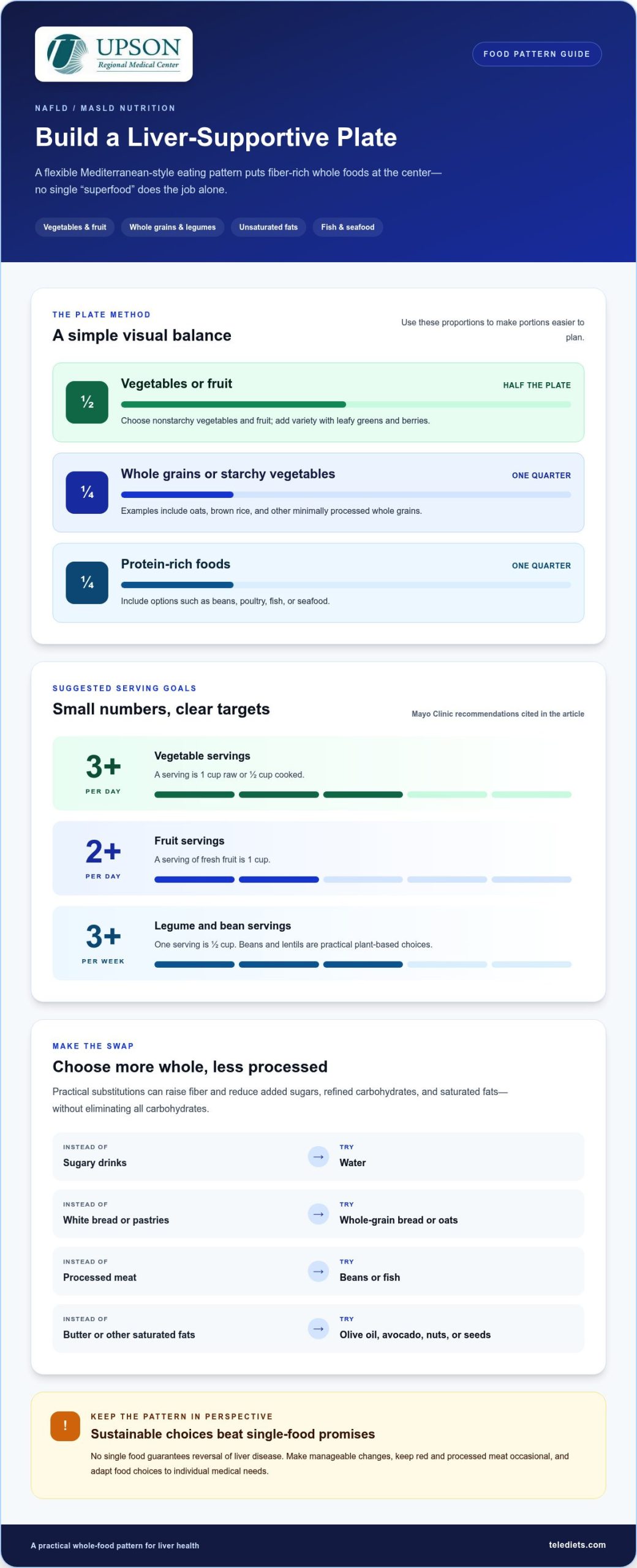
A plate method can make portions easier to visualize: fill half the plate with nonstarchy vegetables or fruit, one-quarter with whole grains or starchy vegetables, and one-quarter with protein-rich foods such as beans or poultry. A serving of vegetables is 1 cup raw or 1/2 cup cooked; a serving of fresh fruit is 1 cup. One serving of beans or legumes is half a cup. Mayo Clinic recommends at least three servings of vegetables daily, at least two servings of fruit daily, and three or more servings of legumes and beans a week for people with MASLD.
Limit foods and drinks with added fructose, including sweetened beverages, packaged sweets, and some processed foods. Reduce refined carbohydrates such as white bread and pastries, as well as fast food and commercial baked goods. These substitutions support a higher-fiber eating pattern without requiring patients to eliminate all carbohydrates. Choose plain whole grains, such as oats or brown rice, instead of refined versions.
Make one change at a time: replace a sugary drink with water, add lentils to soup, or choose whole-grain bread at lunch. These steps can improve overall diet quality and support weight loss when clinically appropriate, but no single food reverses liver disease. Adapt familiar meals by adding vegetables to a sandwich or mixing beans into a casserole. Pairing fiber-rich choices with regular meals can also support blood sugar management and liver health.
4. Diet and lifestyle changes for fatty liver disease
Diet quality, movement, and sleep work together in managing metabolic liver disease. Mayo Clinic says typically, losing 10% of your body weight or more is recommended. That target describes weight loss, not a rapid deadline. Use gradual, sustainable changes rather than fasting or crash diets, which can make balanced eating harder to maintain.
How much weight loss improves fatty liver disease, and how quickly should it happen? Mayo Clinic’s typical target is losing 10% of body weight or more; aim for steady progress rather than rapid loss. Pair achievable food changes with regular activity, and avoid treating a short-term drop on the scale as the only measure of progress.
For adults with NAFLD, aim for 150–300 minutes of moderate-intensity aerobic activity per week, or 75–150 minutes of vigorous activity per week. Resistance training can complement aerobic exercise. A brisk walk and strength exercises are practical examples. Quality sleep also belongs in a healthy lifestyle pattern, alongside consistent eating habits and reduced sugary drinks.
What dietary recommendations apply to fatty liver disease with diabetes, obesity, or cirrhosis? People with NAFLD should be evaluated for coexisting diabetes, obesity, hypertension, dyslipidemia, and cardiovascular disease, and those conditions should be actively managed. With cirrhosis or advanced liver disease, dietary needs may differ; a doctor or dietitian can guide appropriate adjustments. Nonalcoholic steatohepatitis involves more than liver fat, so care should address metabolic health as well as eating habits. Alcoholic fatty liver has a different cause, but avoiding excess alcohol remains relevant to liver health.
TeleDIETS: Standard Series Meal Plans
TeleDIETS helps healthcare professionals incorporate structured nutrition plans into chronic disease care. Its Standard Series Meal Plans support general nutrition workflows, while Advanced Medical Series Meal Plans are designed for more complex clinical needs. The platform can tailor plans to lab results and clinical diagnoses, helping practices turn nutrition priorities into care plans.
For patients with fatty liver disease, clinicians can use the dietary principles above to guide nutrition planning, then select an appropriate plan for the patient’s broader clinical profile. TeleDIETS also offers GLP-1 Meal Plan Protocols and Insurance Billing & CPT Coding Tools. These resources are intended for healthcare professionals integrating nutrition into practice workflows, not as a substitute for individualized clinical judgment.
Contact TeleDIETS to explore how its meal plans can support your practice.
Turn nutrition goals into a sustainable care pathway
Progress comes from making nutrition guidance part of ongoing care, rather than treating it as a short-term change. A clinical approach to dietary protocols for fatty liver disease (NAFLD) can translate broad health priorities into practical steps suited to each patient’s needs. Choose a manageable focus, such as planning balanced meals or building regular movement into the week, then review how it fits with other metabolic health goals.
For healthcare professionals, the next step is to establish a consistent way to integrate nutrition into practice workflows. TeleDIETS provides clinical meal-planning tools to support nutrition care in chronic disease management. Explore how the platform can fit your practice and care-planning process.
Contact TeleDIETS for support as you develop a practical nutrition workflow. Each thoughtful, sustainable step can help move care forward.
Frequently Asked Questions
Fatty liver disease diet: What foods help prevent and reverse fatty liver?
A balanced eating pattern can support liver health, but no individual food guarantees reversal. Build familiar meals around fiber and protein, such as oatmeal with unsweetened yogurt or a bean-and-vegetable bowl. Replace one highly processed snack with a whole-food option, then repeat changes you can sustain. If you have a diagnosis or changes in liver tests, discuss nutrition goals as part of clinical care.
How can I improve my liver health?
Start with changes that address both eating habits and metabolic health. Plan regular meals, choose water instead of sweetened drinks, and schedule movement that fits your routine, such as a walk after lunch. If you have diabetes, high blood pressure, or abnormal blood lipids, include these conditions in your care plan. A clinician can help coordinate liver-related goals with your wider health needs.
Which foods should I eat?
Include a variety of vegetables, fruit, legumes, whole grains, and lean protein across meals. For a practical lunch, combine brown rice, beans, chopped vegetables, and a modest portion of chicken or fish. At breakfast, try oats with fruit and unsalted nuts. These flexible combinations let you choose foods that suit your preferences, budget, and usual cooking routine.
What dietary pattern is recommended for NAFLD and MASLD?
A Mediterranean-style eating pattern is commonly recommended for both NAFLD and MASLD. Treat it as a flexible framework, not a fixed menu: eat plant foods regularly, include fish or poultry, and favor unsaturated fats. Adapt the pattern to familiar meals and clinical needs rather than following a restrictive plan that is difficult to maintain.
Which foods should people with fatty liver disease eat more of?
Include more high-fiber choices in meals and snacks, such as lentils, oats, fruit, vegetables, and nuts. Add lentils to soup, serve oats at breakfast, or pair fruit with plain yogurt for a simple snack. Rotating choices during the week adds variety. These foods support a balanced dietary pattern; they are not a stand-alone treatment.
Which foods and drinks should people with fatty liver disease limit or avoid?
Reduce sugary drinks, foods with added sugars, refined grains, fast food, and processed meats. Alcohol is also a consideration for people with MASLD, for whom avoidance is generally advised. When shopping, compare packaged products and choose options with less added sugar. Focus on practical substitutions, such as water instead of soda or a less processed snack.
Leave a Reply