
A clinic-ready IBS low FODMAP meal plan generator can organize weekly menus and grocery lists around the elimination, reintroduction, and personalization phases. The strict first phase is intended to last 2-6 weeks, followed by gradual food challenges and a personalized eating pattern that reflects each person’s symptom responses.
Meal planning is only one part of clinical care. Patients also need a clear way to record what they eat and how they feel. A structured plan makes patterns easier to review without treating every high-FODMAP food as a permanent restriction.
This article covers practical weekly menus and grocery lists, symptom and possible-trigger tracking, and the transition from elimination to reintroduction. It also explains how an IBS low FODMAP meal plan generator for clinics can support a consistent nutrition workflow while preserving professional judgment and individualization.
Key Takeaways
- Pair meal records with symptom notes so patterns and possible food triggers are easier to review.
- Plan reintroduction as a structured process, testing foods individually and recording responses before broadening the menu.
- Build weekly menus and grocery lists around suitable portions, practical substitutions, and meals patients can prepare consistently.
- Use the elimination phase as a limited part of care, then shift toward a personalized eating pattern based on observed tolerance.
Monitoring symptoms and identifying personal food triggers
The low-FODMAP diet limits fermentable carbohydrates that can worsen IBS symptoms. FODMAP means fermentable oligosaccharides, disaccharides, monosaccharides, and polyols. Gut bacteria ferment these carbohydrates, producing gas that can contribute to pain and bloating. According to National Center for Biotechnology Information, the low-FODMAP diet reduced IBS severity compared with a control diet (SMD −0.66, 95% CI −0.88 to −0.44).
A two-week trial of low-FODMAP food substitutions can help assess whether symptoms improve. Track meals, portions, bowel changes, pain, bloating, and constipation in a daily diary. Record when symptoms occur in relation to meals, so clinicians can assess possible food responses and identify patterns that may need further review.
Reintroducing Foods and Tracking Symptoms
Food reintroduction tests high-FODMAP foods one at a time after elimination, helping identify personal tolerance. Test one food category at a time, increasing the amount over a few days while recording symptoms. Monitor responses for about 72 hours before introducing another challenge. A diary should capture the food, portion, timing, and changes in symptoms, so clinicians can compare responses rather than relying on memory.
Personalizing IBS Meal Plans
A meal plan generator can organize practical options around recorded symptoms, food preferences, and tolerated ingredients. A person may react to only one or two FODMAP carbohydrates, not every category. An IBS low FODMAP meal plan generator for clinics can help organize suitable swaps and adapt menus as food challenges reveal individual patterns.
Check ingredient labels on packaged foods, including branded products, because formulations vary. Look for onion, garlic, wheat, and high-fructose corn syrup in sauces, soups, and seasonings as well as main ingredients. Even products marketed as alternatives need an ingredient review. Record the brand and serving with symptoms, since both portion size and ingredients help clinicians assess how a food fits the plan.
University Hospitals recommends two weeks of low-FODMAP food substitutions to assess IBS symptom improvement; relief may take 7 days or more. During reintroduction, test each food in increasing quantities for a few days, or bring foods back one item per week with guidance from a doctor or dietitian. Reintroduce one group at a time and avoid only foods that bother you.
Suggested duration of the restriction and reintroduction phases
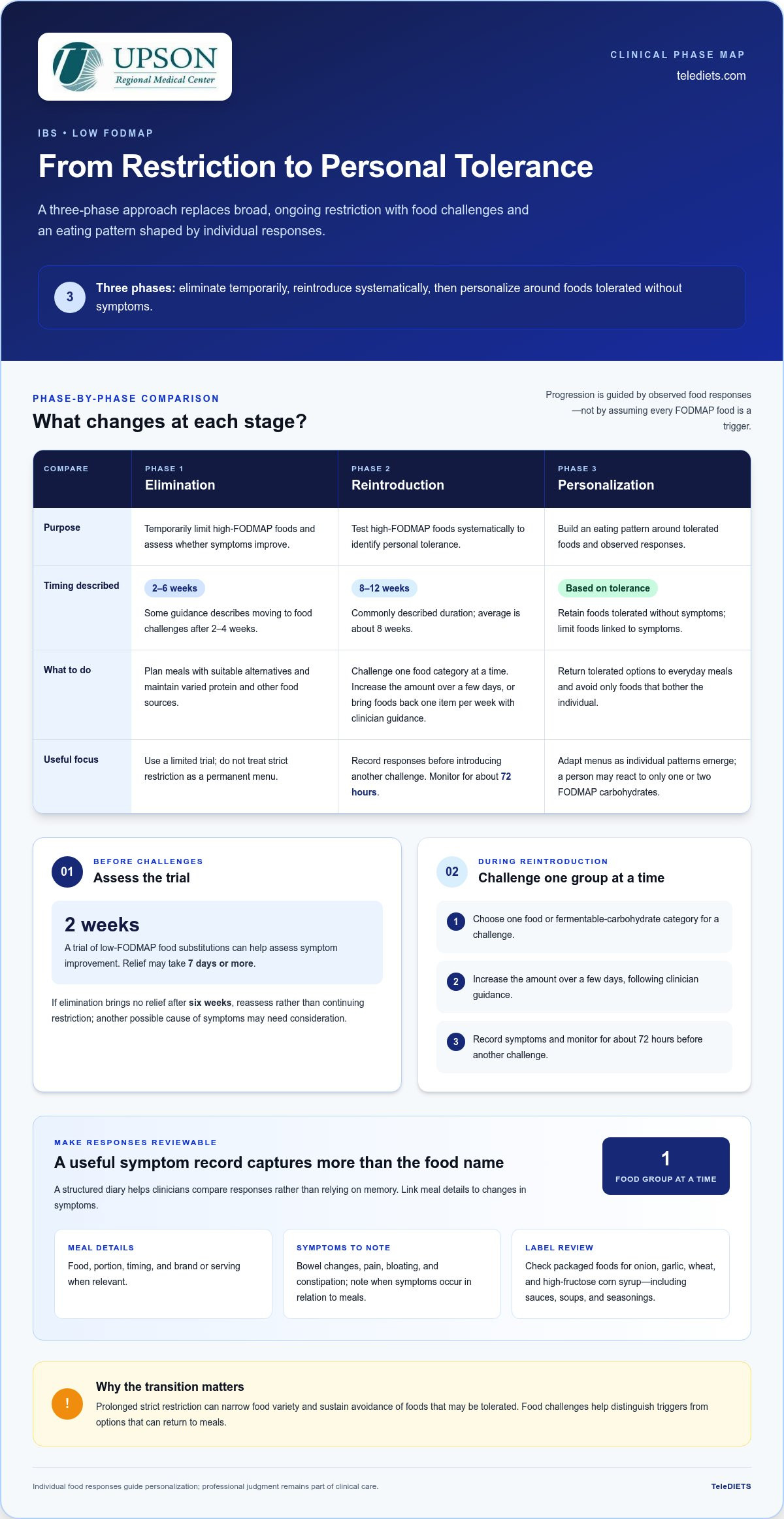
The low-FODMAP diet has three phases: elimination, reintroduction, and personalization, sometimes called maintenance. The aim is to move from temporary restriction to an eating pattern based on individual tolerance.
Moving Through the Diet Phases
Elimination temporarily limits high-FODMAP foods; reintroduction tests them systematically; personalization retains foods tolerated without symptoms. The strict elimination phase is intended to last 2-6 weeks, while some guidance describes moving to food challenges after two to four weeks. Reintroduction is commonly described as taking 8-12 weeks, with an average of about eight weeks. The staged process matters because it replaces broad restrictions with evidence from each person’s responses.
During elimination, clinicians can plan meals using suitable alternatives while maintaining varied protein and other food sources. Reintroduction challenges one fermentable carbohydrate group at a time, such as foods containing garlic or excess monosaccharides. During personalization, patients limit foods linked to symptoms and return tolerated options to everyday meals. This phased approach identifies individual triggers instead of excluding every FODMAP food indefinitely.
Considering Risks of Prolonged Restriction
Prolonged restriction means continuing the strict elimination phase instead of progressing to food challenges and personalization. A narrow food list can make eating less varied and sustain unnecessary avoidance of foods that may be tolerated. The practical risk is missing opportunities to identify safe choices and build a more flexible diet. Use the phases to distinguish trigger foods from foods that can return to meals.
If elimination has brought no relief after six weeks, reassess rather than continue restricting. People who complete six weeks without improvement should seek another possible cause of symptoms. Reintroduction can help determine whether garlic, foods rich in polyols, or another category is related to symptoms. A planned transition also helps clinicians adjust menus and support varied eating during personalization.
Weekly meal planning and grocery lists
US clinics can use spreadsheets, electronic health record templates, or nutrition software for planning. Spreadsheets allow flexible menus and grocery lists, while clinical platforms may help organize patient-specific plans and documentation. Compare tools based on their support for portion details, substitutions, symptom notes, and clinician review.
Evidence-based planning uses a limited low-FODMAP trial for IBS, followed by reintroduction rather than indefinite restriction. A dietitian familiar with gastrointestinal conditions can help assess food variety, portions, and symptom patterns. Menu notes should distinguish lactose concerns from gluten avoidance, since they are different dietary needs.
When software handles patient information, assess access permissions, storage, retention, and information sharing. Align policies with applicable privacy and security obligations, and set clear controls for who can view or update a plan. Include these checks in procurement and workflow reviews, since meal plans are part of clinical data management.
Useful clinical fields include IBS subtype, allergies, dietary preferences, constipation or diarrhea patterns, and foods being reintroduced. These details help tailor menus and grocery lists without treating every potential trigger alike. Build the grocery list from planned meals, then check packaged-food labels for ingredients such as onion, garlic, or wheat.
- For a meal, list firm tofu, rice, and suitable vegetables, with portions recorded.
- For another option, include drained canned chickpeas and Mediterranean-style pasta ingredients.
- Track lactose-free alternatives separately when lactose is a patient concern.
Specific examples make weekly purchasing more practical and help clinicians connect meal choices with symptoms such as bloating. Keep substitutions visible during reintroduction so the plan can change as tolerance becomes clearer.
Additional entries can keep serving details visible: the sample plan suggests a serving of 5 medium strawberries with chia seeds and 1 cup of firm tofu in a stir-fry. For Day 1 dinner, it suggests salmon alongside ½ cup of roasted sweet potatoes and 15 green beans; it also suggests 15 steamed green beans.
For a snack, Day 3 suggests 1 tablespoon of almond butter with rice cakes. University Hospitals includes one tablespoon of peanut butter in a low FODMAP breakfast idea. Keeping these portions alongside the ingredients makes it easier to prepare the planned meals and compare substitutions during review.
Recommended duration of elimination and reintroduction
For irritable bowel syndrome (IBS), the low-FODMAP diet is a limited trial, not a permanent food list. The American College of Gastroenterology Clinical Guidelines for Managing Irritable Bowel Syndrome recommend a limited trial to improve global symptoms. A planned endpoint helps clinics assess whether nutrition changes are helping before moving to food challenges.
The strict elimination phase is intended to last 2-6 weeks. Some guidance places reintroduction after two to four weeks, while other protocols use the full 2-6-week restriction window. These ranges describe a short assessment, not a reason to extend exclusions automatically. Record symptom changes alongside meals and bowel patterns, including diarrhea, before deciding whether to move forward.
Reintroduction often takes about eight weeks; the broader estimate is 8-12 weeks. Test one high-FODMAP food from each category at a time, increasing its quantity over a few days. Monitor responses for about 72 hours before adding another category. For example, challenge a lactose-containing food separately from fruits or wheat-based foods, and log the serving and symptoms.
If there is no relief after six weeks, patients should seek another possible cause of symptoms rather than continue strict elimination. The lack of improvement shifts the clinical question from which carbohydrates may trigger symptoms to whether another explanation needs evaluation. Continuing restrictions without benefit may also exclude tolerated foods. Use symptom records to guide the next phase, rather than treating the elimination menu as a long-term plan.
Personalization follows reintroduction: retain tolerated foods and limit those linked to symptoms. For example, a patient may tolerate some cheeses but report symptoms after yogurt, and the plan can reflect that difference. Clinics can document each challenge, portion, response, and menu adjustment. This creates a traceable transition from restriction to everyday eating and gives patients a practical plan based on their own food responses.
TeleDIETS: Standard Series Meal Plans
TeleDIETS offers clinics Standard Series Meal Plans to support structured nutrition planning in care workflows. Healthcare professionals can use the platform to create evidence-based nutritional plans tailored to lab results and clinical diagnoses. For more complex chronic disease management needs, Advanced Medical Series Meal Plans provide another plan category.
These options can support clinics that want a consistent approach to incorporating nutrition planning into care. They do not replace individualized low-FODMAP assessment, food challenges, or clinical judgment. Determine how meal plans fit each patient’s needs and current dietary phase within your clinical process.
Contact TeleDIETS to discuss meal plan options for your clinic’s nutrition-planning workflow.
Build a More Consistent Nutrition Workflow
The next step is to make your clinic’s approach a repeatable workflow that supports consistent nutrition planning while preserving individualized care. An IBS low FODMAP meal plan generator for clinics can help structure that process without replacing clinical judgment or ongoing assessment.
TeleDIETS offers Standard Series Meal Plans and Advanced Medical Series Meal Plans for healthcare professionals, along with GLP-1 Meal Plan Protocols. These offerings support different nutrition-planning needs across clinical workflows. Consider which plan categories best fit your practice’s focus and how they could complement the way your team delivers nutrition care.
Explore clinic support with TeleDIETS and consider how structured meal planning could fit your workflow. A clear, well-supported process can help your team move forward with greater confidence.
Frequently Asked Questions
Which low-FODMAP foods, serving sizes, and nutrition data should a meal plan generator include?
Include foods with tested serving guidance, portion sizes, and nutrition fields that help clinicians review each menu. For example, University Hospitals lists a quarter-cup of dry oatmeal, half of a small banana, and one clementine as low-FODMAP servings. Recording portions alongside carbohydrates, protein, fiber, and other nutrition data helps clinicians assess meal variety and adapt choices to patient needs.
How can clinics monitor symptoms, nutrition adequacy, and food reintroduction with a meal plan generator?
Use an IBS low FODMAP meal plan generator for clinics to organize meal records, symptom notes, and nutrition review in one workflow. Ask patients to log ingredients, portions, symptom changes, and bowel patterns, then compare those entries with foods being reintroduced. Clinicians can review the record for recurring responses and gaps in food variety, then update menus to reflect tolerated choices and individual nutrition needs.
Leave a Reply