
Autoimmune disease diet protocol software can help clinicians organize care across three phases: elimination, reintroduction, and maintenance. During reintroduction, foods are added one at a time, with 5-7 days before testing a different food. The goal is to make each phase easier to document and discuss, not to replace clinical judgment.
That structure matters because food choices, symptoms, and lab results need to be considered together. A clear record helps distinguish what was removed, what was reintroduced, and what changed, while keeping the plan grounded in each person’s clinical context.
This article explains how software can support phase-by-phase tracking, help clinicians personalize nutrition planning with lab results, and prepare focused conversations with a physician. It also covers what to look for in a workflow that supports careful food reintroduction and a sustainable maintenance plan.
Key Takeaways
- Keep elimination, food trials, symptom notes, and maintenance decisions organized so patterns are easier to review over time.
- Use lab results alongside clinical history and food responses to shape a more relevant nutrition plan, rather than treating any single result as the whole picture.
- Prepare for physician discussions with a clear record of dietary changes and symptoms; a check-in after about 4-6 weeks can help review progress.
- Understand how an autoimmune protocol differs from a general eating pattern and why professional guidance matters when assessing suitability and nutritional balance.
Elimination, reintroduction, and maintenance phases
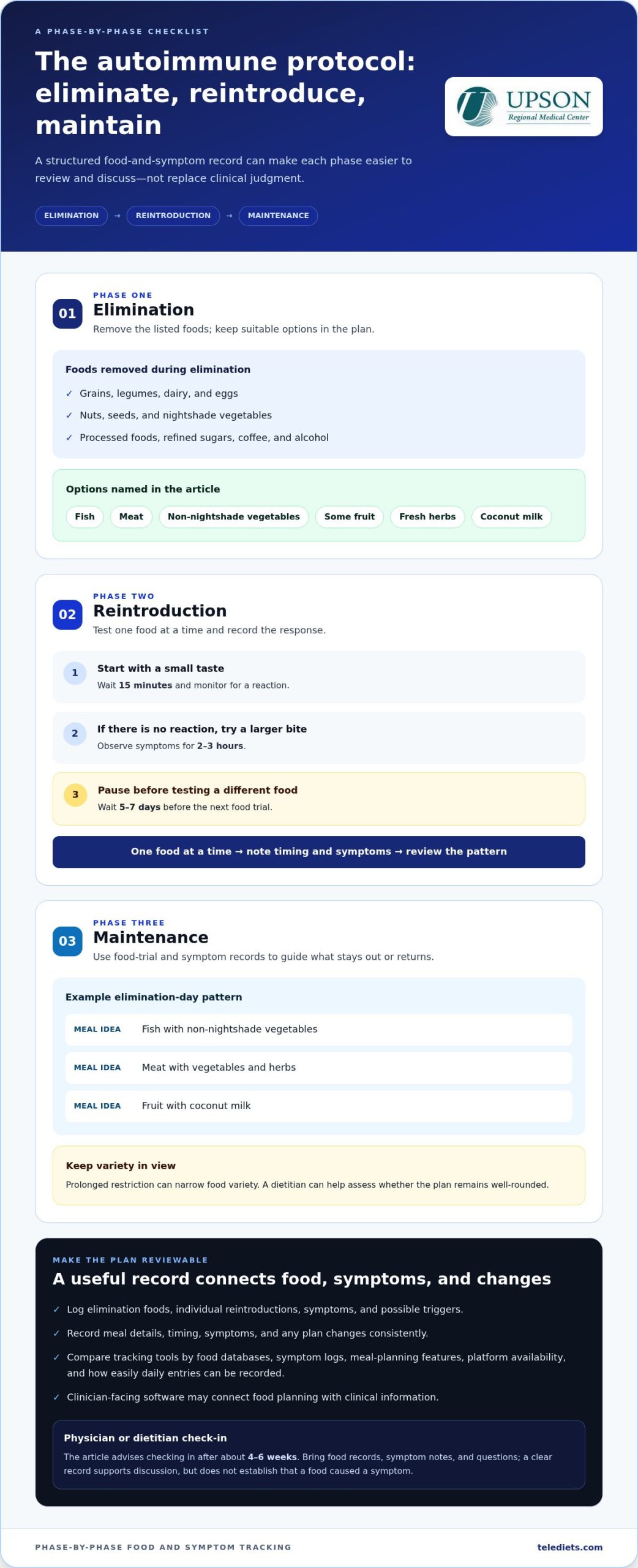
The autoimmune protocol is commonly described as a phased dietary approach. During elimination, it removes grains, legumes, dairy, eggs, nuts, seeds, nightshade vegetables, processed foods, refined sugars, coffee, and alcohol. Options include fish, meat, non-nightshade vegetables, some fruit, fresh herbs, and coconut milk.
Reintroduction tests one food at a time to help identify potential triggers. A suggested approach starts with a small taste, then waits 15 minutes to monitor for a reaction. If there’s no reaction, the person may try a larger bite and observe symptoms for 2-3 hours. Wait 5-7 days before testing a different food.
During maintenance, use records of food trials and symptoms to guide which foods remain excluded or return. A sample elimination day could include fish with non-nightshade vegetables, meat with vegetables and herbs, and fruit with coconut milk. Prolonged restriction can narrow food variety, so a dietitian can help assess whether the plan remains well-rounded.
Autoimmune diet apps differ in their food databases, symptom logs, meal-planning tools, and availability on mobile devices or computers. Compare the features you need and how easily each tool records daily entries.
Look for trackers that log elimination foods, individual reintroductions, symptoms, and possible triggers. Clinician-facing software may also connect food planning with clinical information.
App costs depend on the tool’s features, platform, and whether it supports personal tracking or clinical workflows. Compare what each option includes before choosing.
AIP, Mediterranean, and gluten-free approaches are discussed in autoimmune nutrition care. The appropriate pattern depends on the clinical goal and the foods being assessed.
In the United States, options include general food and symptom trackers and clinician-facing nutrition software. Their planning and documentation features vary.
Evidence includes an 11-week study of 15 people with IBD who reported fewer related symptoms. A study of 16 women with Hashimoto’s thyroiditis reported symptom and inflammation changes after 10 weeks.
Personalizing autoimmune diets with lab results
Lab results add clinical context to food planning, but they don’t identify a food trigger on their own. A useful review considers the patient’s diagnosis, current symptoms, eating pattern, and relevant laboratory findings together. Autoimmune disease diet protocol software can help clinicians organize these details for a focused review. The clinician can then decide whether the nutrition plan needs adjustment and what response to monitor.
For example, a food record might show symptoms after meals containing grains, while lab results inform the broader clinical picture. That pattern can guide a discussion, but it doesn’t prove grains caused the symptoms. Record meal details, timing, symptoms, and any plan changes so the clinician can compare like with like. Software can keep these records connected to the plan under review.
- Connect: Review lab findings alongside diagnosis, medications, and the patient’s existing eating pattern.
- Document: Record ingredients and symptoms consistently, including foods such as potatoes, peppers, or eggplant.
- Reassess: Compare the patient’s reported response with the clinical context before changing restrictions.
Food lists also need precise interpretation. AIP elimination protocols exclude nightshade vegetables, grains, and artificial sugars, among other foods. If a plan removes grains, note the specific foods and suitable replacements, then assess whether the overall pattern remains varied and provides needed nutrients. Avoid expanding restrictions based on a single symptom or result.
Autoimmune disease diet protocol software can organize lab information, meal choices, symptoms, and plan changes in one reviewable record. This can help clinicians identify questions for a physician or dietitian, such as whether a reaction occurred consistently or whether several dietary changes happened at once. Clear documentation supports a focused conversation rather than treating a lab result as a standalone food rule. For clinician workflows, nutrition plans tailored to lab results can support individualized food planning.
Physician guidance and suitability
Physician guidance helps determine whether an elimination phase fits a person’s diagnosis, symptoms, and current treatment. People following AIP are advised to check in with a doctor or dietitian after about 4-6 weeks. Bring a food record, symptom notes, and questions about inflammation or changes in joint pain. This gives the clinician specific details to discuss rather than relying on memory alone.
Autoimmune diet software can share food and symptom logs when it includes export or clinician-sharing tools. Otherwise, prepare a dated summary of meals, symptoms, and food trials to discuss at the appointment. For example, note whether joint pain appeared after tomatoes, gluten, or another food, and whether other dietary changes happened at the same time.
Suitability also means understanding what the protocol excludes. AIP elimination commonly removes nightshade vegetables, including tomatoes, along with gluten-containing grains. A reaction noted after eating a nightshade food does not establish that it caused inflammation. The clinician can compare timing, frequency, other exposures, and the broader diet before considering changes. Claims about “leaky gut” also warrant careful discussion of what the term means in the person’s care.
Discuss supplements, probiotics, or other proposed treatments with a doctor, especially during a restrictive phase. The American College of Rheumatology article describes combining the AIP diet with medication as an approach to managing rheumatic diseases. A dietitian can help keep the plan varied and well-rounded, with suitable alternatives such as coconut milk and a range of vegetables. Review energy, food variety, symptoms, and practical barriers together. If the plan becomes difficult to follow or removes more foods than intended, document the issue and raise it at the next clinical discussion.
When considering probiotics, supplements, or other treatments for gut-healing goals, discuss them with a doctor as part of the overall plan. Work with a dietitian to help ensure the AIP diet remains varied and well-rounded. Ongoing collaboration keeps attention on both proposed treatments and the diet’s suitability within the person’s clinical care.
What is an autoimmune disease diet protocol?
An autoimmune disease diet protocol is a structured eating approach used to explore how food choices relate to symptoms and clinical goals. The autoimmune protocol, or AIP, is an elimination diet similar to Paleo, but stricter than Paleo or Whole30. It is designed for people with autoimmune disorders and aims to support gut health, hormone regulation, and immune system regulation through nutrient-dense foods.
AIP does not mean removing foods without a plan. The protocol organizes decisions into phases, with a defined reason for each restriction and a way to review food responses. For example, an AIP plan may temporarily exclude grains, dairy, and legumes, then assess individual foods during reintroduction. The goal is to learn which choices suit the person, rather than treating every excluded food as a permanent trigger.
Other eating patterns may be discussed in autoimmune care, including Mediterranean or gluten-free approaches. They are not interchangeable: each has different food choices and purposes. A gluten-free pattern focuses on avoiding gluten, while AIP involves broader exclusions. The clinical question, diagnosis, food history, and nutritional needs shape which approach is appropriate.
Software can make a protocol easier to interpret by organizing its rules, meal choices, and recorded responses. A clinician might use it to distinguish foods excluded by the chosen plan from foods an individual reports reacting to. That distinction helps prevent assumptions, such as treating every grain or every AIP-restricted food as a confirmed cause of symptoms.
More than 100 conditions may benefit from the AIP diet, but that does not make one menu suitable for every condition or person. Consider the specific clinical goal, dietary adequacy, and the person’s ability to follow the plan. A useful protocol stays focused, records the reason for each change, and gives the care team a clear basis for reviewing progress.
The protocol’s intended audience is people with autoimmune disorders, and its rules are stricter than those of Paleo or Whole30. This distinction frames the approach as specifically designed for people with autoimmune disorders, rather than simply as a stricter version of either eating pattern. Its defining features are both its tighter restrictions and its intended use for people with autoimmune disorders.
TeleDIETS: Standard Series Meal Plans
TeleDIETS offers healthcare professionals structured nutrition plans for clinical workflows. Standard Series Meal Plans support general meal-planning needs, while Advanced Medical Series Meal Plans are designed for specialized medical nutrition therapy. Clinicians can incorporate the appropriate offering into care planning, then review food choices and patient responses with the care team.
For other clinical contexts, TeleDIETS also offers GLP-1 Meal Plan Protocols and Insurance Billing & CPT Coding Tools. These tools address distinct practice needs; they don’t replace physician judgment or turn an autoimmune protocol into a one-size-fits-all plan. Choose the offering that fits your workflow and the clinical purpose of the nutrition plan.
Contact TeleDIETS to explore how its meal-planning offerings may fit your practice.
Build a more connected nutrition workflow
The next step is to turn dietary observations into a clear clinical workflow, linking each recommendation to a care goal and reviewing it with the appropriate healthcare professional. Autoimmune disease diet protocol software can help organize that process, while clinical judgment guides how food plans fit each person’s care.
For practices selecting nutrition resources, TeleDIETS offers Standard Series Meal Plans, Advanced Medical Series Meal Plans, and GLP-1 Meal Plan Protocols. These options support different practice needs; choose based on the population and nutrition workflow your team is addressing.
Explore how these meal-planning options may fit your practice, then decide what would support your next workflow improvement. Contact TeleDIETS to discuss nutrition planning for your practice.
A thoughtful, well-organized process gives your team a stronger foundation for informed care.
Frequently Asked Questions
How do I choose software for an autoimmune protocol diet with clinician or dietitian support?
Choose software that supports the clinician’s workflow, not just food logging. Map a sample visit: review diagnosis and lab information, select a nutrition plan, then record the clinical rationale and follow-up questions. TeleDIETS is a medical nutrition therapy platform for healthcare professionals, enabling physicians and clinics to prescribe evidence-based plans tailored to lab results and clinical diagnoses. Consider whether this structured approach fits your practice’s care process.
How do autoimmune diet apps compare by features, platforms, and ease of use?
Apps vary in their food databases, symptom logs, meal-planning tools, and availability on mobile devices or computers. Compare the features you need and how easily each tool records daily entries. Some clinician-facing tools also connect food planning with clinical information.
Leave a Reply