
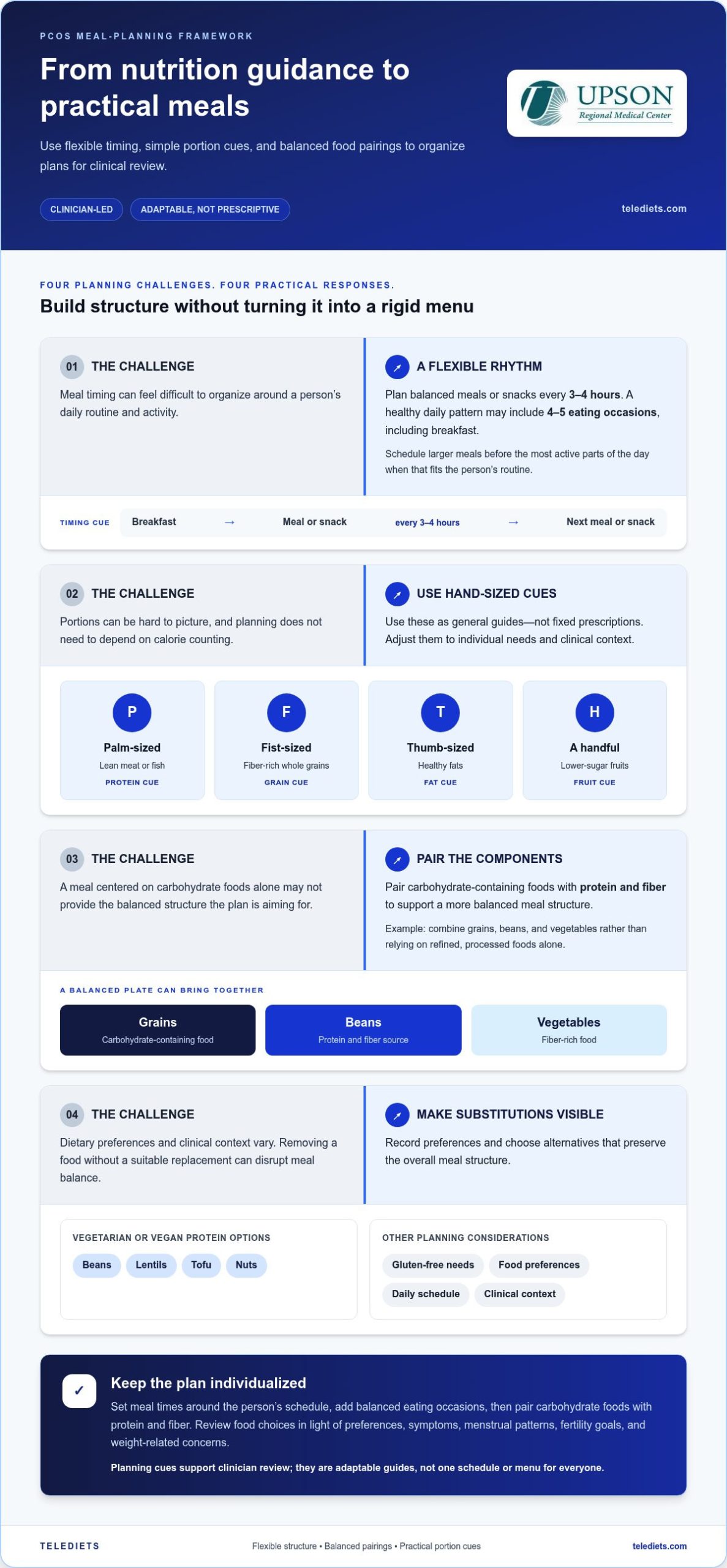
Nutrition plan software for PCOS management can support balanced carbohydrate pairings and practical meal timing by organizing meals around protein, fiber, and healthy fats. A useful framework is to plan smaller, balanced meals every 3-4 hours, with general portion cues such as a palm-sized protein serving, a fist-sized whole-grain serving, and a thumb-sized serving of healthy fats. These are adaptable guides, not fixed prescriptions.
For clinicians, turning PCOS nutrition guidance into a consistent plan takes more than listing foods: schedules, preferences, and clinical needs all shape what works in practice. Nutrition plan software for PCOS management can help organize meal timing, portions, and food combinations for clinical review. This article outlines what to look for in a planning workflow and how medical nutrition therapy tools can support it. The aim is practical guidance clinicians can adapt to individual clinical context, not a rigid menu.
Key Takeaways
- Pair carbohydrate-containing foods with protein and fiber to support a more balanced meal structure.
- Use meal timing and portion cues as adaptable planning tools, not rigid rules for every person.
- Assess nutrition software by how well it supports relevant dietary guidelines and clinician-led personalization.
- Consider whether structured meal-plan options fit your practice’s needs and the level of medical nutrition support required.
2. Meal timing and portion guidance
Meal timing can help make PCOS eating patterns more structured. A practical framework is to plan balanced meals or snacks every 3-4 hours, which may help manage hunger and insulin spikes. A healthy daily pattern may include four to five meals or snacks, including breakfast. The largest meals can be scheduled before the most active parts of the day, while still reflecting a person’s routine and physical activity.
Portion cues can make meal planning practical without requiring calorie counting. A palm-sized serving of lean meat or fish offers a general protein guide, while a fist-sized serving of fiber-rich whole grains provides a grain cue. Use a thumb-sized portion for healthy fats and a handful for lower-sugar fruits. Pairing carbohydrate foods with protein and fiber can slow glucose release into the bloodstream and support blood sugar balance. For example, a meal might combine grains, beans, and vegetables instead of relying on refined, processed foods alone.
Can nutrition planning software accommodate vegetarian, vegan, gluten-free, or other dietary needs for PCOS? Yes, if clinicians can record preferences and make suitable substitutions. Vegetarian or vegan meals can use beans, lentils, tofu, or nuts as protein sources. Gluten-free plans can include grains that meet that requirement. The key is maintaining balance across meals, rather than removing foods without replacing them.
To build a useful plan, clinicians can first set meal times around a person’s daily schedule, then add breakfast and other eating occasions. Next, they can pair carbohydrate foods with protein and fiber and apply flexible portion cues. This structure matters because PCOS, a hormonal and ovarian disorder, can involve insulin resistance and higher androgen production. Individual symptoms, menstrual patterns, fertility goals, and weight-related concerns can shape suitable foods and timing. Software can organize these details for clinical review instead of treating one schedule as right for everyone.
3. What PCOS nutrition and dietary guidelines should meal-planning software support?
Useful software should let clinicians build plans around established dietary patterns rather than impose a single PCOS menu. Mediterranean-style and DASH patterns emphasize vegetables, fruits, whole grains, fiber-rich foods, and healthy fats. A plan might pair leafy vegetables with lentils and a whole grain, or include fatty fish alongside vegetables. These examples translate broad guidance into meals that can be adapted to clinical needs and food preferences.
It should also support meal components associated with blood sugar management. For example, clinicians can include fiber from fruits, vegetables, and whole grains, then add protein from beans, lentils, tofu, fish, lean meat, or low-fat dairy. Walnuts and flaxseed offer examples of foods containing omega-3 fatty acids. Software should make such substitutions visible, so a clinician can preserve the meal’s overall structure when changing ingredients.
- Emphasize fiber: include vegetables, fruits, beans, and whole grains across meals.
- Offer protein options: present plant and animal sources, such as lentils, tofu, fish, and lean meats.
- Support practical swaps: replace sugary drinks or refined-flour foods with options that fit the plan.
Guidance should distinguish flexible food choices from restrictive rules. Meal plans can limit highly processed and fried foods, sweets, and sugary drinks without claiming that a single ingredient causes or cures PCOS. Water can be included as a beverage choice. Plans can also reflect whether a person is trying to conceive, since food and beverage decisions may need to account for that context.
In practice, clinicians can select a dietary pattern, set suitable food groups, and review the resulting meals for balance and fit with preferences. A DASH-style plan, for example, can feature vegetables, beans, whole grains, and lean protein. Software is most useful when it keeps these guidelines adaptable, rather than treating calorie counting or perfect meals as requirements. This structure supports sustainable changes while keeping clinical judgment central.
Software can support flexible eating plans that include whole, plant-based foods. A healthy eating plan may include dietary fiber from fruits, vegetables, and whole grains.
Because polyendocrine metabolic ovarian syndrome can involve insulin resistance, meaning the body does not use insulin well, and too much insulin in the body, plans can suggest beans as a protein alternative to meat a couple of times per week. Sustainable small changes may help symptoms over time; calorie counting and perfect meals are not necessary.
4. Which nutrition planning apps or software work best for PCOS management?
The right fit depends on who plans the meals and how they’ll be used. A food-tracking app may help someone record eating patterns, while clinician-focused nutrition software supports professional meal-plan development. For PCOS care, prioritize tools that help translate nutrition guidance into practical, individualized plans rather than relying on generic menus.
Start by matching the software to the practice workflow. Clinicians building medical nutrition therapy plans need different capabilities from people tracking meals independently. Look for a clear way to organize clinical context, dietary preferences, and meal structure. For example, a plan for someone avoiding animal products should support appropriate protein substitutions, such as beans or tofu, rather than simply removing meat.
Next, assess the nutrition framework. A useful option should support meals built around fiber-rich foods, varied protein sources, and minimally processed ingredients. It should make Mediterranean-style or DASH-style patterns practical to apply, such as by combining vegetables, whole grains, and beans. These patterns offer a framework, not a single PCOS prescription.
Review how the tool supports clinician oversight. PCOS can involve insulin resistance, so recommendations should be considered alongside the person’s health information and clinical goals. Software can help structure a plan, but clinicians still need to review food choices, substitutions, and suitability. A calorie counter or fixed meal schedule alone is not a complete clinical plan.
Use a simple selection process: define the user, identify the required planning workflow, and compare how each option handles preferences and clinical review. A useful demonstration would be adapting a sample meal for vegetarian needs while preserving protein and fiber. For practices seeking evidence-based meal-planning workflows, nutrition software designed for healthcare professionals may be more relevant than consumer tracking tools. Choose a tool that supports clinician-led planning and fits its intended use.
Women with PCOS often have higher insulin levels, which can make maintaining a healthy weight difficult. People seeking a PMOS meal plan can work with a dietitian to make small, sustainable changes. The page says a search for “best diet for PCOS” returned 11.4 million results when it was written and recommends planning meals ahead, choosing foods without added sugars, ample fiber, and whole grains when possible. It also says dairy contains IGF-1, which it claims can cause the ovaries to release testosterone.
4. How do PCOS nutrition apps compare in features, usability, and personalization?
PCOS nutrition tools differ mainly by purpose. A food diary helps record meals, while clinician-focused software supports structured meal planning. Compare options by checking whether they can turn dietary guidance into usable meal examples. For instance, a plan built around vegetables, whole grains, and protein offers more planning context than a food log alone.
Features matter when they support practical clinical workflows. Check whether a tool lets users record food preferences, select ingredients, and adapt meals. A vegetarian plan, for example, should allow a protein substitution such as beans or tofu. Clinicians can also assess whether meal suggestions align with fiber-rich foods and less processed choices. These checks show whether features support planning or simply track entries.
Usability depends on how clearly a person can follow and adjust a plan. Review a sample day: are meals readable, ingredients recognizable, and substitutions easy to understand? A long list of food entries may suit detailed tracking, while a simple meal outline may be easier to use for routine planning. The right format depends on whether the user is a clinician, a patient, or both.
Personalization should reflect relevant preferences and clinical context, not just a name on a template. For example, a clinician may need to adapt a meal for vegetarian needs while retaining its overall nutritional structure. Review whether the software supports meaningful edits and professional oversight. Do not assume that an app’s default plan is appropriate for every person with PCOS.
Compare options with a short, consistent review: identify the intended user, test a sample meal edit, and inspect how the updated plan appears. Then assess whether the workflow supports clinician review and clear meal guidance. For medical nutrition therapy practices, software designed for professional planning may align more closely with these tasks than a consumer food diary. This comparison helps clarify which features matter before choosing a tool.
TeleDIETS: Standard Series Meal Plans
TeleDIETS offers Standard Series Meal Plans for healthcare professionals incorporating structured nutrition planning into practice. For cases calling for more specialized chronic disease support, Advanced Medical Series Meal Plans provide another planning option. The platform enables physicians and clinics to prescribe evidence-based nutritional plans tailored to lab results and clinical diagnoses.
For PCOS-focused care, these offerings can support clinicians as they build meal-plan workflows around an individual’s clinical context. TeleDIETS also offers GLP-1 Meal Plan Protocols and Insurance Billing & CPT Coding Tools for practices where those tools fit their needs. The software supports professional planning; clinical judgment remains central to selecting and reviewing each plan.
Explore whether TeleDIETS fits your practice’s nutrition-planning workflow. Visit telediets.com to learn more.
Build a Practical Planning Workflow
Start by identifying how your practice wants nutrition planning to fit into care. Consider whether clinicians need a structured starting point, more specialized medical planning, or support for a particular treatment pathway. That distinction can guide which tools belong in your workflow and where professional review remains essential.
TeleDIETS offers Standard Series Meal Plans, Advanced Medical Series Meal Plans, and GLP-1 Meal Plan Protocols. These options give healthcare professionals different plan frameworks to consider alongside their clinical processes. Nutrition plan software for PCOS management is most useful when it helps clinicians organize planning while keeping individual needs and judgment central.
If you’re evaluating how meal-plan tools could fit your practice, contact TeleDIETS to discuss your needs. A clear workflow can help your team turn nutrition planning into a more consistent part of care.
Frequently Asked Questions
What features should nutrition plan software for PCOS management include?
It should support clinician review, dietary preferences, and plans informed by relevant clinical information. For example, a platform can help account for a patient’s lab results and diagnosis while clinicians assess suitable meal choices. TeleDIETS can read CMP biomarker lab results and ICD-10 codes to automatically recommend appropriate meal plans. These capabilities can help clinicians build a more relevant starting point for individualized nutrition planning.
Leave a Reply