
A vegetarian meal plan shouldn’t begin with a list of foods to add or avoid. Vegetarian medical nutrition therapy plans start with a dietary assessment that considers the person’s clinical needs, lab results, vegetarian pattern, and food preferences. That context helps shape a plan that is both nutritionally balanced and relevant to the health conditions being managed.
It’s understandable to focus first on what a vegetarian diet includes. But effective planning also considers nutrients that can require attention, such as protein, iron, calcium, vitamin B12, and omega-3 fatty acids. The right approach depends on the person’s dietary pattern and care needs, rather than a one-size-fits-all menu.
This guide covers how to begin an assessment, shape personalized meal plans, and adapt nutrition therapy to specific health conditions. It also reviews practical sources of key nutrients, showing how clinical considerations connect with everyday food choices.
Key Takeaways
- Build vegetarian meal plans around varied plant proteins, then account for nutrients that may need closer attention.
- Use dietary patterns, clinical needs, lab results, and food preferences to shape a practical, personalized plan.
- Adapt nutrition therapy to the health condition being managed, since dietary priorities can differ across clinical needs.
- Identify food sources of omega-3 fatty acids, vitamin D, zinc, and iodine as part of a well-rounded plan.
Plant-based protein sources
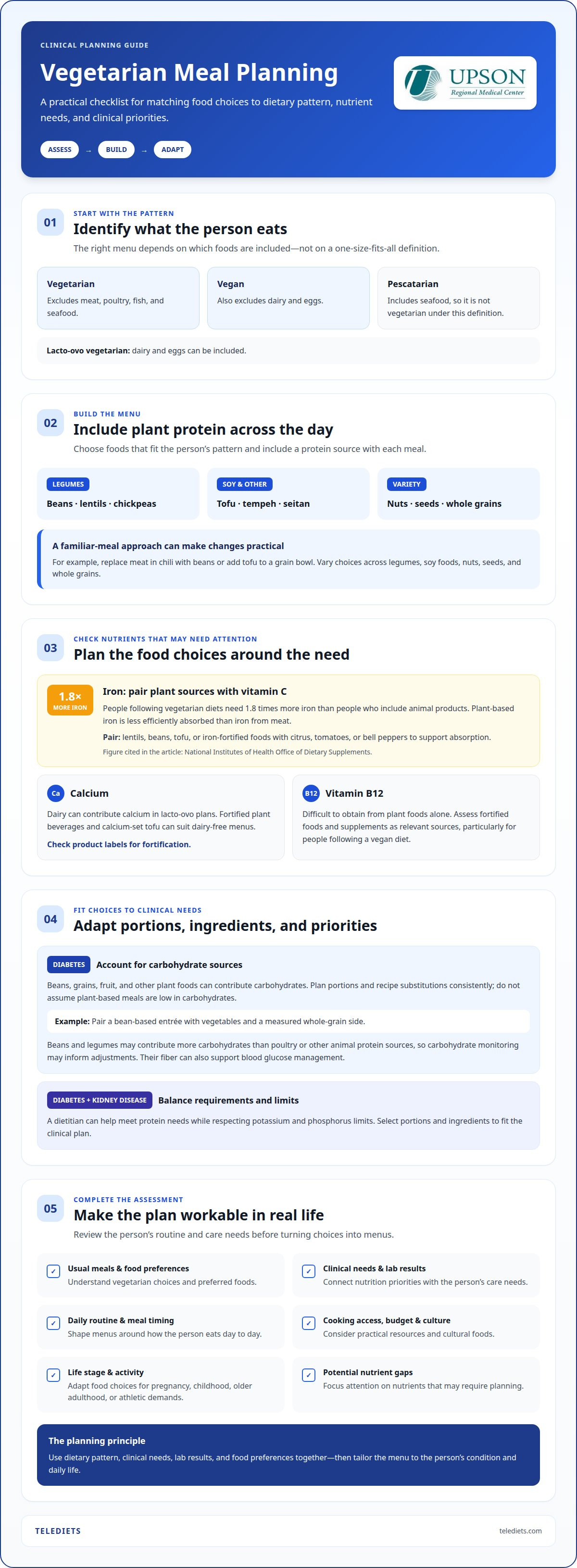
Start by identifying which foods fit the person’s vegetarian pattern. A vegetarian diet excludes meat, poultry, fish, and seafood; a vegan diet also excludes dairy and eggs. Beans, lentils, chickpeas, tofu, tempeh, seitan, nuts, seeds, and whole grains provide plant-based protein. Including a protein source with each meal helps distribute these foods throughout the day.
Iron needs careful attention alongside protein. People following vegetarian diets need 1.8 times more iron than people who include animal products, according to the National Institutes of Health Office of Dietary Supplements. Plant-based iron is less efficiently absorbed than iron from meat. Pair lentils, beans, tofu, or iron-fortified foods with vitamin C sources, such as citrus, tomatoes, or bell peppers, to support absorption.
Calcium sources depend partly on the eating pattern. Dairy foods can contribute calcium for lacto-ovo vegetarians, while fortified plant beverages and calcium-set tofu can help suit dairy-free menus. Check product labels for fortification. Vitamin B12 is difficult to obtain from plant foods alone, so fortified foods and supplements are relevant sources to assess, particularly for people following a vegan diet.
Clinical needs influence which protein choices fit. For people with diabetes, beans and legumes may contribute more carbohydrates than poultry or other animal protein sources, so carbohydrate monitoring may inform meal-plan adjustments. Their fiber can also support blood glucose management. When diabetes and kidney disease occur together, a dietitian can help meet protein needs while respecting potassium and phosphorus limits.
A plant-based pattern is easier to sustain when familiar meals can be adapted. Replace meat in chili with beans or add tofu to a grain bowl; familiar cooking methods and flavors may help make these changes practical. Vary choices across legumes, soy foods, nuts, seeds, and whole grains. A focused dietary assessment can identify nutrient gaps and align protein options with clinical needs.
Dietary assessment and personalized vegetarian meal planning
Personalized planning begins with the patient’s dietary pattern, clinical needs, and food preferences. An assessment turns these details into practical menus for home or facility settings.
Dietary Assessment and Personalization
A dietary assessment reviews usual meals, vegetarian choices, preferences, and nutrition needs before a menu is developed. Vegetarian medical nutrition therapy plans should reflect both clinical priorities and the patient’s daily routine. Consider access to cooking facilities, budget, cultural foods, and preferred meal timing. For pregnancy, childhood, older adulthood, or athletic demands, adapt food choices to life-stage needs and activity, while giving focused attention to nutrients that may require planning.
Meal Planning for Diabetes and Kidney Disease
Diabetes- and kidney-friendly planning aligns food choices with the nutrition priorities of each condition. When patients are managing both, protein choices need to meet their requirements while respecting potassium and phosphorus limits. A menu can include a variety of plant-based foods, with portions and ingredients selected to fit the clinical plan. In a facility, coordinate vegetarian options with residents’ documented dietary needs to keep meals practical throughout the menu cycle.
Carbohydrate Management in Meal Planning
Carbohydrate management organizes carbohydrate-containing foods within meals to support an individualized eating pattern. For diabetes, planning should account for beans, grains, fruit, and other carbohydrate sources rather than assuming plant-based meals are low in carbohydrates. Apply a consistent approach to portions and recipe substitutions. For example, pair a bean-based entrée with vegetables and a measured whole-grain side.
Plans for Different Vegetarian Diets
Meal plans vary according to which animal foods a patient includes. Lacto-ovo vegetarian plans can include dairy and eggs; vegan plans exclude animal ingredients. Pescatarian plans include seafood, so they are not vegetarian under the definition that excludes fish and seafood. Balanced vegetarian medical nutrition therapy plans draw on varied vegetables, fruits, beans, nuts, seeds, and whole grains, with protein choices suited to the patient’s pattern. Facility menus can label meals clearly and offer appropriate alternatives.
Medical nutrition therapy for health conditions
Medical nutrition therapy uses dietary planning to support management of a health condition. Its role depends on clinical priorities and the person’s eating pattern.
Medical Nutrition Therapy for Vegetarians
For vegetarians, medical nutrition therapy connects food choices with a diagnosis, nutrition assessment, and care goals. A plant-based pattern needs to address both condition-specific requirements and nutrients that may need attention. A registered dietitian can tailor meal choices to the person’s usual foods, lifestyle, and clinical priorities.
A plant-based diet may support management of PCOS, diabetes, heart disease, gastrointestinal disorders, and inflammation. Vegetarian eating may also help reduce the risk of heart disease and type 2 diabetes, lower blood pressure, and reduce the chance of obesity. These are potential benefits, not a substitute for individualized care. For example, a plan may emphasize legumes while considering protein needs and calcium sources.
Clinical Guidance for Care Teams
Clinical guidance helps healthcare professionals incorporate plant-based eating into condition-specific care. A coordinated team can connect dietary recommendations with the patient’s diagnosis, relevant lab results, and current nutrition needs. A registered dietitian can assess restrictive eating patterns, identify potential nutrient gaps, and adapt food choices alongside the broader care plan. Coordination can be especially useful for teens, pregnant patients, older adults, and people with chronic illnesses.
In the United States, fees for a registered dietitian’s medical nutrition therapy depend on the clinician, visit format, and services provided. Insurance or Medicare coverage depends on eligibility and the individual plan’s benefits, so coverage and fees are not universal. For healthcare professionals, useful clinical guidance addresses plant-based diet effects, nutrients of concern, and patient-management strategies. It can also help teams discuss how food choices fit the patient’s treatment and lifestyle, rather than treating vegetarian eating as a single, standardized intervention.
Omega-3, vitamin D, zinc, and iodine sources
Review omega-3, vitamin D, zinc, and iodine alongside protein, iron, calcium, and vitamin B12. These nutrients can be harder to obtain in vegetarian diets, so a food-pattern review helps identify useful sources. For a patient managing chronic disease, match choices to the overall clinical plan rather than treating one food as a complete solution.
For omega-3 fatty acids, consider ground flaxseed, chia seeds, walnuts, and canola oil. A patient can add ground flaxseed to oatmeal or use walnuts in a grain bowl. Lacto-ovo vegetarians may also include eggs, while vegan plans rely on plant foods. These examples add variety to meals without requiring seafood, which vegetarian diets exclude.
Calcium sources include dairy foods, calcium-fortified plant beverages, and calcium-set tofu. Vitamin D helps improve calcium absorption, and fortified foods can provide both nutrients. Check beverage labels for fortification, as products differ. Spinach, Swiss chard, and beet greens are not reliable calcium sources because oxalates inhibit absorption. Include appropriate calcium foods and vitamin D sources when developing menus.
For zinc, use legumes, nuts, seeds, and whole grains across meals. Iodine sources include iodized salt; seaweed also contains iodine, but its content can vary. Vitamin B12 deserves separate attention: fortified foods and supplements are sources for people eating plant-based diets, since plant foods alone make adequate B12 difficult to obtain. Include these considerations in the dietary assessment, not as assumptions about every patient.
Food examples are a starting point, not a substitute for individualized planning. Explore clinical meal-planning tools to support nutrient-focused menus for patients with chronic conditions.
TeleDIETS: Advanced Medical Series Meal Plans
TeleDIETS supports healthcare professionals who need structured nutrition plans for clinical care. Its Advanced Medical Series Meal Plans provide an option for practices addressing chronic disease management, while Standard Series Meal Plans and GLP-1 Meal Plan Protocols serve other clinical planning needs. The platform enables physicians and clinics to prescribe evidence-based nutritional plans tailored to lab results and clinical diagnoses. For vegetarian care, these plans can support a workflow that connects clinical needs with meal planning. Insurance Billing & CPT Coding Tools can also support related practice processes. Consider this approach when your team needs structured plans alongside its clinical nutrition workflow. To discuss how TeleDIETS may fit your practice, contact TeleDIETS.
Make Your Next Planning Decision Count
The next step is to translate clinical priorities into a nutrition workflow your team can use consistently. Vegetarian medical nutrition therapy plans are most useful when they support professional judgment and provide clinicians with a structured starting point for care planning. Consider where your practice would benefit from a clearer pathway, whether for routine nutrition support or more medically complex needs.
TeleDIETS offers Standard Series Meal Plans, Advanced Medical Series Meal Plans, and GLP-1 Meal Plan Protocols. These options give practices different starting points for organizing nutrition support within their clinical workflows. The right fit depends on the needs your team aims to address.
Contact TeleDIETS about nutrition therapy to discuss how its platform may fit your practice. A practical next step can help your team move from planning priorities to a more consistent process, with confidence in the care you provide.
Frequently Asked Questions
Where to Begin?
Start with a structured review of the patient’s usual intake, vegetarian pattern, diagnoses, lab results, food access, and meal routines. Vegetarian medical nutrition therapy plans can reflect clinical priorities alongside practical constraints, such as limited cooking facilities or cultural preferences. A concise food record may reveal skipped meals or reliance on a narrow range of foods. Use these findings to shape an initial plan with the care team.
What are vegetarian sources of protein, iron, vitamin B12, calcium, vitamin D, iodine, and omega-3s?
Beans, lentils, soy foods, nuts, seeds, and whole grains provide plant protein. Pair iron-containing foods with vitamin C sources such as citrus or tomatoes. Fortified foods and supplements provide vitamin B12 for plant-based diets. Calcium-set tofu and fortified plant beverages can contribute calcium; dairy is another option for lacto-ovo patterns. Flaxseed, chia, and walnuts provide plant omega-3s. Review fortified products and usual food choices when assessing vitamin D and iodine.
How can a vegetarian meal plan meet calorie and protein needs for diabetes, heart disease, or kidney disease?
Calorie and protein targets should follow the patient’s clinical assessment, not a generic menu. For diabetes, account for carbohydrates from beans and grains within the meal pattern. With kidney disease, consider potassium and phosphorus limits alongside protein needs. For heart disease, coordinate food choices with the broader clinical plan. Review intake and relevant lab information with the care team before making adjustments.
What does a sample 7-day vegetarian medical nutrition therapy meal plan look like?
A sample week can rotate ingredients while keeping meals adaptable. Breakfasts might include oatmeal, eggs, or fortified plant beverage; lunches could feature lentil soup, chickpea salad, or tofu grain bowls. Dinners might rotate among bean chili, tempeh with vegetables, and lentil-stuffed peppers. Snacks can include fruit with nuts or yogurt, depending on the dietary pattern. Adjust portions and ingredients to the patient’s clinical needs and preferences.
What are the risks of nutrient deficiencies on vegetarian diets, and how can they be prevented?
Potential shortfall nutrients include protein, iron, calcium, vitamin B12, omega-3 fatty acids, zinc, iodine, and vitamin D. Risk varies with dietary pattern, life stage, and health needs. Prevention starts with assessing food variety and identifying gaps, then planning appropriate sources, including fortified foods where relevant. For restrictive patterns or complex conditions, dietitian follow-up can help refine the plan and address changing nutrition needs.
How are vegetarian medical nutrition therapy plans personalized for pregnancy, children, older adults, or athletes?
Plans are tailored to dietary pattern, clinical needs, food preferences, life stage, and activity, with focused attention to nutrients that may be harder to obtain. Teens and pregnant patients should work with a registered dietitian to check protein and other key nutrient needs; older adults may need particular attention to calcium, vitamin D, vitamin B6, protein, and vitamin B12.
Leave a Reply