
Medical nutrition therapy is an ongoing care process, not a one-time nutrition recommendation. In the United States, registered dietitians and registered dietitian nutritionists provide it through nutrition assessment, diagnosis, intervention, and monitoring. Medical nutrition therapy software for physicians can support this workflow by organizing clinical information and helping teams coordinate nutrition plans across assessment, follow-up, and treatment monitoring.
That structure matters because nutrition care may include education and behavioral counseling to help prevent or manage a medical condition, with recommendations adjusted as a patient’s needs and progress change. This guide explains what MNT includes, what clinicians assess, and how follow-up visits help monitor progress. It also covers software capabilities that can support documentation and care workflows, and how physician-focused tools can connect evidence-based nutrition plans with ongoing clinical management.
Key Takeaways
- Understand the stages of medical nutrition therapy and how they support nutrition care for medical conditions.
- Learn what follow-up visits can track and how clinicians use progress to guide nutrition plan adjustments.
- Identify the clinical and lifestyle information that can shape a useful nutrition assessment.
- Explore software capabilities that can support assessments, treatment monitoring, and physician workflows.
What Is Medical Nutrition Therapy?
Medical nutrition therapy (MNT) uses nutrition assessment, diagnosis, intervention, and monitoring to support care for medical conditions. In the United States, registered dietitians and registered dietitian nutritionists provide MNT, which may combine nutrition education with behavioral counseling.
Individualized Dietary Action Plans
An individualized dietary action plan turns assessment findings into practical steps tied to a patient’s clinical needs. Before recommending changes, a dietitian may consider medical history, test results, eating patterns, and barriers. For example, a plan for someone managing diabetes may address meal planning and lifestyle factors. The steps should be clear enough to discuss and revisit at follow-up.
Personalized Nutrition Plans
A personalized nutrition plan aligns recommendations with a patient’s medical and nutritional status, history, and daily circumstances. It may address food choices, label reading, menu planning, or culinary skills. During the assessment, the dietitian identifies the most relevant topics and tailors education to those needs. The plan gives the care team a defined intervention to monitor and adjust as progress is reviewed.
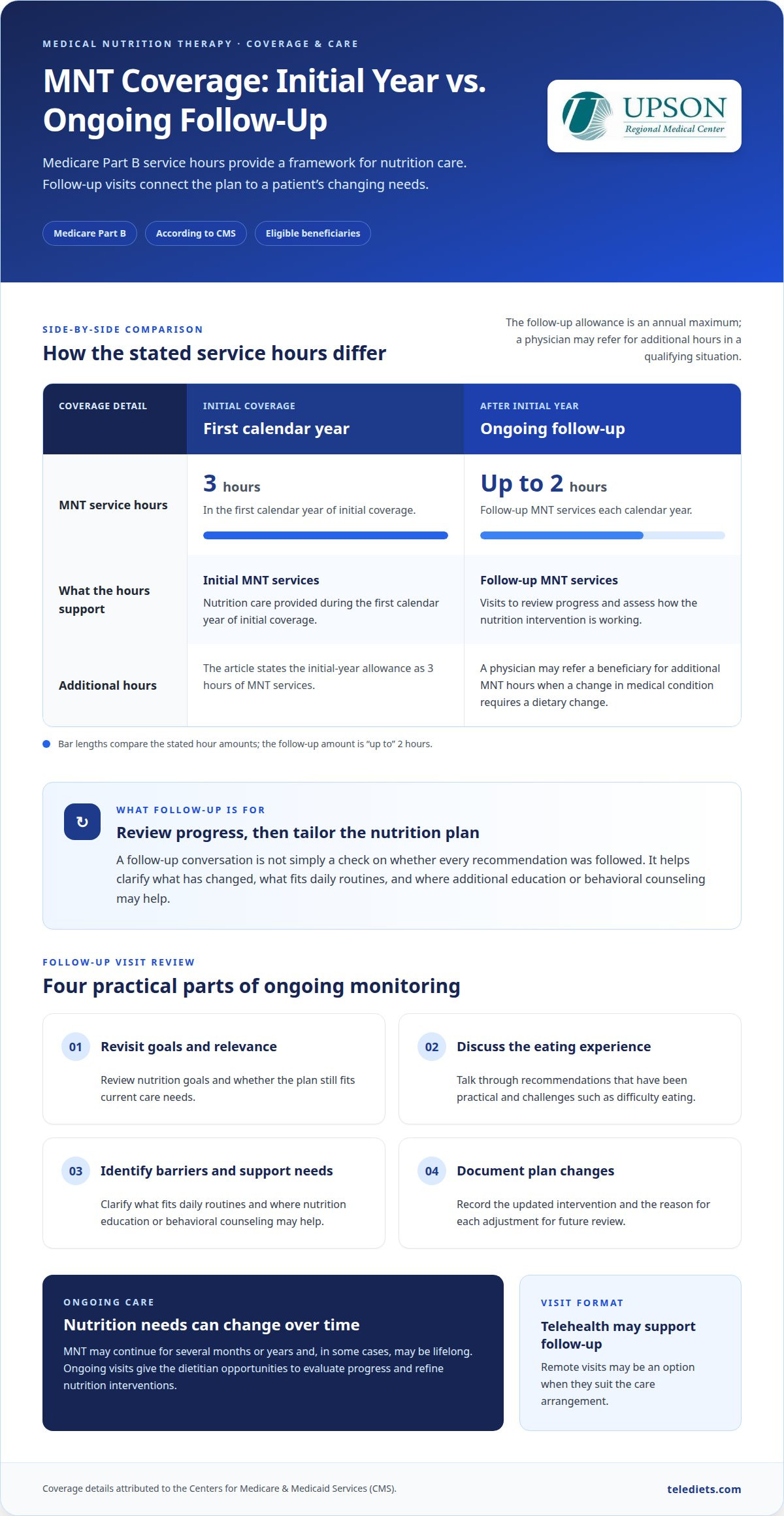
Medicare Part B covers 3 hours of medical nutrition therapy services in the first calendar year of initial coverage, according to the Centers for Medicare & Medicaid Services (CMS). This coverage detail helps frame eligible patients’ initial MNT visits. The care itself can address chronic conditions such as diabetes or kidney disease, with nutrition interventions selected for the person’s clinical situation.
GLP-1 meal plans are another form of structured nutrition support. In a clinical setting, meal-planning guidance can be considered alongside the patient’s broader nutrition assessment and treatment plan. The focus is on appropriate food and nutrition support, not medication dosing or changes. Physicians and dietitians can use follow-up discussions to identify whether the plan remains practical and aligned with care goals.
Across these steps, documentation should link the identified need to the intervention and the progress reviewed later. This sequence helps physicians see what nutrition support was recommended and what may need discussion at the next visit.
Follow-up visits and treatment monitoring
Follow-up visits help a dietitian assess how an intervention is working and what may need adjustment. They connect earlier recommendations with a patient’s current progress, eating experience, and care needs.
After the initial coverage year, eligible Medicare beneficiaries may receive up to 2 hours of follow-up medical nutrition therapy services each calendar year, according to the Centers for Medicare & Medicaid Services (CMS). A physician may refer a beneficiary for additional MNT hours when a change in medical condition requires a dietary change.
Monitoring is more useful when each visit has a clear purpose. The dietitian can revisit the nutrition plan, discuss which recommendations have been practical, and identify barriers, such as difficulty eating. If food intake is a challenge, the plan can be adjusted to better reflect the patient’s needs. The clinician can document the updated intervention and its rationale for future review.
Progress review is not simply a check on whether a patient followed every recommendation. The conversation can clarify what has changed, which parts of the plan fit daily routines, and where more nutrition education or behavioral counseling may help. These details give the care team a fuller picture of how the intervention fits alongside other treatment.
- Review the nutrition goals and the plan’s relevance to current care.
- Discuss eating challenges and practical barriers.
- Record adjustments and the reason for each change.
MNT may continue for several months or years and, in some cases, may be lifelong. Ongoing visits give the dietitian opportunities to evaluate progress and refine evidence-based nutrition interventions over time. Telehealth may also support follow-up when remote visits suit the care arrangement.
For practices supporting ongoing nutrition care, Advanced Medical Series Meal Plans can provide structured plans for clinical use alongside follow-up workflows.
Stanford Health Care monitors patients’ progress during follow-up visits and changes nutrition plans when patients have difficulty eating. Medical nutrition therapy services may include follow-up visits to check a patient’s progress. The approach uses personalized nutrition interventions based on evidence-based practice and monitors progress over subsequent visits; telehealth meetings may be an option in some cases.
Nutrition and lifestyle assessments
An MNT assessment gives a registered dietitian a structured view of a patient’s nutritional and medical status. It provides context for selecting nutrition support related to a disease or ongoing care need.
The assessment may include medical history and test results, as well as eating patterns and relevant lifestyle factors. For someone managing diabetes, the discussion may cover lifestyle factors that affect the condition. Reviewing these details together helps the dietitian identify nutrition concerns to address and determine what information should guide the intervention.
Practical topics can make an assessment more useful than a record of clinical details alone. Depending on the patient’s needs, the discussion may cover:
- Food purchasing habits and access to foods.
- How the patient reads nutrition labels.
- Menu planning and culinary skills.
- Attitudes toward food, eating, and weight.
These topics connect clinical information with everyday decisions. For example, a patient who needs help planning meals may benefit from discussing menu choices and food purchasing. Someone uncertain about food labels may need education on interpreting information relevant to their nutrition plan. The registered dietitian can tailor the conversation to the patient’s history and priorities.
A useful assessment also establishes a starting point for later evaluation. The care team can document which medical and nutrition details informed the intervention, then revisit those concerns during follow-up. Changes in test results or the patient’s circumstances can inform future nutrition discussions. This creates a clear link between assessment findings, the support provided, and progress reviewed over time.
For physicians, assessment details make nutrition care easier to understand alongside other treatment. A concise record of relevant history, test results, eating patterns, and lifestyle factors helps explain why a particular nutrition intervention was selected. It also gives the dietitian a practical basis for focusing education and tracking the patient’s response over time.
Medical nutrition therapy includes a comprehensive assessment of a patient’s medical and nutritional status and history. Keeping this broad view in focus helps organize the conversation around the patient’s circumstances instead of treating details in isolation. It provides a consistent foundation for identifying the concerns that matter to care.
Software features for medical nutrition therapy
Useful software can organize nutrition plans and support clinical follow-up. For physicians, its value depends on how well its features fit the practice’s MNT workflow.
Platforms differ in clinical focus, plan libraries, billing tools, and telehealth capabilities. In the United States, physicians can compare these categories, but no platform name or popularity ranking is established here.
Privacy and HIPAA Support
Software alone does not establish HIPAA compliance or ensure patient data privacy. Practices should assess how a platform handles access, storage, and sharing of patient information, and follow their own privacy and security procedures. For example, nutrition notes should be handled within the practice’s established processes for sensitive health information.
EHR Integration
Clinical-system integration varies by platform. Some tools connect with clinical records, while others require separate documentation, so workflow fit depends on how information moves between systems. For a diabetes nutrition plan, consider whether clinicians can readily access relevant assessment details and follow-up notes without unnecessary duplicate work.
Clinical Practice Implementation
Start implementation by identifying the practice’s needs, such as nutrition planning, clinical documentation, follow-up, or billing support. Then define who will use the software and where each step belongs in the care workflow. A diabetes-focused team, for example, can map how a nutrition plan is selected, reviewed, and updated during follow-up.
Nutrition software has limits. It can organize information and support a workflow, but it does not replace clinical judgment or a dietitian’s assessment. Inaccurate patient details or an unsuitable plan can produce unhelpful recommendations, so clinicians should review outputs against the patient’s documented needs.
Explore physician-focused nutrition workflows for structured nutrition planning and practice support.
TeleDIETS: Advanced Medical Series Meal Plans
TeleDIETS offers Advanced Medical Series Meal Plans for physicians and clinics supporting chronic disease management. Its platform helps healthcare professionals select evidence-based nutrition plans tailored to lab results and clinical diagnoses. This can support practices looking to structure nutrition care alongside assessment and follow-up workflows.
Choose from Advanced Medical Series Meal Plans for specialized clinical needs, Standard Series Meal Plans for broader nutrition support, or GLP-1 Meal Plan Protocols where relevant to your practice. Insurance Billing & CPT Coding Tools also support billing workflows connected to nutrition services. These offerings help practices bring nutrition planning into clinical care without replacing clinician judgment or individualized patient assessment.
Contact TeleDIETS to discuss how its clinical nutrition software can fit your practice’s workflow.
Build a Nutrition Workflow That Fits Your Practice
Begin by defining how nutrition care should fit your clinical workflow. Identify the tasks that need support, such as organizing care plans, coordinating follow-up, or helping clinicians review nutrition information. Clear priorities make it easier to assess whether a platform complements your team’s responsibilities and existing processes.
When evaluating medical nutrition therapy software for physicians, keep clinical oversight central. Software can support a workflow, but clinicians remain responsible for interpreting patient information and determining appropriate care. A thoughtful implementation starts with your practice’s needs and the people who will use the tools.
TeleDIETS offers nutrition planning options for healthcare professionals, including Standard Series Meal Plans, Advanced Medical Series Meal Plans, and GLP-1 Meal Plan Protocols. To discuss how its offerings may fit your practice, contact TeleDIETS about your needs.
With a clear workflow and a considered approach, your team can take a confident next step in supporting nutrition care.
Frequently Asked Questions
What features should physicians look for in medical nutrition therapy software?
Look for tools that connect clinical inputs with nutrition planning and fit provider workflows. TeleDIETS can read CMP biomarker lab results and ICD-10 codes to automatically recommend appropriate meal plans. Its digital library of over 8,000 pre-designed meal plans gives clinicians a range of options, while secure integration with clinical systems supports protected data flow. Consider how these capabilities align with your practice’s care processes.
Leave a Reply