
Did you know that consistent access to evidence-based nutrition can reduce hospitalizations by as much as 14%? For many clinicians, the gap between diagnosing a chronic condition and seeing a patient actually change their diet feels nearly impossible to bridge. You likely recognize that personalized nutrition is essential for managing metabolic health, yet the reality of a high-volume clinic makes one-on-one counseling feel like a luxury you can’t afford. It’s frustrating to see patients struggle when you know that improving patient outcomes with medical nutrition therapy is the key to their long-term success.
This guide will show you how to integrate automated, diagnosis-based MNT into your existing workflow to enhance patient health and practice efficiency simultaneously. We’ll explore how to scale personalized plans using AI-driven protocols and how to secure reimbursement using 2026 Medicare rates for CPT codes like 97802 and 97803. By moving from manual advice to automated, lab-driven protocols, you can transform nutrition from a bottleneck into a clinical advantage.
Key Takeaways
- Understand the clinical distinction between general wellness and evidence-based intervention as a primary driver for improving patient outcomes with medical nutrition therapy.
- Discover how specialized meal plan protocols, such as the Advanced Medical Series, provide targeted support for complex conditions and patients on GLP-1 receptor agonists.
- See how AI-driven automation and telemedicine plugins can integrate into your practice to reduce nutrition prescription time to just 30 seconds.
- Identify the specific CPT codes and automated documentation tools you’ll need to secure consistent insurance reimbursement for nutrition services.
The Clinical Impact of Medical Nutrition Therapy on Patient Outcomes
Medical Nutrition Therapy (MNT) represents a sophisticated shift from generic dietary advice to a targeted clinical intervention. Unlike broad wellness suggestions, MNT is a therapeutic approach designed to treat specific medical conditions and manage their symptoms through a specifically tailored diet. By centering care on clinical nutrition, you transition from being a source of general health tips to a Trusted Expert Guide who provides life-altering medical prescriptions. This precision is fundamental to improving patient outcomes with medical nutrition therapy in a complex healthcare environment.
MNT vs. General Nutrition Education
General nutrition education often focuses on preventative wellness for the healthy population. In contrast, MNT is diagnostic-driven and essential for patients with established pathologies. It requires specific clinical data, including lab results and official diagnoses, to create a plan that addresses a patient’s unique metabolic needs. While wellness advice is helpful, it’s lacking the clinical necessity and professional authority required to manage chronic disease effectively.
Evidence-Based Results in Chronic Disease Management
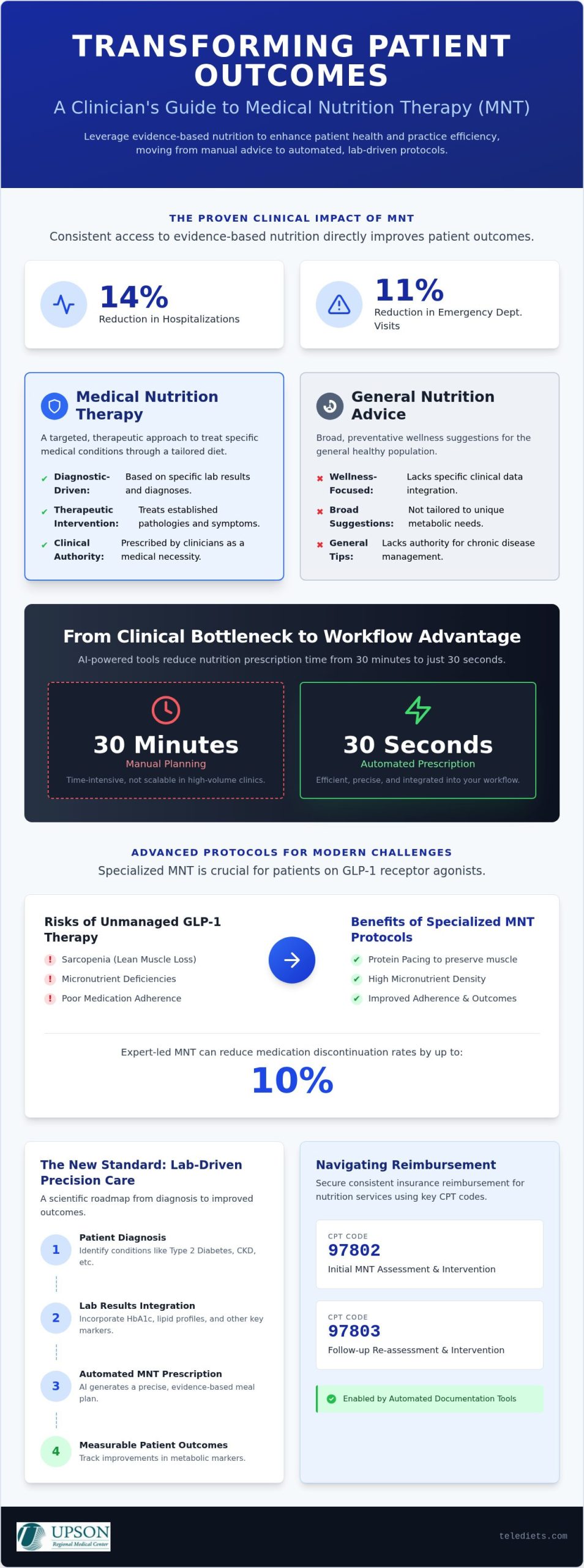
Current 2026 clinical standards demonstrate that MNT significantly impacts metabolic markers such as HbA1c levels and lipid profiles. Recent evaluations of “Food as Medicine” initiatives show that consistent access to nutritious food reduces hospitalizations by 14% and emergency department visits by 11%. For patients with dyslipidemia or hypertension, these interventions directly lower cardiovascular risk by improving lipid profiles and stabilizing blood pressure. A 2026 study found that involving experts in MNT for patients on GLP-1 receptor agonists can reduce medication discontinuation rates by up to 10%. To achieve measurable changes in metabolic syndrome markers, the effective dosage of nutrition therapy typically requires an initial assessment followed by consistent, data-driven interventions tailored to the patient’s specific metabolic labs.
Advanced Protocols for Chronic Disease and GLP-1 Support
The rapid adoption of GLP-1 receptor agonists has fundamentally changed the requirements for clinical nutrition. While these medications are highly effective, they introduce specific risks like sarcopenia and micronutrient deficiencies due to extreme appetite suppression. This is where improving patient outcomes with medical nutrition therapy becomes a matter of physiological safety, not just weight management. Relying on generic advice in this era isn’t sufficient for high-risk patients.
The Necessity of GLP-1 Meal Plan Protocols
Patients on GLP-1s often struggle to consume adequate food volume. Specialized GLP-1 Meal Plan Protocols prioritize protein pacing and high micronutrient density to preserve lean muscle mass during rapid weight loss. Clinical software ensures these specific requirements are met even when a patient’s appetite is minimal. Research confirms that this level of targeted intervention improves patient outcomes by managing side effects and ensuring medication adherence.
Lab-Based Nutrition: Precision Chronic Care
Clinicians frequently hear patients claim they “already know how to eat.” However, generic knowledge fails when managing complex conditions like Stage 3 CKD or insulin-dependent Type 2 Diabetes. The Advanced Medical Series of meal plans moves beyond basics by integrating specific lab markers into the daily routine. Utilizing an automated clinical nutrition prescription platform eliminates the guesswork and manual labor inherent in traditional planning. It’s a shift toward personalized nutrition plans derived from lab results as the new standard for chronic disease management. This approach replaces vague suggestions with a definitive, scientific roadmap. You can modernize your clinical workflow and focus on improving patient outcomes with medical nutrition therapy by adopting these evidence-based tools.
Integrating Automated MNT into High-Volume Clinical Workflows
The primary barrier to improving patient outcomes with medical nutrition therapy is rarely a lack of clinical knowledge; it’s a lack of time. In a high-volume primary care setting, spending 30 minutes crafting a manual diet plan isn’t feasible for most providers. AI-powered clinical nutrition software solves this by reducing ‘time-to-prescription’ from half an hour to just 30 seconds. This efficiency allows you to provide high-level care without extending your clinical day. You don’t have to be a dietitian to offer these services because modern SaaS tools handle the underlying complexity for you.
The Role of AI in Scaling Nutrition Care
An AI nutrition therapy engine processes your clinical inputs, such as diagnosis and lab data, to generate patient-ready protocols instantly. This physician-led, software-supported model is essential for Medical Nutrition Therapy to be scalable across a large patient panel. By using Standard Series Meal Plans, you can deploy rapid, proven nutritional strategies for common conditions with minimal friction. This ensures that every patient receives a professional roadmap immediately after their appointment, rather than waiting for a referral that might never happen.
Workflow Optimization: From Diagnosis to Prescription
Integrating a nutrition therapy telemedicine plugin into your existing EHR or telehealth platform creates a seamless transition from diagnosis to action. You can follow this 3-step checklist during a standard encounter:
- Enter the patient’s primary diagnosis and relevant lab markers into the system.
- Select the appropriate medical nutrition protocol from the provided library.
- Transmit the plan via the telemedicine plugin for immediate patient access and remote tracking.
This streamlined process ensures better compliance and allows for remote delivery of care, which is vital for long-term habit change. To start automating your prescriptions and improving patient outcomes with medical nutrition therapy today, explore the TeleDIETS clinical platform.
Navigating Reimbursement and Coding for Sustainable Nutrition Care
Financial sustainability is the final pillar of a successful nutrition program. While clinical efficacy is paramount, your practice must also capture the revenue generated by these specialized services. By leveraging standardized coding, you ensure that improving patient outcomes with medical nutrition therapy becomes a profitable, long-term component of your care model. Modern SaaS platforms now offer integrated insurance billing and CPT coding tools to remove the manual burden of documentation.
Essential CPT Codes for MNT Reimbursement
Understanding the primary time-based codes is essential for accurate billing. For 2026, the national unadjusted Medicare reimbursement rates provide a clear framework for these services:
- CPT 97802: Use this for the initial assessment and intervention. It’s billed in 15-minute increments at a rate of $36.74 per unit.
- CPT 97803: This code covers all subsequent individual follow-up visits and re-assessments, reimbursed at $31.73 per 15-minute block.
Proper documentation is mandatory for reimbursement. Each unit must be supported by clinical notes demonstrating the specific work performed during that time.
Maximizing Practice ROI with Digital MNT
The financial benefit of combining MNT with Chronic Care Management (CCM) programs creates a synergistic revenue stream that supports both patient retention and practice growth. Automated documentation tools within a clinical platform significantly reduce the administrative weight of nutrition billing, ensuring that your staff spends less time on paperwork and more on patient care. As the Medical Nutrition Therapy Act of 2026 moves through the 119th Congress, expanding coverage to conditions like obesity and hypertension is becoming a reality. To capitalize on these shifts and access integrated billing tools, you should subscribe to the TeleDIETS MNT platform today. This investment bridges the gap between clinical excellence and financial health.
Transforming Your Practice with Modern Nutrition Care
Integrating medical nutrition therapy into your daily workflow is no longer a logistical burden; it’s a clinical and financial opportunity. You’ve seen how evidence-based protocols can stabilize metabolic markers and how automated systems allow you to scale these interventions without sacrificing your time. By focusing on improving patient outcomes with medical nutrition therapy, you position your clinic at the forefront of precision medicine while securing the reimbursement your expertise deserves.
Modernizing your approach requires the right tools to bridge the gap between diagnosis and patient action. You can generate evidence-based plans in seconds and leverage specialized GLP-1 and Advanced Medical Series protocols to meet the needs of your most complex patients. With integrated CPT coding for 97802 and 97803, your practice can remain both clinically effective and financially sustainable. Scale your practice with the TeleDIETS AI Nutrition Engine and empower your patients to achieve lasting health. You’re ready to lead the way in comprehensive, nutrition-focused care.
Frequently Asked Questions
Is medical nutrition therapy covered by private insurance and Medicare?
Medicare Part B currently covers MNT for patients with diabetes, chronic renal disease, or a kidney transplant when a physician referral is provided. Private insurance coverage often follows these standards, though many carriers expand coverage to other metabolic conditions. Utilizing integrated billing tools helps your practice capture the 2026 reimbursement rates for CPT codes 97802 and 97803, making these essential clinical services financially sustainable for your practice.
Can a physician prescribe MNT without a registered dietitian on staff?
Physicians can prescribe MNT directly by utilizing AI-driven clinical software that generates plans based on specific diagnoses. You don’t need a registered dietitian on-site to provide these evidence-based protocols to your patients. This technology-forward approach is a primary driver for improving patient outcomes with medical nutrition therapy, as it allows for immediate intervention during the patient encounter without the delays or administrative hurdles of external referrals.
How much time does it take to implement automated MNT software in a clinic?
Implementation of a cloud-based SaaS platform is nearly instantaneous; it requires no complex hardware installation or long-term setup. Most clinics can begin generating diagnosis-based meal plans the same day they subscribe to the platform. Because the AI engine reduces the time-to-prescription from 30 minutes to just 30 seconds, the software integrates seamlessly into high-volume schedules without disrupting your existing patient flow or requiring extensive staff training.
What happens if a patient has multiple diagnoses requiring different nutritional protocols?
Sophisticated AI engines process multiple clinical inputs simultaneously to navigate the challenges of complex comorbidities. If a patient presents with overlapping conditions, such as Type 2 Diabetes and Stage 3 CKD, the software selects a protocol that respects the clinical restrictions of both diagnoses. This prevents the errors often associated with manual dietary planning and ensures the patient receives a scientifically valid roadmap tailored to their metabolic profile.
How do GLP-1 meal plan protocols differ from standard weight loss diets?
GLP-1 protocols are specifically engineered to prevent muscle mass loss and nutrient deficiencies caused by extreme appetite suppression. Unlike standard weight loss diets that focus on broad calorie restriction, these protocols prioritize protein pacing and micronutrient density. This targeted approach is critical for improving patient outcomes with medical nutrition therapy, as it supports medication adherence while protecting the patient’s long-term metabolic health and preserving their physical strength.
Leave a Reply