
How much billable revenue is your practice losing to generic PDF handouts and manual carb counting every week? Most endocrinologists recognize that medical nutrition therapy is the cornerstone of metabolic health, yet implementing a dedicated nutrition software for endocrinology practice is often the missing link between clinical advice and patient adherence. You’re likely balancing the complex management of GLP-1 receptor agonist side effects with the need for precise, lab-driven dietary guidance that patients actually follow.
Transitioning to an automated MNT engine transforms this administrative burden into a streamlined, high-value service. By leveraging evidence-based protocols, you can move beyond static advice and provide dynamic care that scales with your volume. This guide details how to capture untapped revenue using CPT codes 97802 and 97803 while navigating the 2026 Medicare reimbursement landscape and updated diagnostic requirements. We will explore how to integrate automated meal plans that drive metabolic success, ensuring your practice remains a leader in modern endocrine care and achieves superior patient outcomes without increasing staff workload.
Key Takeaways
- Understand how to transition from manual dietary advice to a clinical-grade MNT workflow that improves patient adherence and metabolic outcomes.
- Learn how implementing a dedicated nutrition software for endocrinology practice enables your team to generate lab-driven meal plans in under 60 seconds.
- Identify the specific steps needed to capture billable revenue using CPT codes 97802 and 97803 within a high-volume clinical environment.
- Discover how to scale your services using AI-driven protocols that address complex chronic diseases and the nutritional side effects of GLP-1 receptor agonists.
The Role of Medical Nutrition Therapy in Modern Endocrinology
Medical Nutrition Therapy (MNT) is an evidence-based clinical intervention targeting metabolic disorders such as Type 2 diabetes, PCOS, and metabolic syndrome. It’s far more than basic dietary guidance; it’s a therapeutic tool used to manage chronic conditions through specific nutritional prescriptions. The Role of Medical Nutrition Therapy is central to modern endocrine care, yet many high-volume practices struggle with the implementation phase. Manual meal planning is simply too slow for a busy clinic. When providers rely on generic PDF handouts, patient adherence often plummets, leading to suboptimal clinical results.
Clinical standards in 2026 have shifted from passive food tracking to active nutritional prescribing. High-performance nutrition software for endocrinology practice bridges the gap between patient lab results and daily dietary choices. It allows clinicians to convert complex biomarkers into actionable, automated protocols in seconds.
Addressing the Metabolic Complexity of 2026
Precision nutrition has a documented impact on A1c levels, glycemic load, and lipid profiles. While consumer-grade apps are popular for general weight loss, they lack the HIPAA compliance and clinical accuracy required for a professional medical setting. Endocrinology practices need specialized tools that integrate seamlessly with medical data to provide valid, scientific interventions that patients can trust.
The ROI of Integrated Nutrition Services
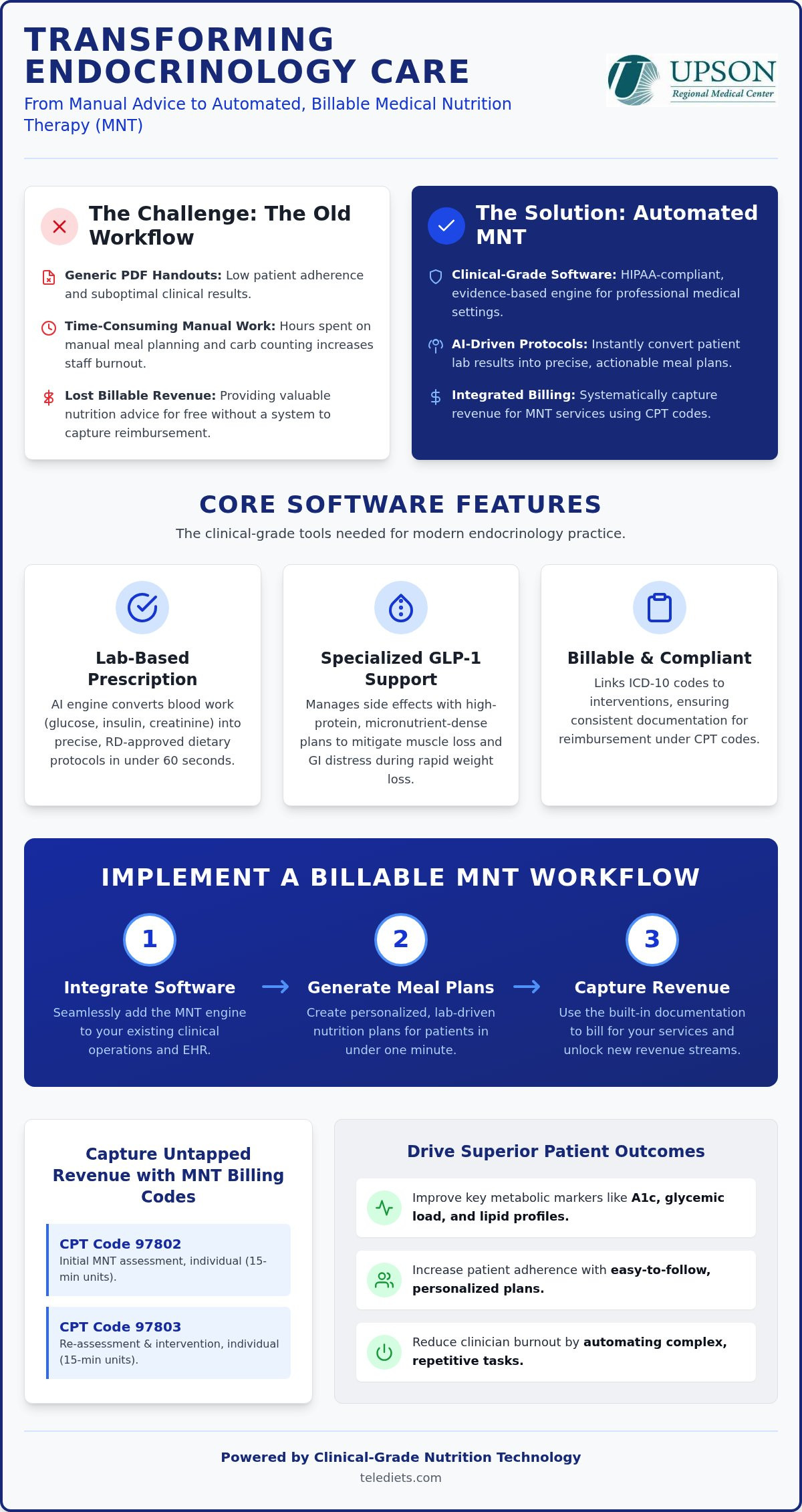
Viewing nutrition as a revenue driver rather than a cost center is a significant shift in practice management. By integrating specialized billing tools, clinics can finally capture reimbursement for MNT services that were previously provided for free. Implementing a dedicated nutrition software for endocrinology practice ensures that every nutritional intervention is documented and billable. Utilizing clinical nutrition software reduces clinician burnout by automating the complex process of meal plan generation, allowing staff to focus on patient interaction rather than manual calculations.
Core Features of Clinical-Grade Endocrinology Nutrition Software
Effective nutrition software for endocrinology practice must function as a clinical prescription engine rather than a simple calorie tracker. It automates protocol generation by linking specific ICD-10 codes directly to evidence-based dietary interventions. This ensures that meal planning for diabetes, PCOS, and metabolic syndrome remains consistent across your entire patient population. By integrating HIPAA-compliant patient portals and ensuring interoperability with existing EHR systems, clinicians can monitor progress in real-time without the friction of manual data entry. Understanding Medicare coverage for medical nutrition therapy is vital here, as these sophisticated features ensure your documentation meets the rigorous standards required for reimbursement.
Lab-Based Nutrition Prescription
The core of this technology is an AI engine that converts blood work results, including glucose, insulin, and creatinine levels, into precise dietary restrictions. Instead of generic advice, patients receive RD-approved “Standard” or “Advanced Medical Series” protocols tailored to their unique metabolic profile. This precision ensures that nutrition becomes a measurable, predictable part of the treatment plan. If you’re ready to modernize your clinical workflow, you can explore professional licensing options to begin automating your MNT delivery today.
Specialized GLP-1 Support Protocols
With the widespread use of GLP-1 receptor agonists, managing nutritional side effects has become a clinical priority. Modern software provides specialized protocols that prioritize high protein intake and micronutrient density to mitigate muscle loss during periods of rapid weight loss. These plans help manage gastrointestinal distress and ensure patients maintain metabolic health while on therapy. Utilizing automated MNT protocols allows your staff to provide these high-touch interventions in seconds, ensuring patients remain adherent and successful throughout their entire treatment journey.
How to Implement a Billable Nutrition Workflow in Your Practice
Establishing a profitable nutrition service requires a structured approach that integrates seamlessly into your daily clinical operations. By shifting from informal dietary advice to a formalized, billable model, you can provide superior care while capturing revenue that often goes unclaimed. The right nutrition software for endocrinology practice makes this transition effortless by automating the heavy lifting of plan creation and documentation.
- Step 1: Identify eligible patients through diagnosis-based screening. Effective August 3, 2026, ensure MNT services are billed with a required diagnosis of diabetes or renal disease to meet updated claim requirements.
- Step 2: Generate the initial MNT prescription using clinical software in under 60 seconds. This speed allows your staff to issue plans during the patient visit rather than as a follow-up task.
- Step 3: Utilize integrated CPT coding tools for accurate insurance submission, ensuring every session is captured correctly.
- Step 4: Schedule automated follow-ups to maintain patient engagement and bill for subsequent sessions.
Maximizing MNT Reimbursement
Revenue growth depends on the consistent use of CPT code 97802 for initial assessments and 97803 for follow-up medical nutrition therapy sessions. Clinical software provides the automated documentation necessary to support insurance audits; it ensures every claim is backed by lab-driven data. This level of precision reduces claim denials and secures your practice’s financial health. You can implement a billable nutrition workflow today to ensure no revenue is left on the table.
Telemedicine and Remote Care Delivery
Scaling your services doesn’t require more physical exam rooms. By integrating a telemedicine nutrition plugin, you can deliver remote MNT to patients from the comfort of their homes. This model reduces office overhead and overcomes geographical barriers, allowing your practice to support a higher volume of patients with chronic metabolic conditions while maintaining high-touch clinical oversight and professional guidance.
Scaling Your Practice with TeleDIETS Clinical Protocols
Expanding an endocrinology practice in 2026 requires more than just clinical expertise; it demands operational efficiency. The TeleDIETS AI engine acts as a force multiplier for your medical staff, allowing them to deliver sophisticated, lab-driven nutrition prescriptions without the need for extensive specialized training. By utilizing high-performance nutrition software for endocrinology practice, you can offer the Advanced Medical Series to manage complex chronic diseases while maintaining a lean workflow. This positioning establishes your clinic as a leader in comprehensive metabolic health, providing a level of care that generic EHR systems simply can’t match.
The TeleDIETS Advantage: From Labs to Life
Lab-driven protocols outperform generic dietary advice because they’re grounded in the patient’s actual physiological state. When you empower your staff to generate clinical-grade plans based on real-time data, you reduce the margin for error and improve patient adherence. The dedicated telemedicine plugin further reduces friction, allowing patients to access their protocols and engage with your practice remotely. This seamless integration ensures that your nutritional interventions are as scientifically rigorous as your pharmacological treatments, providing a unified experience for the patient.
Getting Started with Clinical-Grade Nutrition
Choosing a subscription level that matches your practice volume is the first step toward scaling your impact. Whether you’re a solo practitioner or part of a large multi-specialty group, the right software provides the infrastructure needed to handle the 2026 surge in patients requiring GLP-1 receptor agonist support. You can access a clinical-grade software subscription for immediate implementation, ensuring your team has the tools to deliver evidence-based MNT today. This investment improves metabolic outcomes and secures a sustainable revenue stream for your practice’s future.
Advancing Metabolic Care Through Clinical Automation
Integrating medical nutrition therapy into your daily workflow is no longer just a clinical recommendation; it’s a strategic necessity for the modern practice. By moving away from manual handouts and adopting a dedicated nutrition software for endocrinology practice, you can finally align patient dietary habits with real-time lab data. We’ve explored how automated protocols and precise CPT coding for 97802 and 97803 transform nutrition from a time-consuming task into a reliable, billable revenue driver.
Your team can now leverage the Advanced Medical Series and specialized GLP-1 receptor agonist protocols to ensure every patient receives high-touch, evidence-based care. With integrated insurance billing tools and HIPAA-compliant telemedicine integration, you’re equipped to scale your services far beyond the physical clinic walls. It’s time to empower your staff and secure the long-term metabolic success of your patients.
Upgrade your practice with the TeleDIETS clinical nutrition engine today and lead the way in comprehensive endocrine health.
Frequently Asked Questions
What are the most common CPT codes for medical nutrition therapy in endocrinology?
The primary CPT codes for medical nutrition therapy are 97802 for the initial assessment and 97803 for subsequent individual interventions. Practices also utilize 97804 for group sessions. Effective August 3, 2026, these claims must be billed with a required diagnosis of diabetes or renal disease. Clinical software automates the documentation necessary to support these codes, ensuring compliance with the latest Medicare reimbursement standards and reducing administrative friction.
Can nutrition software integrate with my existing EHR system?
Yes, clinical-grade nutrition software for endocrinology practice is designed for seamless interoperability with major EHR systems. This integration’s what allows for the automatic flow of lab values, such as A1c and creatinine, directly into the nutrition engine. By syncing data, your staff avoids manual entry errors and ensures every nutritional prescription’s based on the most recent clinical data available in the patient’s record.
How does the software handle meal plans for patients on GLP-1 medications?
The software utilizes specialized GLP-1 Meal Plan Protocols to address the unique needs of patients on receptor agonists. These plans prioritize high protein intake and micronutrient density to preserve lean muscle mass during rapid weight loss. Additionally, the protocols include specific dietary adjustments to help manage common gastrointestinal side effects, ensuring patients remain adherent to their medication while achieving their metabolic health goals safely and effectively.
Is a registered dietitian required to use medical nutrition therapy software?
While the software’s designed to be user-friendly for all clinical staff, billing for MNT codes usually requires a Registered Dietitian or a qualified nutrition professional as defined by CMS. However, the AI-driven engine acts as a clinical force multiplier. It’s what allows medical assistants or nurses to generate evidence-based meal plans under the supervision of a provider, streamlining the workflow and ensuring every patient receives professional guidance.
How much additional revenue can a clinic expect by adding MNT services?
Revenue varies based on patient volume, but the 2026 Medicare conversion factor’s set at $33.40 for non-qualifying APM participants. By consistently billing 97802 and 97803, high-volume practices can turn nutrition from a cost center into a sustainable revenue stream. Integrated billing tools help track these sessions and maximize reimbursement, so clinics don’t lose significant income that was previously given away as informal advice.
Leave a Reply