
There’s no single anti-inflammatory diet: the eating pattern depends on which foods to include and which to limit. The right software for creating anti-inflammatory diet plans should help clinicians turn those priorities into practical meal plans tailored to individual needs. Gradual changes are often more manageable than switching to a new eating pattern all at once.
Planning can become harder when pain or fatigue affects shopping, cooking, or daily routines. You may already know that food choices matter, but a useful planning process also needs to account for what feels achievable. This guide explains what to look for in diet planning software, how to assess its support for foods to emphasize or limit, and how to adapt meal planning when energy and symptoms vary. You’ll also learn how to keep plans flexible and grounded in individual clinical needs.
Key Takeaways
- Build flexibility into meal planning so lower-energy days call for simpler preparation, not an all-or-nothing change.
- Use planning software to organize clinical priorities and adapt meal ideas, while keeping professional judgment central to personalization.
- Assess free tools by whether they support your actual planning workflow; convenience alone doesn’t establish clinical suitability.
- Before relying on a platform, determine how it handles allergies, dietary preferences, and nutrient information so plans reflect each person’s needs.
Planning around pain and fatigue
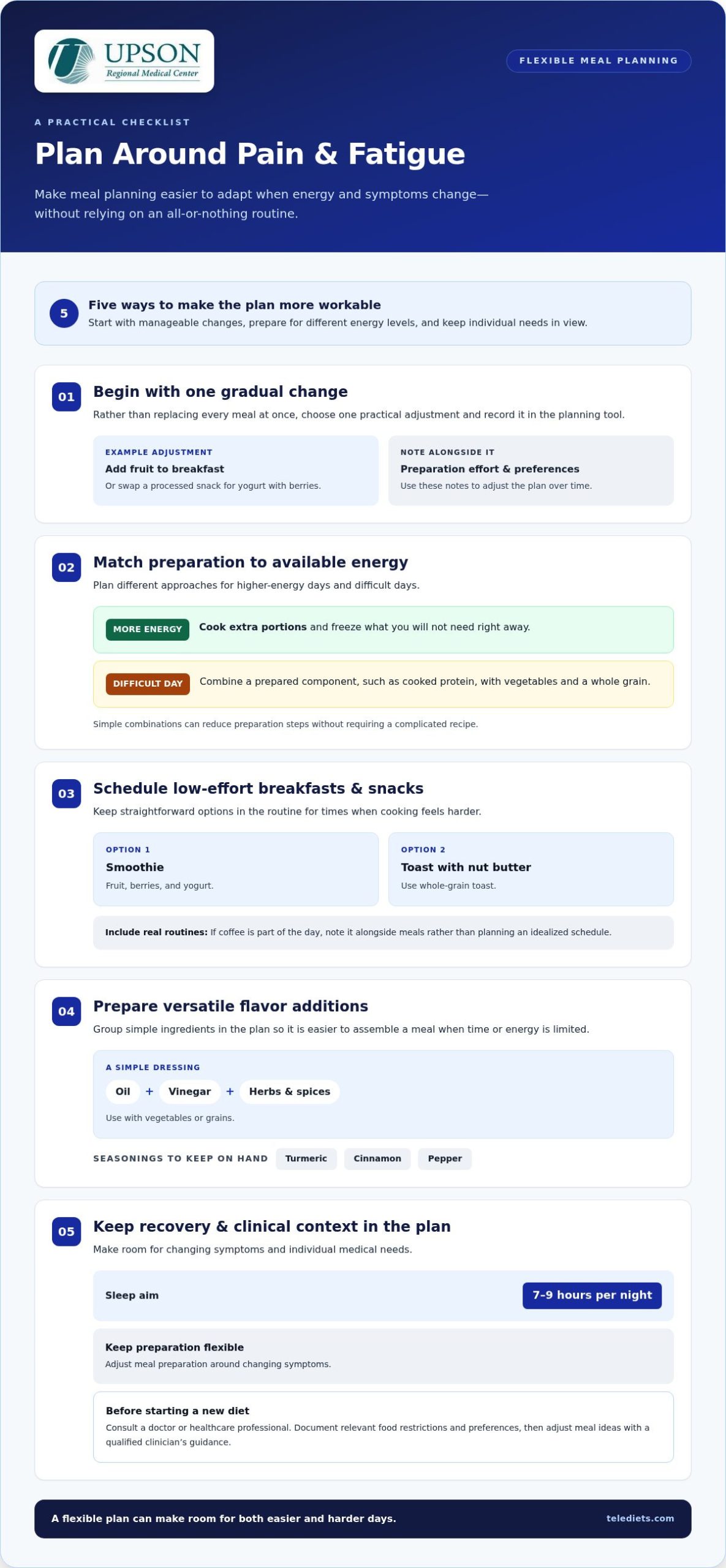
- Start with gradual changes rather than replacing every meal at once. Choose one practical adjustment, such as adding fruit to breakfast or swapping a processed snack for yogurt with berries. Record the change in the planning tool, along with preparation effort and food preferences. This creates a manageable starting point and makes it easier to adjust the plan over time.
- Match meal preparation to available energy. On a higher-energy day, cook extra portions and freeze what won’t be needed right away. On a difficult day, combine a prepared component, such as cooked protein, with vegetables and a whole grain. Simple combinations reduce steps without requiring a complicated recipe.
- Build low-effort breakfasts and snacks into the schedule. A smoothie with fruit, berries, and yogurt may take less preparation than a cooked meal. Nut butter on whole-grain toast is another straightforward option. If coffee is part of the routine, note it alongside meals so the plan reflects real habits, not an idealized schedule.
- Reduce decisions by preparing versatile flavor additions. A dressing made with oil, vinegar, herbs, and spices can accompany vegetables or grains. Keep seasonings such as turmeric, cinnamon, and pepper on hand for simple meals. Planning these ingredients together makes it easier to assemble food when pain or fatigue limits time in the kitchen.
- Include recovery and clinical context in the routine. Aim for 7-9 hours of sleep per night, and keep meal preparation flexible around changing symptoms. Before starting a new diet, consult a doctor or healthcare professional. For medical planning, document relevant food restrictions and preferences, then adjust meal ideas with a qualified clinician’s guidance.
How do dietitians use software to create personalized anti-inflammatory meal plans?
- Set the clinical priorities. Start with the person’s diagnosis, laboratory results, current eating pattern, and practical preferences. Record which foods they already eat and which they want to change. Because there’s no single anti-inflammatory diet, the plan should reflect both foods to include and foods to limit. A dietitian can use these details to guide choices instead of applying the same template to everyone.
- Translate priorities into food patterns. Build meals around fruits, vegetables, whole grains, legumes, fish, nuts, seeds, and unsaturated fats such as olive oil. For example, pair salmon with vegetables and a whole grain. Consider limiting highly processed foods, added sugars, processed meat, or alcohol in line with the person’s clinical needs and preferences.
- Use software to organize meal options. A planning tool can help a dietitian assemble meal ideas into a coherent schedule and revise them when needs change. Enter a clear example, such as oatmeal with berries for breakfast, then consider an alternative that suits a different preference. Review each proposed meal for fit, variety, and practical preparation before sharing it.
- Check the pattern across the plan. Review meals together, not just as separate recipes. Software for creating anti-inflammatory diet plans should support a dietitian’s assessment of food choices across the schedule. Check whether the plan regularly includes fruits and vegetables, whole grains, and sources of unsaturated fats. Adjust meals when repetition, availability, or preferences make the schedule difficult to follow.
- Personalize and review with the person. Present the draft as a practical starting point, then revise it using feedback about taste, routine, and preparation. A plan featuring fish, beans, and vegetables may need alternatives to suit someone’s preferences. Keep clinical judgment central: software helps organize choices, while the dietitian determines whether they fit the individual’s medical nutrition needs.
What are the best free tools for creating anti-inflammatory diet plans?
- Start with a spreadsheet. A basic spreadsheet can organize meals by day, ingredients, and preparation notes without specialized software. Create columns for food groups, preferences, and foods to limit. For example, track whether meals include fruits and vegetables, whole grains, legumes, and healthy fats. Use the sheet as an editable planning aid, not a clinical assessment.
- Use a calendar for routines. A digital or paper calendar can show when meals need simpler preparation or when ingredients can be reused. Add notes such as “leftover grains” or “fish meal” to make the sequence easy to see. A calendar is useful for scheduling, but it can’t determine whether a food choice fits someone’s medical needs.
- Build a template around food patterns. Because there’s no single anti-inflammatory diet, create flexible meal slots rather than rigid menus. Include prompts for fruits and vegetables, whole grains, beans or legumes, nuts or seeds, and healthy fats.
- Compare tools by the work they support. When evaluating software for creating anti-inflammatory diet plans, test it with a practical example, such as replacing an ingredient to reflect a preference. Check whether you can edit meal entries, record foods to limit, and keep notes together. Don’t assume a free tool validates nutrient totals or includes clinical safeguards.
- Know when a simple tool stops being enough. A spreadsheet or calendar can organize ideas, but complex medical requirements call for professional review. For clinicians, a useful tool supports individualized planning, clear revisions, and communication of the intended food pattern. Keep plans adaptable as preferences or health needs change.
Can anti-inflammatory diet software track allergies, dietary preferences, and nutrients?
- Record allergies separately from preferences. Enter an allergy as a restriction, then distinguish it from a disliked ingredient or chosen eating pattern. For example, a dairy allergy is different from a preference for plant-based yogurt. This distinction helps prevent a meal suggestion from treating a preference as a safety requirement. Review ingredient details whenever a recipe or meal changes.
- Translate preferences into usable substitutions. Add practical alternatives for foods a person avoids. If a plan includes fish, a clinician might consider another suitable protein based on the person’s needs. For a dairy-free preference, note an appropriate plant-based beverage or yogurt option. Record the reason for each substitution so later edits preserve the intended meal pattern.
- Choose nutrient views that answer a clinical question. Software may display nutrient information from its food database, but its usefulness depends on the database and selected foods. Review relevant totals, such as protein or fiber, in context rather than treating a screen summary as a clinical conclusion. Compare the entered serving and ingredients with the meal being planned.
- Test the tracking workflow with a sample meal. Enter oatmeal with berries, then replace an ingredient to reflect a preference or restriction. Check whether the software updates the meal record and nutrient display. Try another example, such as beans with vegetables and whole grains. These tests show whether edits remain clear across the plan.
- Keep professional review in the process. Use software to organize allergy information, preferences, and nutrient details, then review the final plan for clinical fit. A recorded restriction should remain visible when meals are edited or copied. For clinicians developing structured nutrition plans, explore medical meal plan options as part of the planning workflow.
TeleDIETS: Standard Series Meal Plans
TeleDIETS offers Standard Series Meal Plans for healthcare professionals building structured nutrition plans. When a patient’s clinical needs call for more specialized planning, Advanced Medical Series Meal Plans provide another option. TeleDIETS also offers GLP-1 Meal Plan Protocols and Insurance Billing & CPT Coding Tools.
For anti-inflammatory nutrition planning, clinicians can use TeleDIETS as part of a broader medical nutrition therapy workflow. The Standard Series offers structured meal plans, while the Advanced Medical Series provides plans for more complex clinical needs. A dietitian or physician remains responsible for applying professional judgment to individual dietary requirements, including allergies, preferences, and relevant clinical information.
Explore TeleDIETS to see how its meal-plan options may fit your clinical workflow.
Make Your Next Planning Step Practical
Start by defining what your planning workflow needs to support, then choose tools that match those priorities. Consider how clinicians will adapt meal plans, document dietary needs, and keep professional judgment central. The right software for creating anti-inflammatory diet plans should support that process while allowing flexibility.
TeleDIETS offers Standard Series Meal Plans, Advanced Medical Series Meal Plans, and GLP-1 Meal Plan Protocols for healthcare professionals working with different nutrition-planning needs. These options can help you align your next step with your practice’s clinical focus.
To explore how TeleDIETS may fit your workflow, contact TeleDIETS for diet planning support. A considered choice can help you build a more practical planning process for the people you serve.
Frequently Asked Questions
What software helps create anti-inflammatory diet plans?
Clinical nutrition software helps healthcare professionals organize meal plans around diagnoses, laboratory results, and nutrition priorities. Since there’s no single anti-inflammatory diet, clinicians need to apply an approach suited to their care context. TeleDIETS is a medical nutrition therapy platform for professionals, with plans tailored to clinical diagnoses and lab results. Clinicians use their judgment to decide how those plans address specific nutrition goals.
Which nutrition planning apps include anti-inflammatory recipes and meal plans?
Look for planning tools with meal-plan content that clinicians can assess against their intended food pattern. Recipe labels alone don’t establish whether a plan fits a person’s preferences or clinical needs. TeleDIETS provides a digital library of over 8,000 pre-designed meal plans for professional use. Healthcare practitioners can consider its plans within their nutrition workflow, rather than treating a general consumer recipe app as clinical guidance.
What features should anti-inflammatory diet planning software include?
Prioritize editable meal plans, clear ingredient details, and ways to account for allergies, preferences, and relevant nutrient information. For example, clinicians should be able to distinguish an allergy from a preference when reviewing a proposed ingredient substitution. Consider whether the tool supports clinical context, such as diagnoses or lab results, and whether its output can be reviewed and adjusted before use.
Which anti-inflammatory diet planning tools are suitable for healthcare professionals?
Choose tools designed for clinical nutrition workflows, where professional review and patient-specific context matter. TeleDIETS offers Standard Series Meal Plans, Advanced Medical Series Meal Plans, GLP-1 Meal Plan Protocols, Insurance Billing & CPT Coding Tools, and a Telemedicine Plugin. These offerings serve different practice needs. A clinician can select the relevant planning resources based on their workflow and the nutrition services they provide.
How accurate are AI-generated anti-inflammatory meal plans, and what are their risks?
AI-generated plans can help organize meal ideas, but their clinical accuracy isn’t established here, and nutrient displays depend on the food database and selected foods. Potential oversights include allergies, preferences, or medical needs, so a qualified clinician should review the ingredients and final plan.
Leave a Reply