
A telemedicine plugin for nutrition therapy can support remote counseling and follow-up, but the technology alone does not determine whether medical nutrition therapy is covered. Coverage depends on the patient’s plan and the service provided, so consider reimbursement as part of the clinical workflow.
Virtual nutrition care can make counseling more accessible while helping clinicians maintain continuity between visits. This article explains how telemedicine supports nutrition counseling and remote monitoring, what convenience it can offer, and how coverage considerations fit into practice. It also reviews ATA Action’s advocacy for reimbursement parity and expanded Medicare coverage for telehealth-delivered medical nutrition therapy.
Key Takeaways
- Remote nutrition care can support counseling and ongoing follow-up, with digital tools helping clinicians keep care connected between visits.
- Effective online counseling depends on matching the virtual format to the patient’s needs and the nutrition care being provided.
- Telemedicine can reduce access barriers by making nutrition services easier to reach without an in-person clinic visit.
- Telehealth coverage and reimbursement are distinct from the convenience of virtual care; understand how payer policies and advocacy efforts shape access to medical nutrition therapy.
Remote monitoring and nutrition-focused digital health services
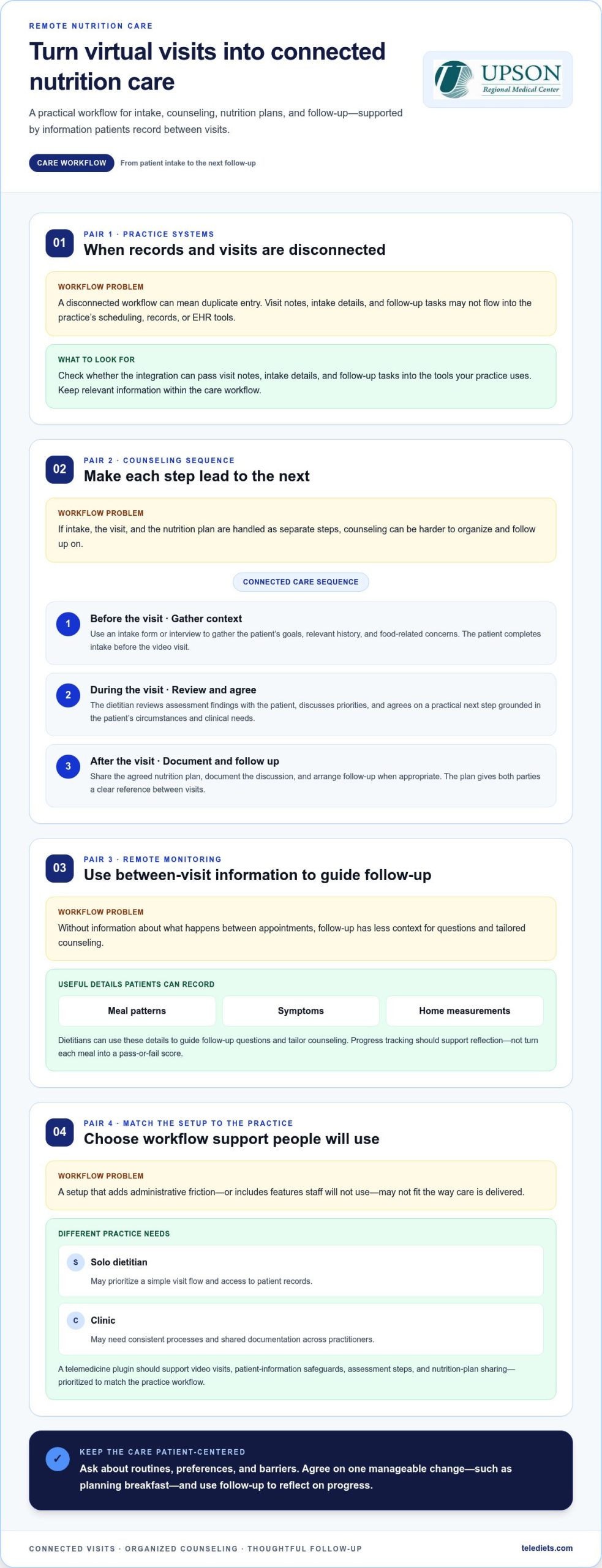
Remote monitoring connects nutrition counseling with information patients record between visits, such as meal patterns, symptoms, or home measurements. Dietitians can use these details to guide follow-up questions and tailor counseling.
Nutrition Practice Integrations
Nutrition practice integrations connect video visits with scheduling, records, and patient documentation, keeping relevant details within the care workflow. To assess compatibility with practice management and EHR systems, check whether a plugin can pass visit notes, intake details, and follow-up tasks into the tools your practice uses. A disconnected workflow can mean duplicate entry.
Features for Dietitians and Clinics
Solo dietitians may prioritize a simple visit flow and access to patient records, while clinics may need consistent processes and shared documentation across practitioners. The setup should reduce administrative friction without adding features staff will not use. A telemedicine plugin for nutrition therapy should support video visits, patient-information safeguards, assessment steps, and nutrition-plan sharing. Prioritize the features that match your workflow.
For intake forms, nutrition assessments, and meal-plan sharing, look for a platform that connects each step: the patient completes intake before a video visit, the dietitian reviews the assessment findings, then shares an agreed plan afterward. This sequence keeps counseling organized and gives both parties a clear reference for follow-up.
Build a collaborative relationship with food. Ask patients about their routines, preferences, and barriers, then agree on one manageable change, such as planning breakfast. Progress tracking should support reflection, not turn each meal into a pass-or-fail score.
For practical meals at home, use a repeatable routine: pair a familiar protein, a vegetable, and a grain, then prepare extra portions for another meal. For example, roasted vegetables from dinner can be added to lunch the next day.
Getting started with online nutrition counseling
Online nutrition counseling lets dietitians meet patients remotely and discuss goals by video. A consultation might address practical concerns, such as planning meals around diabetes care or reviewing routines that affect eating patterns.
To add and configure a telemedicine plugin on a nutrition therapy website, choose one that fits your website and practice workflow. Set up appointment access, visit details, and any supported intake steps. Test the patient journey from booking through the follow-up note before inviting patients to use it.
Build the clinical workflow around the Nutrition Care Process. Before a visit, gather the patient’s goals, relevant history, and food-related concerns through an intake form or interview. During the session, review priorities together and agree on a practical next step. Afterward, document the discussion and arrange follow-up when appropriate.
Telehealth nutrition counseling can let registered dietitians work one-on-one with patients on meal plans and physical activity goals. For example, a dietitian and patient could discuss how to adapt meals to a daily schedule, then set a specific goal to revisit at the next appointment. Keep the plan grounded in the patient’s circumstances and clinical needs.
Patients looking for a qualified registered dietitian can use the Find an Expert directory at eatright.org. Before a virtual appointment, they can prepare questions, a list of current routines, and examples of meals they want to discuss. These details can help focus counseling, especially around diabetes or other nutrition-related concerns.
Remote care also requires attention to where patients receive services. According to the Centers for Medicare & Medicaid Services (CMS), all distant-site providers are subject to state licensing requirements. A telemedicine plugin for nutrition therapy can organize a virtual visit, but it does not replace the professional responsibilities involved in providing care.
People seek online nutritional counseling for issues including diabetes, high blood pressure, and high cholesterol; help with weight loss is the most common reason. Around 50% of American adults have been diagnosed with a preventable chronic disease, and more than 65% of people in the United States are struggling with diet-related chronic conditions.
Margaret Apura develops weight-management meal plans with clients, drawing on what has or has not worked for them and their dietary and lifestyle preferences.
Telemedicine access and convenience
Virtual visits remove travel from a nutrition appointment, helping patients attend from home or work. For example, a patient with limited transportation can discuss meal routines with a dietitian by video. Access still depends on a usable connection, a private setting, and a clear appointment process.
Which telehealth platforms support video visits, scheduling, payments, and secure messaging for dietitians? Choose a platform that combines the functions your workflow needs, such as booking, video appointments, payment handling, and follow-up messages. A single connected process can make it easier to move from appointment request to documented visit.
Are telemedicine plugins HIPAA compliant in the United States? A plugin alone doesn’t establish compliance. Privacy and security depend on the full service, its configuration, and how the practice handles patient information. For example, review who can access records and how visit communications are managed.
What telehealth rules vary by state for dietitians providing nutrition therapy? State requirements can differ, including provider licensing and rules for delivering care across state lines. The Centers for Medicare & Medicaid Services (CMS) says all distant-site providers are subject to state licensing requirements. A provider’s location and the patient’s location matter when planning remote services.
Common risks include an unstable video connection, confusing appointment steps, and information reaching the wrong person. Test the process by completing a sample booking, joining a video visit, sending a message, and reviewing how the visit is recorded. This can reveal usability problems before patients rely on the workflow.
Convenience improves when patients know what to expect. Before a video appointment, provide clear joining instructions and explain how to share relevant information. During the visit, agree on a follow-up method, such as a secure message for a meal-plan question. These steps can make remote nutrition care easier to access and use.
Medical nutrition therapy coverage through telehealth
Telehealth can deliver medical nutrition therapy remotely, but virtual access and insurance coverage are separate questions. Coverage depends on the patient’s plan, eligibility, provider, covered service, and delivery method. For example, a plan may treat a video nutrition visit differently from other remote services.
Use this practical distinction: confirm the applicable benefits and document the clinical service provided. A telemedicine plugin for nutrition therapy can support scheduling and records, but it does not determine reimbursement. Accurate notes should describe the nutrition assessment, care plan, and follow-up relevant to the encounter.
Telehealth use for nutrition care surged beginning in 2020 as the COVID-19 pandemic curtailed in-person clinic visits. That shift expanded virtual delivery, while payment policy continues to shape whether patients can access care through their coverage.
ATA Action’s Virtual Foodcare Coalition advocates reimbursement parity for in-person and virtual telenutrition services across payers. It also advocates expanding Medicare coverage for telehealth-delivered medical nutrition therapy for obesity, prediabetes, and hypertension. These are advocacy priorities, not a guarantee that every plan currently covers every virtual visit.
What HIPAA and privacy requirements apply to telehealth nutrition therapy? Practices should protect patient health information and limit access to people who need it for their work. Responsibilities depend on the organizations and roles involved, so a plugin’s privacy features alone don’t establish that a practice meets its obligations.
For a coverage review, map each visit from appointment type through documentation and billing. A dietitian treating a patient with hypertension, for example, should document the nutrition service delivered while keeping payer requirements distinct from clinical decisions. This helps identify workflow gaps without confusing advocacy proposals with current benefits.
For structured nutrition support that can inform clinical care, explore Advanced Medical Series Meal Plans.
ATA Action projected that by 2030 many people would leave a doctor’s office with prescriptions for both medicine and food. The National Consortium of Telehealth Resource Centers consists of 12 regional Telehealth Resource Centers and 2 national centers in the United States.
Its forecasted application deadline is May 1, 2027 (11:59 p.m. ET).
TeleDIETS: Standard Series Meal Plans
TeleDIETS offers a practical next step for healthcare professionals building nutrition services around remote care. Its Telemedicine Plugin and Standard Series Meal Plans bring virtual appointments together with structured nutrition resources.
For practices focused on chronic disease management, Advanced Medical Series Meal Plans and GLP-1 Meal Plan Protocols provide additional options. Insurance Billing & CPT Coding Tools can also support billing-related workflows. Together, these offerings address different parts of nutrition practice, from plan selection to administrative processes, without replacing the clinician’s role in care decisions.
Consider TeleDIETS when your practice needs nutrition tools alongside telemedicine functionality. Explore the offerings and choose what best fits your clinical workflow. Visit TeleDIETS to learn more.
Build a workflow that fits your practice
Start by identifying how remote appointments should connect with nutrition planning and administrative work. Consider where clinicians need structured resources, where patients need follow-through, and which tasks currently interrupt care. A telemedicine plugin for nutrition therapy can be part of that workflow, alongside the clinical tools your practice uses to support nutrition care.
TeleDIETS offers Standard Series Meal Plans, Advanced Medical Series Meal Plans, and GLP-1 Meal Plan Protocols. These options give healthcare professionals ways to align nutrition resources with different practice needs. Review how they may fit your current approach, then consider what would make virtual nutrition care more consistent for your team.
Contact TeleDIETS to discuss your needs and explore a practical next step for your practice. With a clear workflow and appropriate tools, you can continue developing remote nutrition services with confidence.
Frequently Asked Questions
What insurance billing and reimbursement features do nutrition telehealth plugins support?
Nutrition telehealth tools may support billing workflows, coding references, and documentation, while reimbursement depends on coverage and claim details. TeleDIETS’ Insurance Billing & CPT Coding Tools support this sequence: Verification of Benefits, Clinical Documentation, Superbill Generation, Clearinghouse Submission, Denial Management. Listed codes include CPT 97802, 97803, 97804, G0270, and G0271. CPT 97802 and 97803 use 15-minute units.
Which telemedicine plugins integrate with nutrition practice management and EHR systems?
Choose a plugin with compatibility and data exchange that let it pass visit notes, intake details, and follow-up tasks into the practice management and EHR tools you use. A disconnected workflow can mean duplicate entry.
Which telemedicine plugins offer client intake forms, nutrition assessments, and meal-plan sharing?
Look for a platform that connects client intake, nutrition assessments, and meal-plan sharing: patients complete intake before the visit, the dietitian reviews the assessment findings, then shares an agreed plan afterward.
Leave a Reply