
High blood pressure affects 1 in 3 U.S. adults, making practical nutrition guidance an important part of cardiovascular care. The DASH eating plan emphasizes vegetables, fruit, whole grains, low-fat dairy, and lean protein while limiting sodium and foods high in saturated fat. A DASH diet meal planner for cardiologists can help translate those principles into structured meal plans suited to clinical nutrition workflows.
It’s reasonable to expect a heart-focused plan to be clear about both what to choose and what to limit. The details matter: the National Heart, Lung, and Blood Institute’s DASH sample menus are based on a daily intake of 2,000 calories or less, and the plan includes 2-3 daily servings of fat-free or low-fat dairy.
This article explains the DASH approach, the foods it prioritizes and limits, and its potential role in blood-pressure management. It also shows how structured meal planning can help cardiology teams apply the pattern consistently and support evidence-based nutrition care.
Key Takeaways
- Understand how DASH food groups fit together to create a balanced eating pattern.
- Identify common sources of sodium and other foods to moderate when planning heart-conscious meals.
- Learn why the DASH approach may support blood pressure and broader cardiovascular health.
- See how structured meal plans can help clinicians adapt DASH principles to patient care.
What is the DASH diet?
DASH centers meals on vegetables, fruit, whole grains, low-fat dairy, and lean proteins. Serving targets vary with calorie needs and include a sodium goal.
Daily Serving Targets by Calorie Level
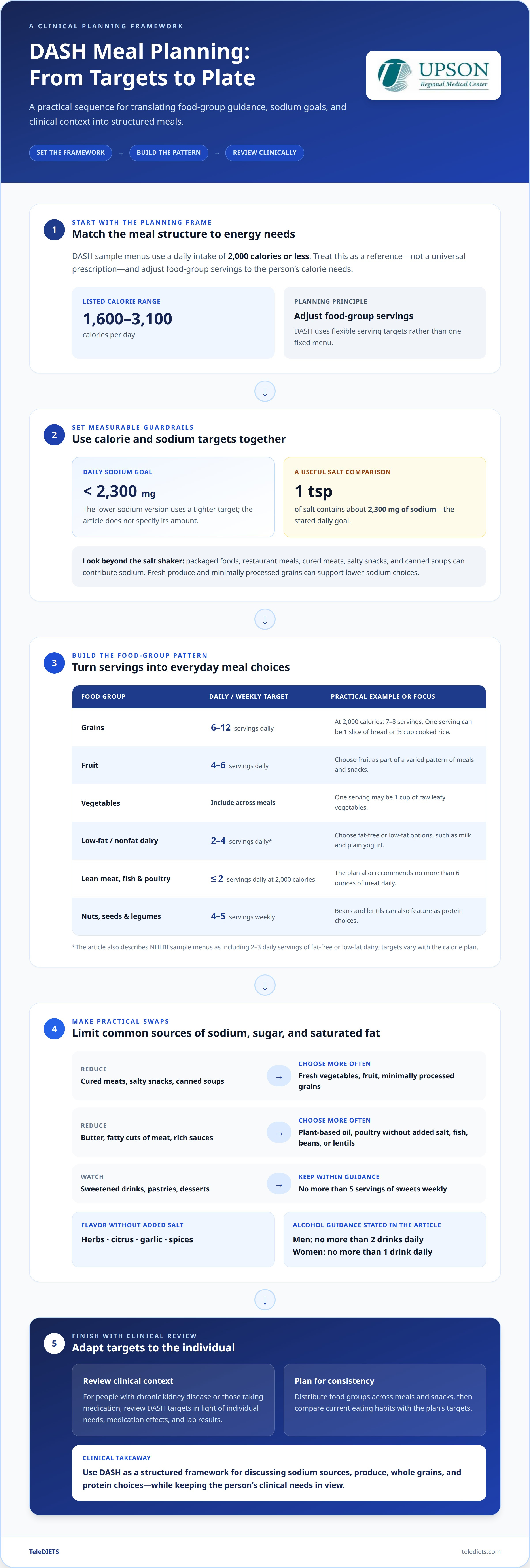
DASH sample menus are based on a daily intake of 2,000 calories or less, so the pattern is a reference, not a universal prescription. The National Heart, Lung, and Blood Institute bases its sample menus on a daily intake of 2,000 calories or less. For plans providing 1,600-3,100 calories, daily targets include 6-12 grain servings, 4-6 fruit servings, and 2-4 low-fat or nonfat dairy servings. These ranges help clinicians align meal structure with energy needs.
For a 2,000-calorie diet, the plan recommends 7-8 grain servings daily and 2 or fewer servings of lean meat, fish, and poultry. Grain portions can include one slice of bread or half a cup of cooked rice. A vegetable serving may be one cup of raw leafy vegetables. These examples make serving targets easier to translate into meals.
Sodium and Calorie Totals
DASH pairs a calorie framework with a daily sodium target, making both useful when reviewing nutrition plans. The National Heart, Lung, and Blood Institute sample menus use a daily intake of 2,000 calories or less. The stated sodium goal for DASH sample menus is less than 2,300 milligrams daily. A lower-sodium version sets a tighter target, so the chosen pattern affects meal composition.
Food-group choices influence these totals. Fresh vegetables, fruit, and minimally processed grains can support a meal pattern with less sodium than heavily salted packaged foods. Calcium-rich dairy contributes to the eating plan, and the National Heart, Lung, and Blood Institute recommends 2-3 servings daily of fat-free or low-fat dairy. It also recommends 4-5 servings weekly of nuts, seeds and legumes.
For readers asking how daily targets change by calorie level, DASH adjusts food-group servings rather than using one fixed menu. Its sample menus use a daily intake of 2,000 calories or less, while listed ranges span plans providing 1,600-3,100 calories.
For people with chronic kidney disease or those taking medication, clinicians should review DASH targets in light of individual needs. Kidney-related nutrition considerations and medication effects may influence sodium and other nutrient choices, so decisions should account for clinical context and lab results.
Foods to limit
DASH stands for Dietary Approaches to Stop Hypertension. The eating pattern emphasizes vegetables, fruits, whole grains, beans, and lean proteins, while limiting excess sodium, sweets, and foods high in saturated fat. For instance, replacing butter with a plant-based oil can reduce saturated fat while still allowing flexibility in cooking.
Start by limiting packaged and prepared foods that can contribute substantial sodium, such as cured meats, salty snacks, and canned soups. One teaspoon of salt contains about 2,300 milligrams of sodium, so small additions can accumulate across meals. Flavor foods with herbs, citrus, garlic, or spices instead. The DASH eating plan recommends no more than five servings of sweets weekly; desserts, sweetened drinks, and pastries all count toward that limit.
Choose calcium-rich dairy in fat-free or low-fat forms, such as milk and plain yogurt. These options fit DASH’s emphasis on lower-fat choices. When possible, choose unsweetened products, since flavored yogurt and sweetened milk can add sugar. A meal plan might pair plain yogurt with fruit or serve low-fat milk with whole-grain cereal.
Lean protein is part of DASH, but portions and preparation matter. The plan recommends no more than six ounces of meat daily. Choose poultry without added salt, fish, beans, or lentils more often than fatty cuts and processed meats. Limiting butter, fatty meat, and rich sauces can also help reduce saturated fat.
Alcohol intake should also be moderate. The stated guidance is no more than two daily drinks for men and one for women. For people managing hypertension or another condition, the overall dietary pattern matters more than any single ingredient. A DASH-focused review can identify sodium sources, added sugars, and practical substitutions while maintaining calcium-rich foods and satisfying meals.
Potential blood pressure and heart-health benefits
DASH stands for Dietary Approaches to Stop Hypertension. Its approach combines a balanced eating pattern with attention to sodium. High blood pressure affects 1 in 3 U.S. adults, making prevention and management important in cardiovascular care. The plan emphasizes vegetables, fruit, whole grains, and low-fat dairy, alongside lean protein. These choices work together as a dietary pattern rather than a single-food intervention.
This timeframe describes a potential effect, not a guaranteed result for everyone. Planning meals can help people follow the pattern consistently by distributing food groups across meals and snacks. Clinicians can also compare a patient’s current eating habits with the plan’s targets.
Sodium is a practical place to start because it can come from packaged foods, restaurant meals, and added salt. For example, replacing a high-sodium packaged side with vegetables or fruit is a meal-level adjustment. DASH also uses measured servings across food groups, keeping the focus on overall nutrition, not sodium alone. Consider blood-pressure response in the context of the individual’s clinical needs.
DASH and the Mediterranean diet are both approaches used in cardiovascular nutrition, but they have different frameworks. DASH sets sodium and food-group serving targets, while the Mediterranean pattern is generally described by its characteristic foods. This distinction can help clinicians explain each approach without suggesting that one is always superior.
For cardiology teams, DASH offers a structured framework for discussing eating patterns and blood pressure. It can guide conversations about sodium sources, produce, whole grains, and protein choices. The information here does not establish effects on cancer or present DASH as a cancer treatment. Its focus is nutrition support relevant to blood pressure and heart health.
DASH-friendly meal planning
A useful DASH eating plan translates food-group goals into meals that fit clinical priorities. A DASH diet meal planner for cardiologists can organize this planning while allowing for patient-specific adjustments.
Individualizing Patient Meal Plans
Individualizing a plan means adapting food choices and portions to the patient’s clinical context and daily routine. For hypertension or heart disease, consider eating patterns, preferences, access to cooking facilities, and other nutrition priorities. Someone who relies on packaged lunches may need different substitutions than someone who cooks at home. For diabetes, clinicians can also account for carbohydrate distribution within the broader nutrition plan.
Clinicians can maintain DASH principles while adapting ingredients and meal formats. Breakfast might pair whole grains with fruit, while lunch includes vegetables and a suitable protein. Tropical fruit can add variety when it fits the patient’s preferences and care plan. A DASH diet meal planner for cardiologists should support this kind of flexibility rather than impose the same menu on everyone.
Meal-Planning Tools and Patient Resources
Choose tools that clearly present serving sizes, food-group targets, and sodium information. This makes it easier to review meals and explain substitutions, such as choosing unsalted ingredients. Flexible examples can help clinicians adapt menus to preferences and clinical priorities. A well-designed DASH diet meal planner for cardiologists should make these details accessible while leaving professional judgment central.
For clinical use in the United States, patient resources should distinguish general DASH principles from individualized care. Useful materials explain how to apply meal guidance across different meals and routines, with adaptable examples rather than a single menu for everyone. Clear language helps patients understand which changes fit their nutrition plan.
Nutrition therapy providers individualize plans around clinical priorities, dietary patterns, preferences, and practical access. These factors inform suitable meal choices for people with hypertension or heart disease.
Look for tools that clearly explain portions, sodium details, and flexible meal examples. Resources should help clinicians tailor recommendations, not replace professional judgment.
Explore structured meal-planning resources to support consistent nutrition planning in clinical workflows.
TeleDIETS: GLP-1 Meal Plan Protocols
TeleDIETS supports clinical nutrition workflows with evidence-based meal plans tailored to lab results and diagnoses. Its GLP-1 Meal Plan Protocols address nutrition planning in practices supporting patients using GLP-1 therapies. For broader care needs, Standard Series Meal Plans and Advanced Medical Series Meal Plans support structured nutrition planning, including chronic disease management.
Organized meal-plan options can complement clinical workflows. TeleDIETS provides healthcare professionals with Standard Series and Advanced Medical Series meal plans, along with Insurance Billing & CPT Coding Tools. The platform supports providers and does not offer direct patient consultations or meal delivery.
Contact TeleDIETS to discuss how its meal-planning tools may fit your clinical workflow.
Build Nutrition Planning Into Your Workflow
Make nutrition planning a consistent part of clinical care. A DASH diet meal planner for cardiologists can support a structured approach, while clinicians tailor recommendations to each patient’s needs and care context. TeleDIETS offers healthcare professionals clinical nutrition software and meal-plan protocols to support nutrition planning in practice. Explore the platform to see how it can fit your workflow.
TeleDIETS offers Standard Series Meal Plans, Advanced Medical Series Meal Plans, and GLP-1 Meal Plan Protocols for healthcare professionals developing nutrition support within their practices. These options can help align meal planning with different clinical workflows and patient populations.
If you’re considering structured nutrition resources for your practice, contact TeleDIETS for nutrition support. A clear, adaptable process can help your team bring nutrition planning into care with confidence.
Frequently Asked Questions
What is the DASH diet and what are its core principles?
DASH is an eating pattern built around varied, nutrient-rich foods and measured servings. A clinician might plan a day with vegetables, fruit, whole grains, low-fat dairy, and lean protein, then review sodium sources across meals. The focus is the overall pattern, not one “heart-healthy” ingredient. Serving needs can be adapted to calorie requirements and clinical context.
How does the DASH diet help lower blood pressure and cardiovascular risk?
DASH can help lower blood pressure by combining food choices with attention to sodium intake. Its emphasis on vegetables, fruit, whole grains, and lean protein supports a consistent dietary pattern rather than a single nutrient change. Blood pressure is an important cardiovascular health measure, but the diet should be considered within a person’s broader care plan. Clinicians can track response and tailor nutrition goals to individual needs.
What is a sample 7-day DASH meal plan for heart health?
A seven-day framework can rotate food groups while allowing clinicians to adjust portions and choices for each patient. For example, vary whole-grain breakfasts, fruit snacks, vegetable-focused lunches, and dinners featuring beans, fish, or poultry. Include low-fat dairy where appropriate and review sodium across the week. This is a planning template, not a prescription for everyone; preferences, diagnoses, and calorie needs shape the final plan.
What are the DASH diet sodium limits and how can patients meet them?
The stated sodium goal for DASH sample menus is less than 2,300 milligrams daily; a lower-sodium version uses 1,500 milligrams daily or less. Clinicians can help patients identify major contributors, including packaged meals, sauces, and seasoning mixes. Practical substitutions include choosing unsalted ingredients and comparing sodium information on labels. Reviewing a typical day’s meals can reveal where changes may fit most easily.
Which foods are encouraged and limited on the DASH diet?
DASH encourages vegetables, fruits, whole grains, low-fat dairy, beans, nuts, seeds, and lean proteins. Foods to moderate include salty packaged products, processed meats, sweets, and foods high in saturated fat, such as meals prepared with substantial butter. In clinical discussions, compare familiar foods with suitable alternatives, such as unsalted nuts instead of salty snacks, while accounting for preferences and nutrition needs.
Leave a Reply