
A Mediterranean diet protocol for clinics is best understood as a flexible eating pattern, not one fixed menu. It emphasizes vegetables, fruit, whole grains, legumes, nuts and olive oil, with fish and poultry in moderate portions and red meat and sugary foods limited. Common targets include 2 to 3 servings of fruit and four or more servings of vegetables each day.
That flexibility matters: Mediterranean cuisines vary, so clinical guidance should clarify food priorities without implying there is only one authentic way to eat. Practical guidance on dairy, eggs, meat, and desserts also helps clinicians explain how these foods fit the pattern.
This article explains what defines the diet, its core foods, and daily fruit and vegetable targets, then reviews guidance on meat, dairy, eggs, and desserts. It offers a framework for discussing the Mediterranean eating pattern in clinical practice.
Key Takeaways
- Recognize the Mediterranean pattern by its emphasis on minimally processed plant foods and olive oil, rather than treating it as a single fixed menu.
- Use daily fruit and vegetable targets to make the eating pattern more practical to discuss in clinical care.
- Distinguish foods to include regularly from those to moderate, including red meat, dairy, eggs, and desserts.
- Explore how TeleDIETS meal plan protocols can support clinicians applying nutrition plans in medical practice.
What is the Mediterranean Diet?
The Mediterranean diet is a flexible eating pattern centered on plant foods, whole grains, and olive oil. In clinics, the goal is to translate those priorities into practical guidance suited to each patient’s health needs and daily routine.
Cardiometabolic and Cardiovascular Benefits
Cardiometabolic health encompasses cardiovascular risk factors, such as blood pressure and cholesterol, alongside broader metabolic health. In the PREDIMED randomized trial, participants at high cardiovascular risk who followed a Mediterranean diet had fewer major cardiovascular events than those assigned to a control diet. Adherence has also been linked with better blood pressure control, improved cholesterol, and lower inflammation markers. Cleveland Clinic notes that providers recommend this pattern for people with heart disease risk factors.
Healthy Fats and Olive Oil
Olive oil is the Mediterranean pattern’s primary fat and can replace some sources of saturated fat with unsaturated fat. Replacing saturated fat with unsaturated fat lowers the risk of heart disease events and related death. In counseling, present olive oil as one cooking or dressing option within an overall eating pattern, not as a stand-alone treatment or a substitute for addressing other cardiovascular risk factors.
Compared with DASH, the Mediterranean pattern uses olive oil regularly, while DASH allows more dairy products and meat. Low-carbohydrate and other therapeutic diets prioritize different foods. The appropriate approach depends on the clinical goal and the patient’s circumstances.
Clinic implementation costs depend on staffing, counseling scope, educational materials, and workflow. To shape practical goals, assess diagnoses, lab results, food preferences, access to ingredients, and medication history, then connect food choices to the patient’s health priorities.
People with heart disease risk factors may be candidates for this intervention. Allergies, individual nutritional needs, and medications call for tailored planning. At follow-up, clinicians can review adherence and relevant health measures, with timing set by each patient’s care plan. Medication review should accompany meaningful dietary changes.
In the United States, a dietitian can help create a Mediterranean-style meal plan suited to a person’s needs and available ingredients. Clinics can connect patients with dietitian counseling and use education sessions to explain practical food substitutions.
Fruit and vegetable serving targets
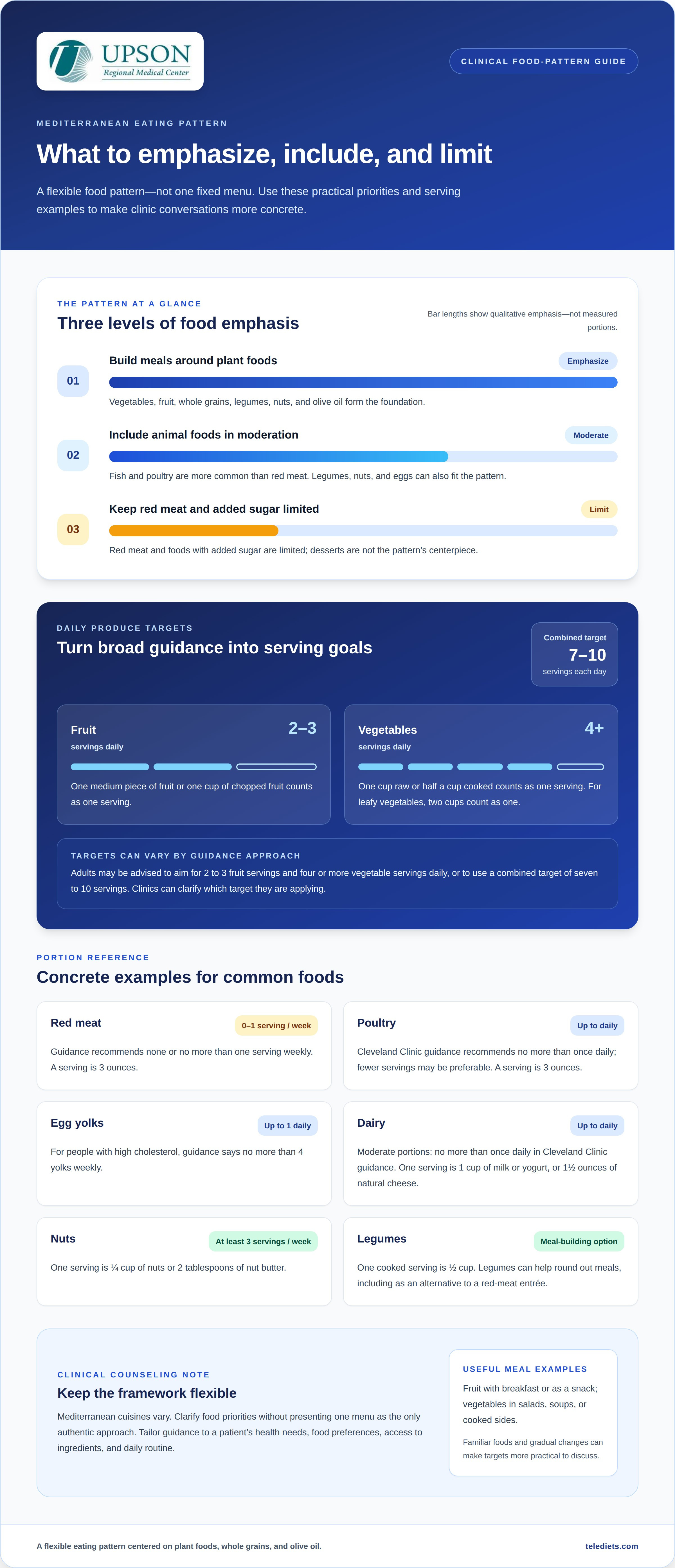
Fruit and vegetable goals make a Mediterranean-style healthy diet measurable in clinical discussions. Adults are commonly advised to aim for 2 to 3 servings of fruit daily and four or more servings of vegetables. Another target is seven to 10 combined servings each day. These figures reflect different guidance approaches, so clinics can state which target they’re applying.
Serving sizes turn broad advice into practical measures. One medium piece of fruit or one cup of chopped fruit counts as one serving. A serving of vegetables is one cup raw or half a cup cooked. Leafy vegetables are measured differently: two cups count as one serving. Explaining these distinctions helps patients assess portions consistently.
- Fruit: 2 to 3 servings daily; one medium apple is an example serving.
- Vegetables: four or more servings daily; one cup of raw vegetables counts as one.
- Leafy vegetables: two cups count as one serving.
- Combined target: seven to 10 fruit and vegetable servings daily.
For a clinic protocol, pair each target with familiar foods and meals. Fruit can accompany breakfast or serve as a snack; vegetables can feature in salads, soups, or cooked sides. Increasing intake gradually may be easier to sustain than changing every meal at once. Ask about preferred foods, usual meals, and access to fresh, frozen, or canned options.
Variety matters as much as the count. Different fruits and vegetables provide different nutrients, and color can help patients vary their choices. Local produce and customary dishes differ across Mediterranean countries, while the dietary pattern continues to prioritize plant foods. Evidence associates Mediterranean-style eating with cardiovascular health, but fruit and vegetable targets are only one part of the broader pattern, not a stand-alone measure of cardiovascular disease risk.
Limits on meat, dairy, eggs, and desserts
The Mediterranean pattern includes animal foods in moderation, with plant proteins and unsaturated fats shaping the overall balance. Fish, legumes, poultry, nuts, and eggs can appear a few times each week. Red meat and foods with added sugar are limited. These priorities help clinics explain “moderate” through practical food choices rather than a rigid menu.
Fish and poultry are more common than red meat in this pattern. A typical cooked meat portion is about 3 ounces, while Cleveland Clinic guidance recommends no red meat or no more than 1 serving per week. Legumes can help round out meals; one cooked serving is ½ cup. This gives clinicians concrete examples when discussing swaps, such as beans instead of a red-meat entrée.
- Nuts: A serving is ¼ cup of nuts or 2 tablespoons of nut butter. Guidance recommends at least 3 servings weekly.
- Poultry: A serving is 3 ounces. Cleveland Clinic guidance recommends no more than once daily, with fewer servings potentially preferable.
- Eggs: Guidance allows up to 1 egg yolk daily, but people with high cholesterol should have no more than 4 yolks weekly.
- Red meat: Keep it to none or no more than 1 serving weekly; a serving measures 3 ounces.
Dairy is included in moderate portions, rather than treated as a meal’s centerpiece. Cleveland Clinic guidance recommends dairy no more than once daily and defines a serving as 1 cup of milk or yogurt, or 1½ ounces of natural cheese. These measures make food records easier to interpret. Patients can also discuss choices such as plain yogurt or natural cheese within their established dietary goals.
For desserts, fruit is a common alternative to sweets. Cleveland Clinic guidance recommends avoiding commercially prepared baked goods and desserts, and limiting homemade versions to no more than 3 servings weekly. Butter-rich pastries, for example, can be occasional rather than routine choices. This approach limits added sugar while keeping guidance specific and usable.
Mediterranean eating pattern and core foods
A Mediterranean diet protocol for clinics turns traditional food priorities into practical clinical guidance. It should remain flexible because cuisines and familiar ingredients vary across Mediterranean countries and among patients.
Traditional Mediterranean Eating Habits
Traditional Mediterranean eating centers on minimally processed, plant-based foods, with healthy fats from olive oil. Vegetables, fruits, beans, nuts, seeds, and whole grains form its foundation; fish and poultry complement these foods in moderate amounts. For clinics, this pattern offers a clear framework without requiring patients to adopt unfamiliar dishes. A familiar bean soup or grain-based meal can reflect its priorities.
Recommended Foods and Portion Sizes
Portion guidance turns broad principles into practical meal-planning details. One serving of cooked grains is ½ cup, and a slice of bread counts as another whole-grain serving. A cooked serving of legumes is ½ cup. These measures help clinical teams describe portions consistently and adapt examples to a patient’s usual meals instead of prescribing a rigid menu.
Fish portions offer another practical example: guidance recommends 3 weekly servings, each measuring 3 to 4 ounces. Clinics can show how a meal built around grains, vegetables, and beans differs from one centered on poultry, while keeping both compatible with the pattern. This supports individualized choices without suggesting that every meal needs identical ingredients.
Shared meals also shape traditional eating habits. Guidance recommends sitting at a table for at least two lunches or dinners weekly. A Mediterranean diet protocol for clinics can address how patients’ schedules and food traditions affect mealtimes. For example, clinicians can use a patient’s regular family meal to discuss practical ways to make eating more intentional.
Apply Mediterranean meal priorities in clinical practice with structured nutrition planning.
TeleDIETS: GLP-1 Meal Plan Protocols
TeleDIETS offers GLP-1 Meal Plan Protocols for clinicians incorporating nutrition planning into medical care. The platform supports evidence-based plans tailored to lab results and clinical diagnoses, helping connect nutritional priorities with a patient’s clinical context. For practices managing broader nutrition needs, Standard Series and Advanced Medical Series Meal Plans provide additional plan options. Insurance Billing & CPT Coding Tools support related practice workflows.
Consider these protocols when your clinic needs structured nutrition plans alongside its existing care processes. They support clinical teams; they don’t replace individualized medical judgment or direct patient consultations. Explore TeleDIETS plan options for your practice.
Build a Practical Nutrition Workflow
A Mediterranean diet protocol for clinics is useful when it translates core principles into consistent, clinically relevant nutrition planning. Connect those priorities with the needs and diagnoses your practice serves, while keeping plans adaptable to each patient’s clinical context.
TeleDIETS offers Standard Series Meal Plans, Advanced Medical Series Meal Plans, and GLP-1 Meal Plan Protocols. These options give clinical teams structured nutrition-planning resources across different care needs, rather than relying on a single template for every situation. Select the approach that aligns with your practice’s workflow and the care you provide.
With a clear framework in place, your team can make nutrition planning more consistent and easier to integrate into clinical care. Contact TeleDIETS about clinic nutrition to discuss the available options for your practice.
Frequently Asked Questions
What about wine?
Wine is optional in a Mediterranean-style pattern, not a nutritional requirement. For anyone who chooses to drink, the guidance advises no more than one drink on a drinking day and recommends avoiding daily drinking. Clinics can discuss nonalcoholic alternatives without treating wine as a measure of adherence. Keep counseling focused on the overall eating pattern rather than alcohol.
What are the core principles of the Mediterranean diet protocol used in clinical care?
Clinical use centers on a sustained eating pattern, not a prescribed menu. Prioritize plant foods, whole grains, legumes, and olive oil, while moderating red meat and foods with added sugar. Clinicians can make these priorities practical through achievable substitutions, such as choosing beans instead of a meat-centered meal. Set goals around diagnoses, laboratory results, food preferences, and access to ingredients.
What are sample Mediterranean diet meal plans for patients?
A sample day might include whole-grain cereal and fruit at breakfast, a bean-and-vegetable lunch, and fish with vegetables and grains at dinner. Use this as a flexible template, not a fixed prescription. Clinics can adapt ingredients to patients’ preferences and usual meals, choosing suitable alternatives when a food does not meet their needs.
What clinical guidelines support the Mediterranean diet for cardiovascular disease, diabetes, and weight management?
Evidence includes the PREDIMED randomized trial, where participants at high cardiovascular risk assigned to a Mediterranean diet had fewer major cardiovascular events than the control group. In people with diabetes, adherence has been associated with HbA1c reductions of about 0.3-0.5%. A 2020 study also found weight-loss maintenance was twice as likely among adherent participants as in the control group.
How should clinicians monitor adherence and health outcomes, and how often?
At follow-up visits, clinicians can review food-pattern adherence and relevant health measures, with timing guided by each patient’s care plan. Patients can log meals at least five days a week and bring the record to each appointment.
Leave a Reply