
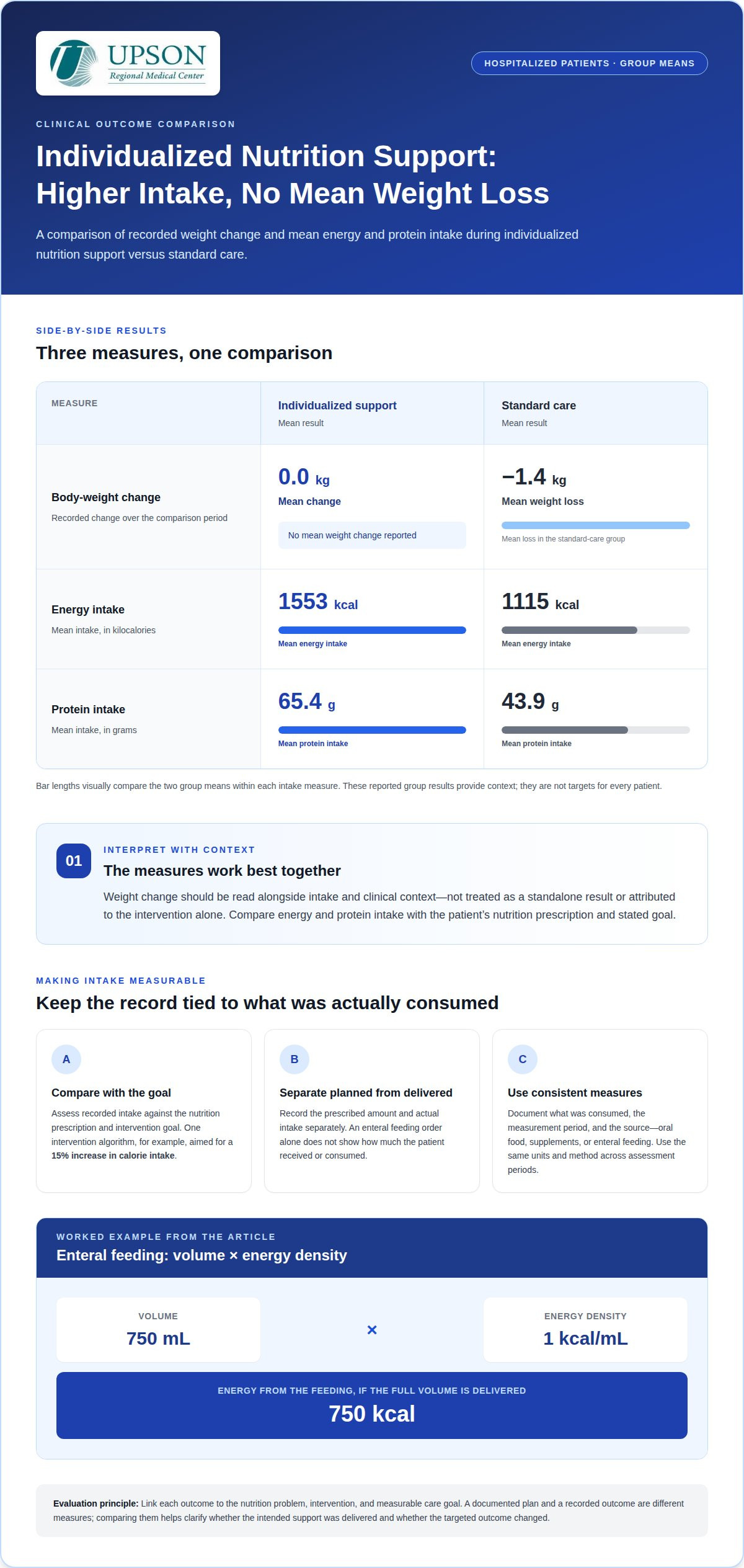
Measuring clinical outcomes of nutrition intervention means tracking more than a single weight reading. In one reported comparison, hospitalized patients receiving individualized nutrition support had a mean weight change of 0.0 kg, while the standard-care group lost 1.4 kg; mean energy and protein intake were also higher in the individualized-support group. These measures help show whether care is moving toward its intended goals.
Weight and intake are useful measures, but their value depends on consistent documentation and a clear link to the nutrition intervention. Learn how to track weight change, assess energy and protein intake, distinguish key intervention terms, and use electronic medical record data to interpret outcomes. The goal is to connect clinical measures with the care provided, so patterns in the record support clearer evaluation and better-informed decisions.
Key Takeaways
- Interpret weight change as a trend alongside clinical context, not as a standalone measure of nutrition care.
- Assess energy and protein intake against the intended nutrition goals to identify where support may need adjustment.
- Connect intervention strategies to the nutrition problem’s underlying cause, the patient’s goals, and measurable outcomes.
- Use electronic medical record data to surface intake patterns, documentation gaps, and variation in intervention timing.
Body-weight change
Body-weight change can help show whether nutrition care is supporting a patient’s stated goals. Interpret it alongside intake and clinical context, rather than attributing the result to the intervention alone.
Tracking Changes in Body Weight
Body-weight change is the difference between a patient’s recorded weight measurements over a defined period. Consistent measurements help you identify whether weight is stable, rising, or falling during nutrition care. For example, patients receiving individualized nutrition support had a mean body-weight change of 0.0 kg, compared with a loss of 1.4 kg in the standard-care group.
Ask patients at nutrition risk whether they have noticed weight gain within the past 3-6 months. Then compare their report with recorded weights and the intervention’s goal. A change that appears favorable in one context may not align with the patient’s nutrition diagnosis or care priorities. Note relevant factors, such as changes in oral intake or enteral feeding, alongside the weight trend.
Guideline-Recommended Outcome Measures
For guideline-aligned evaluation, select nutrition outcomes linked to the nutrition problem, intervention, and measurable care goals. Body weight is one measure; energy and protein intake, relevant clinical indicators, and functional outcomes can provide additional context. Goals should be specific, measurable, achievable, relevant, and time defined, while reflecting client needs and values.
This approach matters because weight alone cannot show whether the intervention addressed the underlying cause of a nutrition problem. For example, a plan targeting inadequate intake should pair weight tracking with intake assessment. A plan addressing another concern may call for a different clinical indicator or functional measure. Choose outcomes that make the intended change visible.
Record the baseline, target, and evaluation period. Reassess the same measures over time, then compare the results with the nutrition prescription and the patient’s goals. If weight changes without improvement in the targeted outcome, review whether the intervention was appropriate and delivered as intended. Documenting this relationship makes outcome measurement more useful for care planning and follow-up.
Energy and protein intake
Energy and protein intake show whether nutrition care is changing what a patient consumes. In a comparison of hospitalized patients, individualized nutrition support was associated with mean energy intake of 1553 kcal, versus 1115 kcal with standard care. Mean protein intake was 65.4 g, compared with 43.9 g. These group results offer context for evaluating intake, not a target for every patient.
For an individual assessment, compare documented intake with the nutrition prescription and intervention goal. A useful record specifies what was consumed, the measurement period, and whether the source was oral food, supplements, or enteral feeding. This makes the outcome easier to interpret. For example, an enteral feeding order alone does not show how much the patient received or consumed.
One intervention algorithm aimed for a 15% increase in calorie intake. That example illustrates how an intervention can translate into a measurable change. The relevant comparison is the patient’s recorded intake before and after support, interpreted against the stated goal. If the target is not reached, intake records can help distinguish limited consumption from a gap between the planned intervention and what was delivered.
A separate example specifies 750 mL of enteral feeding at 1 kcal/mL. Multiplying volume by energy density gives 750 kcal from that feeding, provided the full volume is delivered. Record the prescribed amount and actual intake separately, then note changes that affect interpretation. This distinction matters because planned nutrition and consumed nutrition are different measures.
Use the same units and documentation method across assessment periods. Pair energy intake in kcal with protein intake in grams, and link each measure to the intervention goal. Science-informed evaluation relies on consistent comparisons, not isolated totals. When intake changes, consider whether the intervention addressed the nutrition problem and whether the recorded result reflects the care provided. This gives you a clearer basis for reviewing progress and adjusting the nutrition plan.
Dietitians can also identify subtle intake trends, screening gaps, delayed consults, and variation in intervention timing, helping clarify the patterns behind recorded outcomes.
Nutrition intervention terminology
Clear terminology links a nutrition problem, the care provided, and the outcomes used to evaluate it. In a PES statement, the problem, etiology, and signs or symptoms give the intervention a clinical focus. The intervention should address the etiology, while its goals and measures show whether care is progressing.
NRS-2002 is a named nutrition-risk screening tool used in clinical research. In one study, 271 of 767 consecutively admitted patients had an NRS-2002 score of at least 3. Screening identifies risk; it does not replace a broader assessment of nutritional status or determine whether an intervention achieved its goals.
Follow-up timing should match the outcome and the intervention’s purpose. For outpatient diabetes nutrition care, hemoglobin A1C is checked every 3 months initially to assess care impact. Other outcomes, such as weight or intake, need a measurement period suited to the care goal and the pattern being tracked.
Common limitations include incomplete records, inconsistent measurement methods, and changes in health or care that affect outcomes. A weight trend alone, for example, may not show whether an intervention changed intake or addressed the PES etiology. Compare measures with the baseline, stated goal, and intervention documentation to interpret results more accurately.
Use terms consistently throughout the nutrition care process. A nutrition prescription describes the plan intended to help achieve client goals. The intervention identifies the strategy, while outcome measures capture the response. Goals should be specific, measurable, achievable, relevant, and time defined, with priorities shaped by client needs and values. For example, pair a goal to improve intake with an intake measure, rather than relying only on a general note that nutrition care was provided.
Consistent terminology also supports clear records and billing workflows. Insurance Billing & CPT Coding Tools can support coding for nutrition services, while clinical notes should connect the nutrition diagnosis, intervention, and outcome. That connection makes the record more useful for evaluating care and communicating progress across a clinical team.
Outcome measurement using electronic medical records
Electronic medical records can link nutrition care with outcomes documented in clinical and workflow data. Measuring clinical outcomes of nutrition intervention consistently requires comparable measures and clear documentation of intervention timing.
Baseline and Follow-Up Measurement
Baseline and follow-up measurements compare the same outcomes before and after an intervention. Record each measure, its date, and the related intervention to give any change clinical context. For example, an electronic record can align weight or intake entries with intervention dates. Consistent documentation helps clinicians identify trends and gaps, such as a missing follow-up value or delayed nutrition consult.
Clinical Marker Measurement
Clinical marker measurement tracks relevant values, such as blood glucose, blood pressure, and lipid levels, across care periods. Use values documented at baseline and follow-up, preserving the units and collection dates shown in the record. This makes comparisons easier to interpret and helps clinicians assess whether a change occurred alongside a nutrition intervention. The medical record also provides context about other care and treatment documented during the same period.
Patient-Reported Outcomes
Patient-reported outcomes capture a person’s account of function, quality of life, or nutrition-related symptoms. The SF-36 function summary scale was 37% in an intervention group and 32% in a control group in one reported comparison. Such measures add a patient perspective that laboratory values alone can’t provide. Record the instrument and response period consistently, so follow-up results can be interpreted alongside clinical measures.
Attributing Changes to an Intervention
Attribution means assessing whether an observed change is plausibly related to nutrition care, rather than assuming the intervention caused it. Compare baseline and follow-up results with intervention timing, delivery, and other documented treatment. For hospital outcomes, records can track length of stay, complications, and readmissions. One comparison recorded complications in 4 of 66 intervention patients and 13 of 66 controls, with readmissions in 17 of 64 and 28 of 61, respectively. These differences describe outcomes, not proof of causation.
To make measuring clinical outcomes of nutrition intervention more useful, align clinical and informatics teams around outcome definitions and data capture. Explore advanced medical nutrition plans as one option for supporting clinical nutrition care.
TeleDIETS
TeleDIETS supports clinical nutrition workflows with evidence-based meal plans tailored to lab results and clinical diagnoses. When your practice needs structured nutrition interventions to pair with clear outcome measures, its Standard Series Meal Plans, Advanced Medical Series Meal Plans, and GLP-1 Meal Plan Protocols can support care planning across different clinical needs.
Consistent intervention documentation connects a prescribed plan with outcomes recorded over time. TeleDIETS offers Insurance Billing & CPT Coding Tools to support the administrative side of nutrition services. These tools complement clinical evaluation; selecting and interpreting outcomes remain part of your care process.
Contact TeleDIETS to discuss how its nutrition plans and workflow tools can fit your practice.
Make outcome review part of ongoing care
Useful outcome measurement should be a regular part of clinical decision-making, not a report produced only at the end of care. Establish a shared review approach across your team so nutrition findings inform care discussions and future intervention priorities. Over time, measuring clinical outcomes of nutrition intervention can help your practice identify which questions its records answer clearly and where documentation needs greater consistency.
Keep the process focused: agree on the clinical question, interpret changes in context, and use the findings to guide the next appropriate step. This turns recorded outcomes into practical learning for your nutrition workflow without treating any single measure as the whole story.
If you’re considering how nutrition care tools could fit your practice, start a conversation with TeleDIETS. A thoughtful review process can support clearer decisions and more consistent evaluation across your care team.
Frequently Asked Questions
What clinical outcomes are used to evaluate nutrition interventions?
Clinical outcomes can include condition-related laboratory values, weight-related measures, food intake, functional status, patient-reported symptoms, and healthcare use. Choose measures that align with the nutrition concern and intervention objective. For example, an evaluation focused on a clinical marker can also include a patient-reported measure, giving the care team complementary perspectives. Distinguish these outcomes from process measures, such as whether a planned nutrition service was documented.
How do nutrition interventions affect weight, BMI, and body composition?
Weight, BMI, and body-composition findings may change differently, so record and interpret them as distinct outcomes. The direction of change depends on the intervention goal and clinical context. For example, stable weight may align with a care objective, while body-composition change can provide separate information when that measure is part of the assessment. Avoid inferring change in one measure from another alone.
Which validated tools assess nutritional status and malnutrition?
NRS-2002 is a named nutrition-risk screening tool. It identifies risk but does not replace a broader assessment of nutritional status.
Leave a Reply