
What makes a meal plan template useful in clinical care is not its layout, but the decisions it helps a provider organize. Generic formats may overlook diagnosis, lab results, and individual care needs, while building every plan from scratch can add pressure to a busy workflow. Medical grade meal plan templates should support clinical reasoning, not simply organize food choices.
This guide explains how to assess templates for clinical relevance, responsible personalization, and practical fit in your care setting. You’ll learn what to look for, how to keep professional judgment central, and how to fit nutrition tools into existing workflows. We’ll also cover how provider-focused protocols tailored to lab results and clinical diagnoses can support individualized planning, alongside considerations such as billing tools and telemedicine integration. The goal is a consistent way to review and adapt nutrition guidance without treating a template as a substitute for your expertise.
Key Takeaways
- Assess medical grade meal plan templates by their clinical relevance, evidence review, adaptability, and clarity, not appearance alone.
- Use templates to organize nutrition guidance while keeping assessment, personalization, and care decisions provider-led.
- Apply a consistent workflow: assess context, select a suitable resource, review and adapt it, then document the guidance.
- Explore how TeleDIETS supports provider-led planning with protocols tailored to lab results and clinical diagnoses, alongside workflow tools.
What Makes Medical Grade Meal Plan Templates Different from Printables?
Medical grade meal plan templates are provider-facing tools for organizing nutrition guidance within a clinical workflow, not ready-made prescriptions or decorative meal calendars. A template structures information and supports consistency, but it doesn’t assess a person’s needs or make care decisions. Clinicians interpret the available context and individualize guidance. There’s no single universal “medical-grade” designation, so judge a resource by how well it supports professional practice.
A meal plan template organizes recommendations. A nutrition assessment gathers and evaluates relevant information to identify nutrition-related concerns. Dietary analysis software, by contrast, can analyze reported intake or nutrient information. These tools may complement each other, but they serve different purposes. Medical Nutrition Therapy provides a broader foundation for provider-led nutrition care.
How clinical context changes a meal plan template
Diagnoses and relevant lab results can inform nutrition planning, but their significance depends on the full clinical context and professional interpretation. The Nutrition Care Process offers a structured framework: assessment, nutrition diagnosis, intervention, and monitoring and evaluation. A useful template can help organize guidance within this process without dictating an intervention or promising an outcome.
Templates, protocols, and printables are not interchangeable
A printable typically provides a layout or general plan. A clinical protocol adds provider-oriented structure for applying nutrition guidance consistently while allowing the clinician to review and adapt it. That distinction matters: protocols support judgment, they don’t replace it. When evaluating medical meal planning software, consider whether its resources support provider-led planning or simply produce attractive documents.
How to Evaluate Medical Grade Meal Plan Templates
A consistent review process helps you judge whether a template is clinically relevant and workable in your practice. Before adopting or adapting one, use this checklist:
- Clinical relevance: Does it suit the intended population and care context? Are its purpose and limits clear?
- Evidence review: Are the sources and review or update practices clear? Compare the basis for guidance with resources such as the Academy of Nutrition and Dietetics’ Evidence-Based Nutrition Practice Guidelines.
- Adaptability: Can a clinician account for relevant patient information and care goals without assuming a guaranteed result?
- Clarity and workflow: Can the guidance be reviewed, documented, and shared with patients without extra steps or unclear instructions?
Check clinical relevance and professional oversight
Look for clear authorship, evidence sources, intended population, and information about how the resource is reviewed or updated. These details help you decide whether the material fits your setting, but they don’t establish universal endorsement or replace your own assessment. A template should support qualified clinical judgment, not make decisions on a clinician’s behalf.
Assess adaptability and usability
Consider whether you can tailor the resource to relevant clinical information and agreed care goals. Then walk through the workflow: how much review is needed, can the final guidance fit your documentation process, and is it understandable when shared with a patient? Useful standardization makes core steps more consistent; it doesn’t make care one-size-fits-all.
For a provider-focused example, review how medical nutrition therapy software can support protocols tailored to lab results and clinical diagnoses, with provider oversight remaining central.
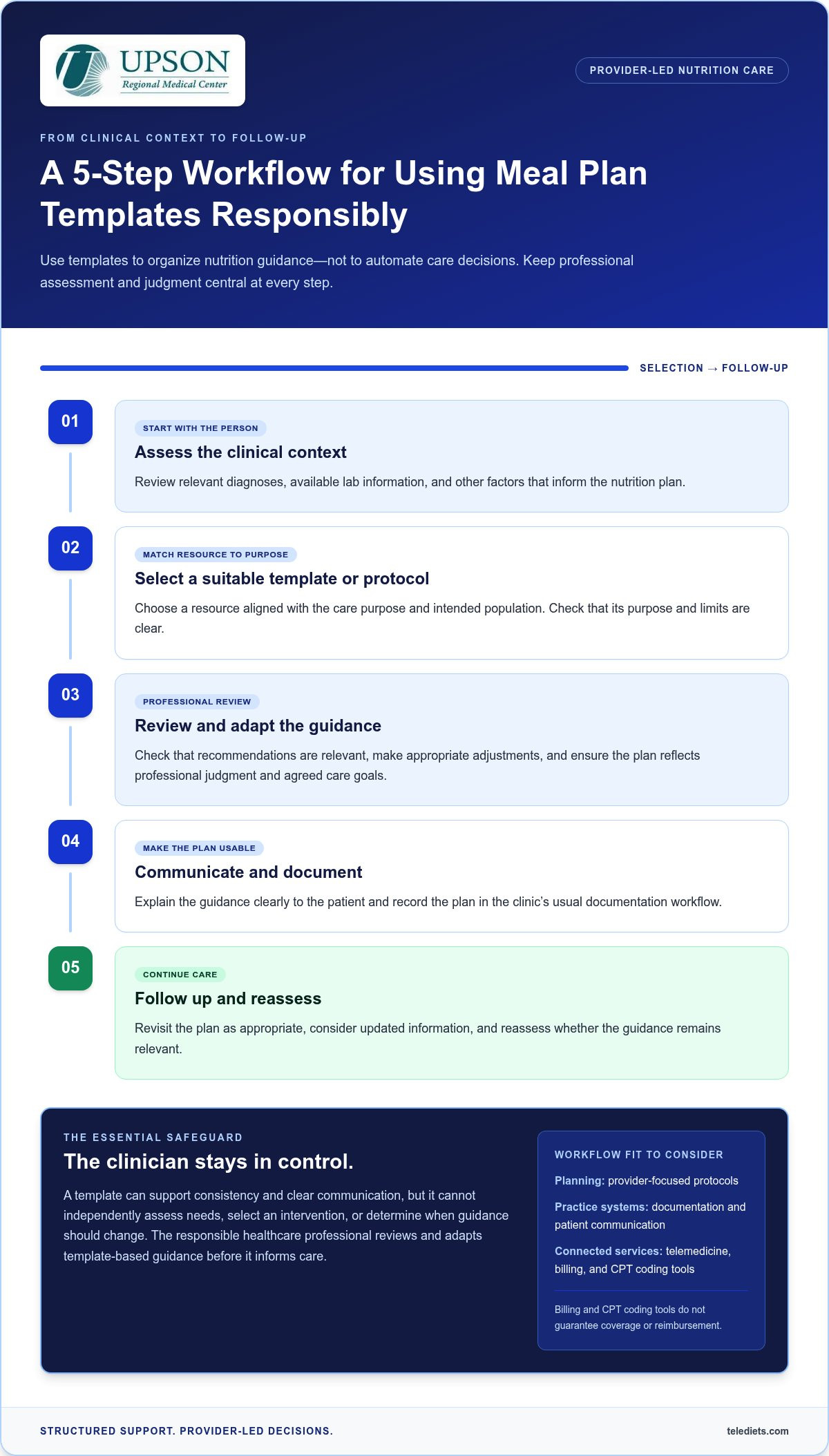
How to Use Meal Plan Templates Responsibly in a Clinical Workflow
A reliable process keeps the clinician in control from selection through follow-up. Use medical grade meal plan templates as structured resources, not automatic care decisions:
- Assess context: Review relevant diagnoses, available lab information, and other factors that inform the nutrition plan.
- Select a suitable resource: Choose a template or protocol aligned with the care purpose and intended population.
- Review and adapt: Check that the guidance is relevant, make appropriate adjustments, and ensure it reflects professional judgment.
- Communicate and document: Explain the guidance clearly and record the plan in the clinic’s usual documentation workflow.
- Follow up: Revisit the plan as appropriate, consider updated information, and reassess whether the guidance remains relevant.
Keep professional review at the center
Before sharing a template-based plan, the responsible healthcare professional should review the relevant clinical context and decide whether the resource fits the purpose of care. A template can support clear communication and a consistent process, but it can’t independently assess needs, select an intervention, or determine when guidance should change. The clinician is responsible for reviewing and adapting template-based guidance before it informs care.
Fit templates into existing systems
Consider where nutrition planning sits alongside documentation, patient communication, and telemedicine in your practice. Billing and CPT coding tools may also be part of the workflow, but their presence doesn’t guarantee coverage or reimbursement. TeleDIETS offers provider-focused meal plan protocols, billing and CPT coding tools, and a telemedicine plugin to support nutrition service workflows.
Explore provider meal plan resources to see how structured protocols can fit into your clinical workflow.
How TeleDIETS Supports Provider-Led Medical Nutrition Planning
After evaluating a template’s clinical relevance, adaptability, and workflow fit, consider how a provider-focused platform can support those principles in practice. TeleDIETS provides medical nutrition therapy software for healthcare professionals, with protocols tailored to patient lab results and clinical diagnoses. The platform supports planning; the clinician remains responsible for reviewing information and deciding whether guidance is appropriate.
From clinical information to a tailored nutrition protocol
TeleDIETS offers Standard Series Meal Plans, Advanced Medical Series Meal Plans, and GLP-1 Meal Plan Protocols. These provider-facing resources give clinicians protocol options to consider in light of relevant clinical information and care goals. For GLP-1-related nutrition support, the focus is nutrition planning and provider workflow, not medication instructions. As with any structured resource, clinical review and professional judgment remain essential.
Consider the full practice workflow
Meal planning is one part of care delivery. Assess how protocols fit with the way your practice reviews clinical information, documents nutrition services, communicates guidance, and conducts telemedicine visits. TeleDIETS also includes insurance billing and CPT coding tools and a telemedicine plugin. These capabilities may support workflow planning, but billing tools don’t guarantee coverage or reimbursement.
As you assess medical grade meal plan templates, consider whether the surrounding platform supports your clinical process as well as the planning resource itself. Explore medical meal planning software to learn more about TeleDIETS and its provider-focused protocols and workflow tools.
Make Clinical Planning More Consistent
Useful medical grade meal plan templates bring structure to nutrition guidance without turning individual care into a one-size-fits-all process. Evaluate each resource for clinical relevance, evidence review, adaptability, and fit with your documentation and communication workflows. Keep professional assessment, review, and follow-up at the center of how you use it.
TeleDIETS supports provider-led planning with protocols tailored to clinical diagnoses and lab results. Its billing and CPT coding tools and telemedicine plugin also offer workflow capabilities to consider alongside nutrition planning. These resources support your process, while clinical decisions remain with the responsible professional.
Explore TeleDIETS’ medical nutrition therapy platform to see how its provider-focused protocols and workflow tools fit your practice. With a thoughtful review process and the right support, you can build a more consistent approach while keeping care individualized.
Frequently Asked Questions
What makes a meal plan template medical grade?
A clinically useful template is designed to support provider-led nutrition care, rather than simply present a general meal calendar. Look for a clear intended population, relevant clinical context, transparent evidence sources, and room for professional review and adaptation. There’s no single universal “medical grade” designation, so evaluate how well the resource supports your assessment and care workflow, not just its appearance.
Can clinicians use meal plan templates for different diagnoses?
Yes, clinicians can use different templates or protocols when they’re appropriate to the intended clinical context. Select and adapt a resource in light of the person’s diagnosis, relevant lab results, care goals, and other information available to the provider. Templates aren’t interchangeable across all diagnoses, and they don’t determine treatment. The responsible healthcare professional must review the guidance before using it in care.
How do medical meal plan templates differ from nutrition analysis software?
Medical meal plan templates organize nutrition guidance for provider review and potential adaptation. Nutrition analysis software serves a different purpose: it can analyze reported dietary intake or nutrient information. One structures recommendations; the other supports assessment of dietary data. Depending on the practice, these tools may be used alongside each other, but analysis results alone don’t create an individualized meal plan or replace clinical judgment.
Are medical grade meal plan templates suitable for patient use without clinician review?
They shouldn’t be treated as individualized guidance without appropriate clinician review. A template may offer structure, but it can’t independently account for a person’s full clinical context or decide whether its content is suitable. Providers should assess, review, and adapt guidance before sharing it as part of care. Clear communication also helps patients understand how the plan relates to their care and follow-up.
How can a clinic fit meal plan templates into its workflow?
Build the resource into a provider-led sequence: assess relevant context, select a suitable template, review and adapt the guidance, document the plan, and arrange appropriate follow-up. Consider how planning fits with existing documentation and patient communication, including telemedicine workflows. Billing and CPT coding tools may support administrative processes, but they don’t guarantee coverage or reimbursement. Consistent review helps keep templates useful without making care one-size-fits-all.
Leave a Reply