
A calorie target is a starting point, not a complete patient plan. Well-designed custom branded meal plans for patients connect calorie ranges with clinical needs, nutrition goals, food preferences, and practical constraints instead of relying on one number for everyone. The appropriate range depends on the patient’s health context and care goals.
A plan should do more than meet a calorie target. It should turn nutrition priorities into a clear, usable structure that reflects the patient’s needs and your practice’s identity. This article explains what shapes calorie ranges, how clinical needs and preferences affect meal planning, and how budgets and nutrition targets fit the process. It also covers how schedules and consistent branding can make plans easier to follow and present as part of a professional care experience.
Key Takeaways
- Calorie and macronutrient targets are shaped by clinical goals and individual health needs, not a one-size-fits-all range.
- Food preferences and budget help make a nutrition plan more practical and personalized.
- Consistent use of logos, colors, and clear document design can create a cohesive branded experience.
- Meal calendars and customized grocery lists can help turn nutrition targets into more actionable planning.
Personalized plans tailored to goals, medical conditions, food preferences, and budget
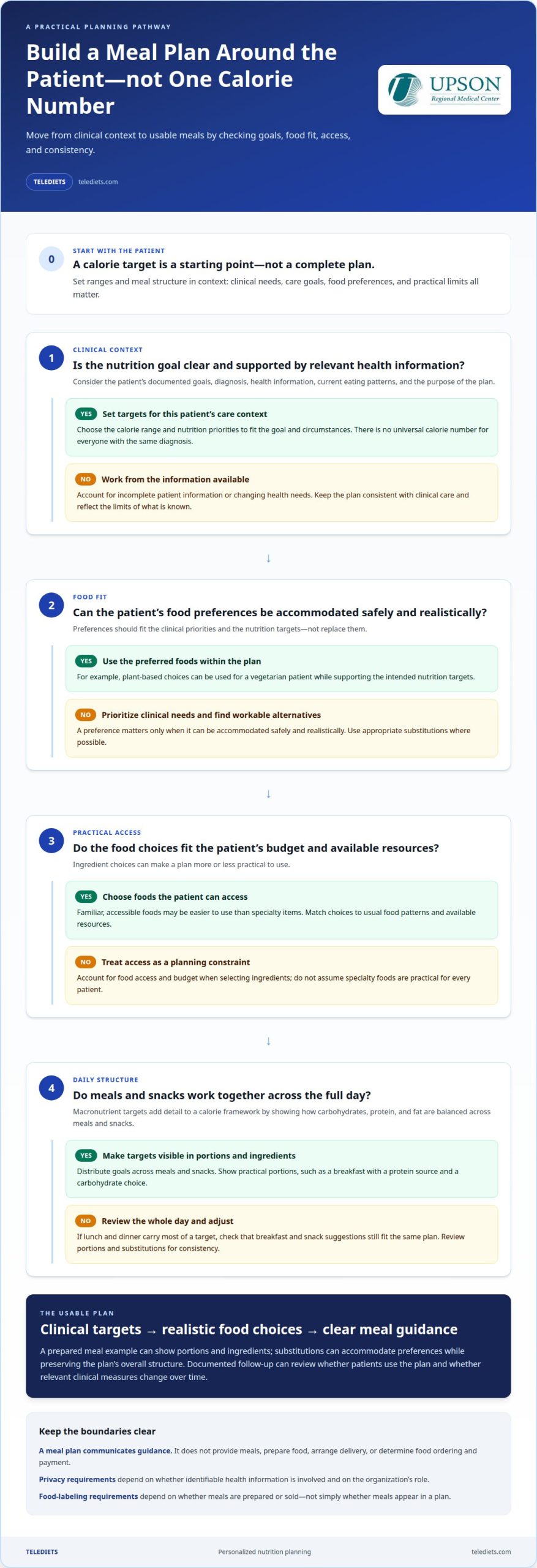
Build each plan around a defined nutrition goal, relevant health information, food preferences, and practical limits. A patient managing diabetes, for example, may need a meal pattern aligned with care goals, while another may need options that fit a limited grocery budget. Consider these factors together: a dietary preference matters only when the plan can accommodate it safely and realistically.
Condition-specific menus should turn nutrition priorities into choices patients can use. Someone with chronic kidney disease, for instance, may have different nutrition considerations from someone receiving support for cardiovascular health. The appropriate approach depends on the individual’s diagnosis, clinical information, and care goals. Standard Series and Advanced Medical Series meal plans support different levels of nutrition planning.
Preferences affect whether a menu feels practical. A vegetarian patient, for example, may need plant-based choices that support the intended nutrition targets. Budget also shapes ingredient selection: familiar, accessible foods may be easier to use than specialty items. Match clinical priorities with the patient’s usual food patterns and available resources.
Privacy requirements depend on whether identifiable health information is involved and on each organization’s role. Food-labeling requirements depend on whether meals are prepared or sold, not simply whether they appear in a plan. Keep meal guidance distinct from packaged-food labels.
Branded plans can be shared in electronic health record or telehealth workflows as documents or summaries. Actual transfer depends on the systems’ capabilities and configuration.
Personalization alone does not establish better outcomes or adherence. Providers can assess these through documented follow-up, such as reviewing whether patients use the plan and whether relevant clinical measures change over time.
Account for limitations such as incomplete patient information, changing health needs, food access, and shifting preferences. The plan should reflect the information available and remain consistent with the patient’s clinical care.
A branded meal plan communicates nutrition guidance; it does not provide meals. Patient access to the plan, food ordering, and payment depend on separate program arrangements, including the practice’s distribution process and any meal vendor it uses.
Customizing meals to calorie and macronutrient targets
Set a calorie range according to the patient’s documented nutrition goals and clinical context. There is no universal number for everyone with the same diagnosis. Consider relevant health information, current eating patterns, and the purpose of the plan. For example, a plan supporting weight maintenance may use different targets from one designed for another nutrition goal. Any target should fit the patient’s care plan and circumstances.
Macronutrient targets add detail to a calorie framework by showing how carbohydrates, protein, and fat are balanced across meals and snacks. The appropriate balance depends on clinical priorities and the foods the patient can reasonably include. A personalized plan can turn these targets into practical portions, such as a breakfast with a protein source and a carbohydrate choice. Make the intended structure clear without suggesting one ratio suits every patient.
Consistency matters across the full day. If lunch and dinner carry most of a target, the breakfast and snack suggestions should still fit the same plan. A prepared meal example can show portions and ingredients, while substitutions help accommodate dietary preferences. The plan itself doesn’t prepare meals or arrange delivery. Nationwide delivery, if part of a separate meal program, involves its own food provider and arrangements.
A useful workflow turns clinical targets into readable guidance:
- Set the calorie and macronutrient goals from the patient’s care context.
- Distribute those goals across meals and snacks.
- Choose foods that reflect preferences and practical access.
- Review portions and substitutions for consistency with the targets.
If a patient avoids dairy, for example, the plan can use an appropriate alternative while preserving its overall structure. Clear targets, portions, and substitutions show how each meal relates to the nutrition goal. They also give the care team a practical framework for reviewing the plan at follow-up.
Logo, colors, cover pages, and signatures
A branded meal plan should identify its source without obscuring the nutrition guidance. Start with the practice logo, then use a restrained color palette and readable type. A diabetes plan, for example, can share a cover layout with other practice materials while keeping meal details easy to scan. Consistent design helps patients recognize documents from the same care team.
Use the cover page to state the plan’s purpose and intended audience. A dietitian might include the patient’s name, plan date, and a concise title such as “Heart-Healthy Meal Plan.” Limit sensitive details to what the document needs. A clear title and date also distinguish an updated plan from an older copy.
Color can organize information, but should not convey meaning on its own. Pair color-coded sections with text labels such as “Breakfast” or “Snack” so the structure remains clear in grayscale. Use consistent heading colors across pages and stronger contrast for important instructions. A simple visual system makes the plan easier to scan without making it feel promotional.
Signature areas should show who prepared or approved the guidance. Include a dietitian’s name and professional role when appropriate, along with space for the relevant signature. Do not imply that a signature guarantees a health outcome. For a disease-specific plan, such as one addressing diabetes, branding should support clear clinical communication, not replace individualized review.
Dietitians, medical practices, and clinics that provide nutrition guidance can use white-label or branded patient meal plans. Providers can present plans under their own identity, with a format and review process suited to their workflow.
Before distributing a plan, review these design elements:
- Confirm the logo, colors, and practice name appear consistently.
- Check that titles, dates, and page order are clear.
- Make sure text remains readable in color and grayscale.
- Review the signature area and provider role for accuracy.
These elements make branded plans easier to identify and navigate. A consistent cover, clearly labeled sections, and an accurate signature block create a professional format while keeping the patient’s nutrition information central.
Meal plan calendars, recipes, and customized grocery lists
A meal plan calendar turns nutrition guidance into a schedule patients can follow. It can show breakfast, lunch, dinner, and snacks by day, with substitutions clearly marked. A weekday calendar, for instance, might repeat a suitable breakfast while varying lunches and dinners. This structure helps patients see how meals fit together instead of interpreting each recommendation in isolation.
Recipes can make a suggested meal more concrete, but each should match the plan’s clinical targets and the patient’s preferences. List ingredients and portions clearly, and identify alternatives when a patient avoids an ingredient. A meal still needs to fit the nutrition guidance. Keep recipe instructions separate from clinical advice, and have qualified staff review materials before sharing them with patients.
Build a customized grocery list from the selected recipes. Group ingredients by category, such as produce, grains, and proteins, so patients can find items efficiently. Remove ingredients used only in excluded recipes and note suitable substitutions. The list should reflect the calendar’s meals, not introduce foods that conflict with the plan. This alignment makes the calendar, recipes, and shopping list a practical set.
To create and launch a branded program, define its audience and nutrition goals, prepare reviewed calendar and recipe materials, apply the practice’s visual identity, and establish a distribution and update process. Assigning an owner to each step helps keep patient materials consistent.
- Match each calendar meal to an approved recipe or meal description.
- Use consistent names for meals and ingredients across every page.
- Build the grocery list from the final calendar, including stated substitutions.
- Review the complete package for clarity before patient distribution.
For a practical framework for organizing patient nutrition plans, explore meal planning workflows.
TeleDIETS: GLP-1 Meal Plan Protocols
TeleDIETS helps healthcare professionals incorporate evidence-based nutrition plans into patient care. Its GLP-1 Meal Plan Protocols provide a structured nutrition resource for practices supporting patients using GLP-1 treatment, without replacing individualized clinical judgment. For broader nutrition needs, Standard Series Meal Plans and Advanced Medical Series Meal Plans support different levels of medical nutrition planning.
If your practice also manages reimbursement, TeleDIETS offers Insurance Billing & CPT Coding Tools as operational support. These tools can connect nutrition planning with how your practice organizes care and documentation. Choose an offering that fits your patient population and clinical workflow.
Contact TeleDIETS to discuss how its meal plan tools may fit your practice.
Make your next step practical
Start with one point in your practice workflow where clearer nutrition planning could help, such as preparing patient materials or organizing follow-up. Define what a useful plan needs to support: its clinical purpose, intended audience, and how your team will share and review it. A focused starting point makes it easier to assess whether a branded approach fits your care model.
Custom branded meal plans for patients work best when their presentation supports clinically appropriate guidance and a clear process for using it. Keep the next step manageable: identify the workflow you want to improve and the needs your nutrition resources should address. Then explore how TeleDIETS’ Standard Series and Advanced Medical Series meal plans can support structured planning within your practice.
Contact TeleDIETS about branded meal plans to discuss a practical next step for your team. Your practice can move forward with a clear purpose and a patient-centered approach.
Frequently Asked Questions
How are the calorie ranges determined?
A clinician sets calorie targets according to the patient’s care goals and relevant clinical information. The target should serve a defined purpose, such as supporting weight maintenance, rather than being chosen for convenience. Providers can document the rationale with the plan and review whether the target remains appropriate when the patient’s health information or care goals change.
What do dietitian meal plans include?
A dietitian meal plan can include meal and snack suggestions, portion guidance, and substitutions suited to the patient’s nutrition goals. Depending on the care workflow, it may also include a patient-facing summary and notes to help the provider explain the plan. A clear document states its purpose and gives patients practical guidance without presenting general meal suggestions as a replacement for clinical care.
What are custom branded meal plans for patients?
Custom branded meal plans for patients are nutrition-planning documents presented with a healthcare practice’s identity and organized around patient needs. Branding may include the practice name, logo, and consistent document styling, while the plan supports the provider’s nutrition guidance. The brand identifies the source of the materials; it does not establish clinical suitability or provide prepared meals.
How are custom patient meal plans personalized for diagnoses, allergies, and dietary preferences?
Personalization starts with the provider incorporating the patient’s diagnosis, known allergies, and food preferences into the plan requirements. An identified allergen, for example, should be excluded, while a suitable alternative can preserve the intended meal structure. Distinguish required exclusions from preferences, document relevant substitutions, and review the resulting plan for consistency with the patient’s care needs.
How much do custom branded meal planning services cost?
Costs depend on the program’s scope and the tools or workflows it requires. Factors may include the type of meal-planning resources, branding needs, and whether related practice features are part of the solution. TeleDIETS provides pricing after a quote request. Evaluate the proposed scope against your operational needs rather than assuming one standard cost applies.
What features should healthcare providers compare when choosing a meal planning platform?
Compare how a platform supports clinical workflows, patient-facing materials, and administrative tasks. TeleDIETS can read CMP biomarker lab results and ICD-10 codes to automatically recommend appropriate meal plans. Providers can also consider whether offerings such as Insurance Billing & CPT Coding Tools or a Telemedicine Plugin align with their practice workflow, then assess how those tools fit their existing processes.
Leave a Reply